
Mexican Aztec tribal tattoo meanings and respectful design ideas
What a Mexican Aztec tribal tattoo really means today
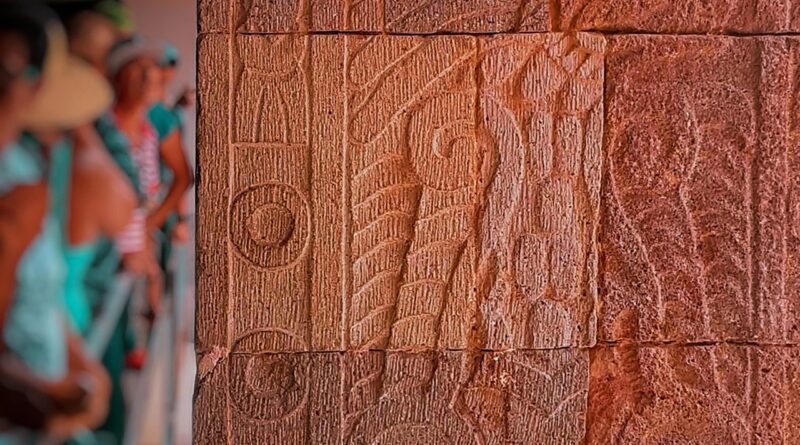
A Mexican Aztec tribal tattoo is usually a modern design inspired by Mexica, broader Mesoamerican, Mexican, and Chicano visual culture. It should not be treated as a direct copy of one documented ancient tattoo tradition. That distinction matters. The strongest designs do more than place a warrior, serpent, sun disk, or stepped pattern on the skin because it looks bold. They connect the image to a clear idea: ancestry, protection, discipline, transformation, memory, or respect for Mexican heritage.
The word Aztec is widely used in search and in tattoo studios, but many historical sources use Mexica for the people who founded Tenochtitlan and became dominant within the Aztec Empire. Museum references commonly place the Mexica-Aztec world in central Mexico from about 1325 to 1521, the year Spanish forces took control of Tenochtitlan. A good tattoo design can acknowledge that history without claiming every line is an exact ancient pattern.
This is why the subject sits between art, identity, and interpretation. For more context on symbolic body art across cultures, readers can explore the broader tattoo culture section.
Common symbols in Mexican Aztec-inspired tattoo design
Most Mexican Aztec tribal tattoo ideas use a familiar group of motifs: eagles, serpents, warriors, jaguars, the sun, calendar-like geometry, skulls, stepped forms, and deity references. These images appear in stone sculpture, codices, ceramics, featherwork, mosaics, and modern heritage art. Tattoo versions often simplify them into blackwork, dotwork, geometric bands, or black-and-gray realism.
The table below separates documented cultural background from modern tattoo interpretation. That separation is important because online tattoo meanings often reduce complex religious and historical symbols to one-word labels.
| Motif | Documented cultural background | Modern tattoo interpretation | Design caution |
|---|---|---|---|
| Eagle | The eagle appears in the founding legend of Tenochtitlan and later became central to Mexico’s national emblem after independence in 1821. | Courage, homeland, endurance, Mexican identity, vision. | Avoid turning the emblem into a vague patriotic sticker; decide whether the design refers to Mexico, Mexica history, or personal family heritage. |
| Feathered serpent | Quetzalcoatl, often described as a plumed or feathered serpent, was an important deity across Mesoamerica. | Transformation, wisdom, movement between earth and sky, renewal. | Do not mix Quetzalcoatl with unrelated dragon imagery unless the design is clearly a modern fusion. |
| Double-headed serpent | Museum collections include a Mixtec-Aztec double-headed serpent pectoral dated to AD 1400-1521. | Duality, balance, celestial force, protection, conflict between two paths. | Its historical meaning is more specific than a generic snake tattoo; use it thoughtfully. |
| Jaguar | Jaguars appear throughout Mesoamerican art and are linked with power, night, rain, and elite warrior symbolism in different contexts. | Strength, stealth, guardianship, courage under pressure. | Do not assume all jaguar imagery has the same meaning in every Indigenous Mexican culture. |
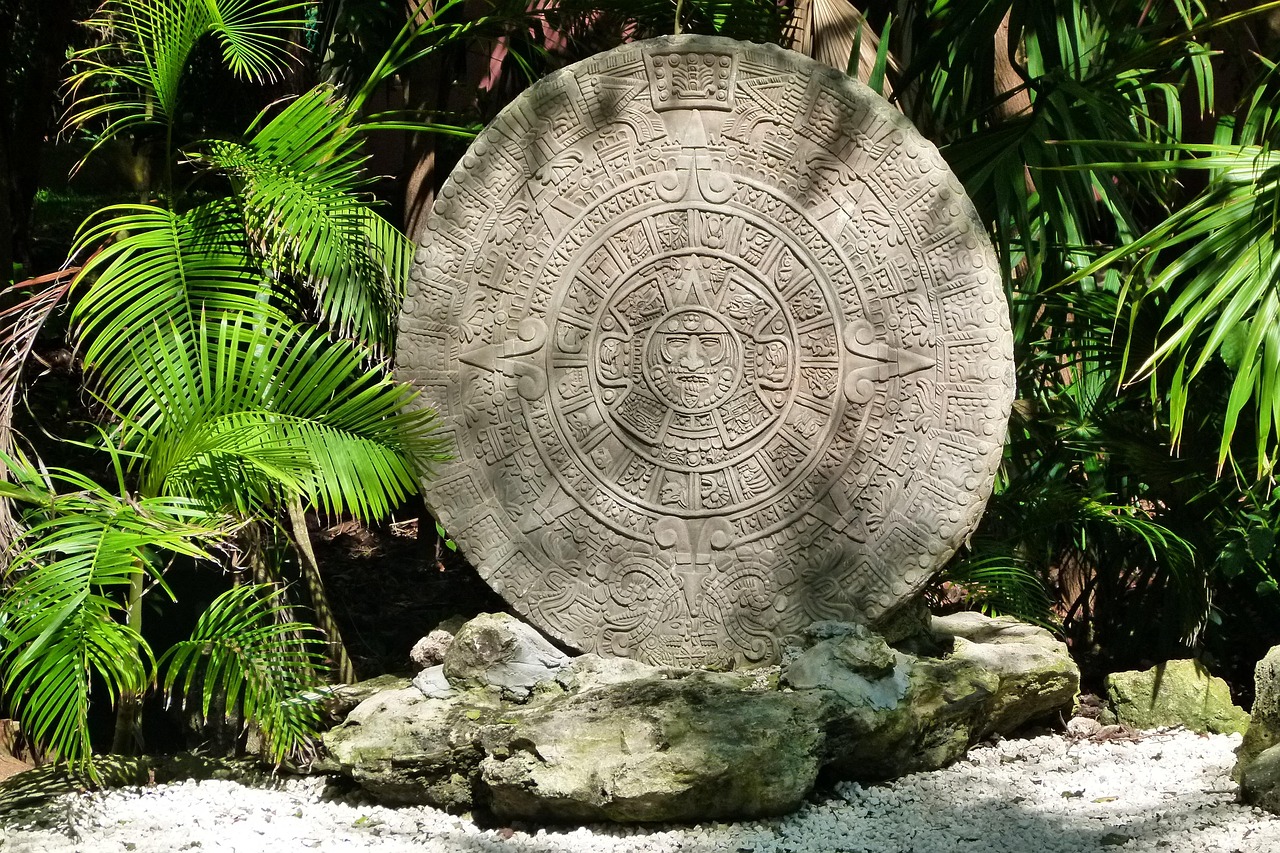
| Sun or calendar stone forms | The famous Sun Stone is often casually called an Aztec calendar, but it is better understood as a complex cosmological and political monument. | Time, cycles, endurance, ancestry, cosmic order. | A full circular design needs scale; small versions often lose detail and become unreadable. |
| Skulls | Death, ancestors, sacrifice, and afterlife concepts appear in many Mesoamerican and later Mexican traditions, but they are not all the same as Day of the Dead imagery. | Mortality, remembrance, family, resilience. | A sugar skull, a Mexica skull, and a modern gothic skull communicate different things. |
Why accuracy matters before choosing a design
The biggest mistake in this style is treating Mexican, Aztec, Maya, Inca, and generic tribal art as interchangeable. They are not. Mexica-Aztec art belongs to a specific historical and regional context in central Mexico. Maya culture has its own languages, calendars, architecture, and living communities. Mixtec, Zapotec, Nahua, Otomi, Purepecha, and many other traditions also have distinct histories. A tattoo that confuses them may still look impressive, but it communicates weak research.
Another common issue is the so-called Aztec calendar tattoo. Many people use that phrase for any round Mesoamerican design. In practice, the reference is usually the Sun Stone. It is visually dense, with signs, faces, rays, and framing bands. Because of that density, it works best as a large back, chest, thigh, or full-shoulder piece. When reduced to a small forearm circle, the design often loses the features that make it recognizable.
There is also a difference between inspiration and reproduction. A tattoo can be inspired by museum objects, carved reliefs, or codex-style lines without copying a sacred figure exactly. For many wearers, the more respectful choice is to build a new composition from researched elements: a serpent curve, stepped geometry, obsidian-like black shapes, eagle feathers, or a sunburst frame. This keeps the design personal while avoiding careless use of highly specific ritual imagery.
How to build a respectful Mexican Aztec tribal tattoo
Start with the reason, not the image
Before choosing flash art, write down the reason for the tattoo in one sentence. It might be honoring Mexican ancestry, remembering a parent or grandparent, marking survival after hardship, or expressing discipline and protection. That reason should guide the symbol. If the idea is ancestry, an eagle, maize, family dates, or a regional reference may fit better than an aggressive warrior mask. If the idea is transformation, a feathered serpent or molting serpent line may be stronger.
Use source references instead of random image boards
Image boards are useful for style direction, but they are not reliable sources for meaning. A stronger approach is to collect two types of references: cultural references and tattoo references. Cultural references might include museum photographs, codex details, sculpture profiles, or academic summaries. Tattoo references should show healed work, not only fresh black ink. This helps you judge whether fine teeth, feathers, calendar glyphs, and dots will remain readable over time.
Choose a style that matches the symbol
Different tattoo styles change the message. Blackwork gives the design a carved, emblematic look. Dotwork and geometric shading can echo stone texture or ceremonial patterning. Black-and-gray realism works well for warrior faces, jaguars, and sculptural heads, but it needs an artist who understands contrast and aging. A minimalist line version can be tasteful, although it may not carry enough detail for a complex Mexica symbol.
Color can work, especially turquoise, red, black, and warm earth tones, because these colors appear in many Mesoamerican art materials. Still, color should not be added only to make the tattoo louder. In many cases, a disciplined black-and-gray palette looks more timeless and helps detailed symbols stay legible.
Placement, scale, and readability
Mexican Aztec tribal tattoo designs often contain repeating lines, teeth, feathers, dots, rays, and stepped borders. These details need space. If the design is too small, the tattoo may blur into a dark patch as it ages. The right placement depends on whether the piece is symbolic, decorative, or narrative.
- Upper arm and shoulder: Good for eagle heads, serpent curves, warrior profiles, and circular sun-inspired frames. The natural roundness of the shoulder supports radial designs.
- Forearm: Works for vertical serpents, glyph-like bands, jaguar faces, and geometric panels. Keep tiny interior lines to a minimum.
- Chest: Strong for symmetrical designs such as eagles, double-headed serpents, or sun-centered compositions. It also suits tattoos connected to family or identity.
- Back: Best for large calendar-style pieces, warrior scenes, or mixed motifs that need breathing room.
- Calf or thigh: Practical for long serpent bodies, stepped borders, and blackwork panels with high contrast.
A useful rule is simple: the more historical detail you want, the larger the tattoo should be. If you want a small tattoo, choose one clear symbol rather than compressing a full cosmology into two inches of skin. See also: tattoo care.
Cultural respect and creative limits
Respect does not mean every Mexican Aztec-inspired tattoo is off limits. It means the wearer should understand what the image suggests, avoid false claims, and treat living cultures as more than aesthetics. This is especially important for non-Mexican wearers or for anyone using sacred figures, warrior identities, or Indigenous symbols without family or community connection.
A thoughtful design avoids three problems. First, it does not label every Mesoamerican image as Aztec. Second, it does not invent meanings such as guaranteed protection, ancient warrior bloodline, or secret code unless there is a clear source. Third, it does not use a sacred figure as decoration while ignoring its cultural and religious background.
The clearest path is to be specific. Say Mexica-inspired if the design draws from Mexica art. Say Mexican heritage tattoo if the design blends national symbols, family references, and modern Chicano tattoo language. Say Mesoamerican-inspired if the design intentionally combines broader regional influences. Specific language makes the tattoo more credible and reduces the risk of accidental disrespect.
Design ideas that balance heritage and modern tattoo craft
For a bold but controlled piece, consider an eagle profile framed by stepped geometry and negative-space rays. This reads clearly from a distance and can reference both Mexica legend and Mexican identity without copying the national coat of arms exactly. For a transformation theme, a feathered serpent can wrap around the forearm or shoulder, with feathers placed where the body curves naturally.
For a memorial tattoo, a sun-inspired frame can hold initials, a date, maize leaves, or a family symbol. The key is to avoid overcrowding. One personal element is usually stronger than five unrelated symbols. For a protection theme, a jaguar face can be paired with blackwork borders and dot shading, creating a design that feels powerful without requiring a full battle scene.
If you prefer a cleaner tribal look, use thick black shapes, stepped edges, and repeating bands, but keep at least one culturally specific anchor. Without that anchor, the tattoo may drift into generic tribal design. With it, the piece can feel connected, readable, and personal.
Frequently asked questions
Is a Mexican Aztec tribal tattoo cultural appropriation?
It depends on the wearer, the design, and the way it is presented. A researched tattoo that acknowledges Mexican or Mexica inspiration is different from a random sacred image used only for style. The more specific and respectful the design, the stronger it is.
What is the most meaningful Aztec tattoo symbol?
There is no single most meaningful symbol for everyone. Eagles often connect to courage and Mexican identity, serpents to transformation and power, and sun-inspired forms to cycles and endurance. The best symbol is the one that matches your reason for wearing it.
Can I get an Aztec calendar tattoo in a small size?
You can, but it is usually not the best choice. Calendar-style and Sun Stone-inspired designs contain many small details. They age better as larger tattoos on the back, chest, thigh, or shoulder.
Should I use the word Aztec or Mexica?
Aztec is widely recognized and useful in everyday search language. Mexica is more precise when referring to the people of Tenochtitlan and their art. In a tattoo brief, using both terms can help your artist understand the direction.
What should I ask a tattoo artist before booking?
Ask whether they have experience with blackwork, geometric balance, Chicano-style shading, or Mesoamerican-inspired designs. Also ask to see healed work. For this style, clean spacing and long-term readability are just as important as the first-day photo.