
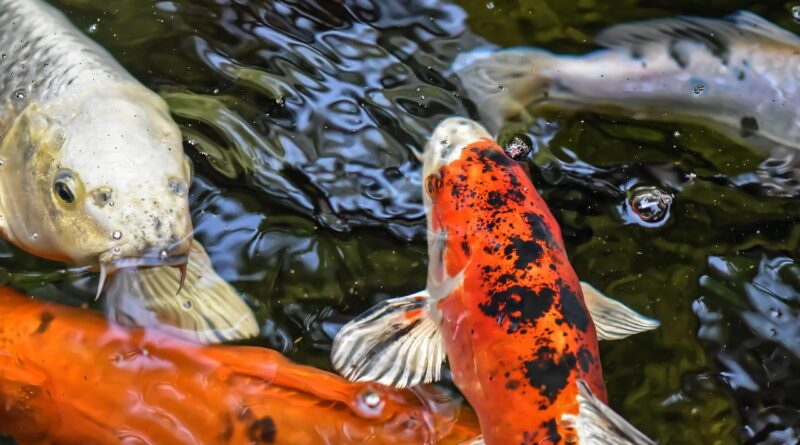
Two koi fish tattoo meaning in balance, love, and transformation
The central two koi fish tattoo meaning is balance under pressure. A single koi can suggest personal endurance, but two koi create a relationship between forces: love and independence, struggle and reward, past and future, yin and yang, or two people moving through life together. That is why the design can feel romantic without being obvious, spiritual without being fixed to one doctrine, and personal without needing text.
A pair of koi swimming in a circle often points to harmony and continuous growth. Two koi moving upstream can express shared resilience. Color, direction, water movement, and placement all affect the reading, so a strong tattoo is not simply two fish placed side by side. It needs a clear visual story.
For more symbolism guides, visit our tattoo meanings collection.
What does a two koi fish tattoo mean?
A two koi fish tattoo most often means harmony, partnership, duality, and persistence. The pair matters because koi already carry strong symbolic associations. In East Asian visual traditions, carp are connected with strength, courage, and the ability to move against a current. In Japanese seasonal customs, carp streamers are associated with Children’s Day on May 5 and wishes for healthy growth and strength. In the well-known Dragon Gate legend, a carp that succeeds in leaping the falls becomes a dragon, which is why koi imagery is often read as transformation through effort.
When two koi appear together, the meaning shifts from one person overcoming one obstacle to the way two energies interact. The pair may represent a couple, two sides of one personality, a parent and child, siblings, friendship, grief and recovery, or ambition balanced by peace. There is no single dictionary definition. The meaning comes from the composition.
The most common interpretations include:
- Balance: two forces held in motion rather than one force dominating.
- Love or partnership: two lives moving together while remaining distinct.
- Perseverance: shared endurance through hardship, especially if both koi swim upstream.
- Transformation: growth earned through effort, often linked to the carp-to-dragon legend.
- Inner duality: ambition and calm, masculine and feminine, shadow and light, or action and reflection.
Why two koi are different from one koi
A single koi tattoo usually reads as an individual journey. It can represent discipline, survival, ambition, or the will to continue despite resistance. A two koi design adds a second voice. The space between the fish becomes part of the message. Are they chasing each other, protecting each other, mirroring each other, or moving in opposite directions?
This is why paired koi tattoos work well for people who want a layered design. The tattoo can honor a relationship while still expressing personal growth. It can also show conflict that has become productive. Two koi do not have to mean a romantic couple. They may represent two chapters of life, two cultures, two parents, two children, or the tension between who someone was and who they are becoming.
A simple way to read the difference is this: one koi says, I kept going. Two koi say, we keep moving, or these two parts of me have learned to move together.
Common two koi fish tattoo designs and what they suggest
The same two fish can carry different meanings depending on their arrangement. Before choosing colors or placement, decide what kind of motion the tattoo should show.
| Design style | Likely meaning | Best for |
|---|---|---|
| Two koi swimming in a circle | Harmony, cycle, balance, ongoing growth | Yin-yang inspired tattoos, couples, spiritual balance |
| Two koi swimming upstream | Shared struggle, resilience, ambition | Partners, siblings, recovery stories, career growth |
| Two koi swimming opposite ways | Duality, tension, independence, contrast | Inner conflict, major life transitions, personality balance |
| One koi above the other | Progress, guidance, generational connection | Parent-child meanings, mentorship, personal evolution |
| Two koi with waves | Endurance through external pressure | Large Japanese-inspired pieces, sleeves, back tattoos |
| Two koi with lotus flowers | Growth through difficulty, emotional clarity | Healing tattoos, spiritual themes, feminine or soft compositions |
A circular composition is the easiest for viewers to recognize. It naturally suggests a loop, return, and balance. A vertical design feels more like a journey. A horizontal design can feel calm, flowing, and relationship-focused. None of these choices is automatically better; the right option is the one that matches the story the tattoo is meant to tell.
Two koi fish and yin-yang symbolism
Many people connect a two koi fish tattoo with yin-yang symbolism, especially when the fish are arranged head-to-tail in a circle and shown in contrasting colors. Yin and yang come from Chinese philosophy and describe opposing but complementary forces that interact and depend on each other. A koi version of the symbol turns that idea into a living image: two bodies moving, responding, and balancing instead of sitting still.
In tattoo design, a yin-yang koi does not need to copy the traditional black-and-white diagram exactly. Some designs use one dark koi and one light koi. Others use warm and cool colors, such as red and blue, orange and black, or gold and gray. The key is contrast. If both fish are identical, the tattoo may still be visually strong, but the sense of duality will be less clear.
It is also worth being precise. A yin-yang koi tattoo is not an ancient fixed symbol in the same way the traditional yin-yang diagram is. It is a modern tattoo interpretation that blends koi symbolism with the idea of complementary opposites. That does not make it less meaningful, but it does mean the final message should be personal and intentional rather than treated as a strict rule.
Color meanings in a two koi fish tattoo
Color is one of the fastest ways to change the tone of a koi tattoo. Traditional and contemporary tattoo culture often attaches meanings to koi colors, but these meanings vary by artist, region, and personal interpretation. Treat color as a guide, not a rulebook.
- Black koi: often linked with overcoming hardship, maturity, and strength after struggle.
- Red koi: commonly associated with love, passion, courage, and strong emotion.
- Gold or yellow koi: often read as prosperity, success, confidence, and good fortune.
- Blue koi: can suggest calm, masculinity in some tattoo traditions, emotional control, or peace.
- White koi: often represents purity, clarity, renewal, or a fresh stage of life.
- Orange koi: frequently feels energetic, warm, optimistic, and lively.
For two koi, contrast usually matters more than any single color. A black and white pair emphasizes balance. Red and black can suggest passion shaped by endurance. Gold and blue may read as ambition balanced by calm. Two red koi may feel intensely romantic, while two black koi can look powerful and serious.
If the tattoo is meant for a couple, avoid choosing colors only because they look symbolic on a chart. Skin tone, long-term aging, placement, and the artist’s style matter. Large koi can hold color gradients, scales, water, and flowers. Smaller koi usually need simpler contrast so the fish remain readable after years of wear. See also: tattoo care.
Direction, water, and placement change the story
Direction is one of the most debated parts of koi tattoo meaning. A common interpretation is that a koi swimming upstream represents struggle, ambition, or active resistance, while a koi swimming downstream may suggest acceptance, peace after struggle, or moving with life rather than against it. These meanings are useful, but they are not universal rules. In a two koi tattoo, direction becomes more complex because the fish interact.
If both fish swim upstream, the design feels determined and united. If both swim downstream, it may suggest release, trust, and emotional flow. If one swims up and the other down, the tattoo can represent tension between effort and surrender. If they circle each other, direction becomes cyclical rather than linear.
Water also matters. Calm water softens the message and makes the tattoo feel peaceful. Strong waves add conflict, pressure, and motion. Splashing water can make a koi tattoo feel heroic, while gentle ripples make it more meditative. In Japanese-inspired tattooing, waves and background flow are not just decoration; they guide the eye and help the fish feel alive.
Placement affects meaning too. A forearm two koi tattoo is visible and can work as a daily reminder. A shoulder or upper arm gives room for circular motion. A back or thigh allows a larger scene with waves, flowers, and detailed scales. A rib or chest placement can make the design more private and emotionally intimate. For matching tattoos, many people choose mirrored placements so the two bodies complete the idea when seen together.
How to choose a two koi design that feels personal
The best two koi fish tattoo is specific enough to make sense years later. Instead of starting with a generic image, start with the relationship or contrast you want to express. Are the koi lovers, rivals, protectors, ancestors, or two versions of yourself? Are they moving through a storm or resting in balance? Should the tattoo feel bold, quiet, spiritual, romantic, or disciplined?
Bring clear meaning notes to your artist, but leave room for design expertise. Koi need movement. Their bodies curve, their fins spread, and their scales create rhythm. A skilled artist can use negative space so the fish do not blur together. This is especially important in small tattoos, where too many scales, waves, flowers, and color changes can become visually crowded.
Before booking, consider these practical questions:
- Do you want the tattoo to read as romantic, spiritual, personal, or cultural?
- Should the two koi look equal, opposite, protective, or in motion together?
- Will the design be blackwork, fine line, neo-traditional, watercolor, or Japanese-inspired?
- Is the placement large enough for two readable fish?
- Do you want background elements such as water, lotus, peony, maple leaves, or a moon?
- Will the tattoo still be meaningful if a relationship changes?
That last question is important. If the tattoo is for a partner, consider a design that also stands on its own. Two koi can symbolize love, but they can also symbolize balance, growth, and resilience. A flexible meaning keeps the tattoo from depending too heavily on one moment in life.
Frequently asked questions
Do two koi fish always mean love?
No. Two koi can represent romantic love, but they can also mean friendship, family bonds, inner balance, duality, shared struggle, or personal transformation. The meaning depends on the fish arrangement, colors, and the story behind the tattoo.
What does a yin-yang koi tattoo mean?
A yin-yang koi tattoo usually means harmony between opposite but complementary forces. It may represent light and dark, action and rest, masculine and feminine energy, two partners, or two sides of one person. The circular movement is what makes the balance feel active.
Should two koi face the same direction or opposite directions?
Facing the same direction often suggests unity, shared purpose, or moving through life together. Opposite directions can suggest contrast, tension, independence, or balance between different forces. A circular head-to-tail design usually suggests cycles and harmony.
What colors are best for a two koi fish tattoo?
There is no single best color pair. Black and white works well for contrast and yin-yang symbolism. Red and black can feel passionate and strong. Gold and blue can suggest ambition balanced with calm. The best choice depends on the intended meaning, skin tone, tattoo size, and artist’s style.
Is a two koi tattoo good for matching tattoos?
Yes, but it is wise to design each tattoo so it stands alone. Matching two koi tattoos can represent partnership, loyalty, or shared resilience. Mirrored placements, complementary colors, or one koi per person can make the idea subtle without relying on names or dates.