Which Forearm Tattoo Styles Will Look Best on You?
Choosing between forearm tattoo styles can feel easy while you are scrolling through pictures. It gets more serious when you picture the design on your own arm and think about seeing it every day. The forearm is easy to show, good for photos, and still simple to cover with long sleeves when you need to. If you are still looking at wider ideas, this guide works well with the main tattoo styles page before you narrow the design.
Forearm tattoos are not a small trend. Pew Research Center reported in August 2023 that 32% of U.S. adults had at least one tattoo, based on a survey of 8,480 adults conducted July 10 to July 16, 2023. Among tattooed adults, 69% said they had a tattoo to honor or remember someone or something, and 47% said at least one tattoo made a statement about what they believe. That matters because the best forearm tattoo is not just decoration. It needs to mean something, sit well on the arm, and age well on skin that people see almost every day.
Why Are Forearm Tattoo Styles So Popular?
The forearm is a practical place for a tattoo. It gives enough room for detail without going straight into a full sleeve, and it is easier to look at than the upper arm, back, or rib area. You can look down and see the piece yourself, which sounds simple, but many people like that daily connection. The area also has limits, so the style choice matters more than many first-time clients expect.
Easy Visibility With Simple Cover-Up
A forearm tattoo can be public or private depending on what you wear. Short sleeves show it, while a button-down shirt, hoodie, or jacket can hide most of it. That flexibility is one reason first-timers often choose the forearm before the hand, neck, or face. If your job has rules about visible tattoos, try the placement with a temporary stencil or marker first. Sit at a desk, reach for coffee, shake hands, and check what is visible. A quick real-life test can save you from an awkward surprise later.
A Shape That Flatters Many Designs
The forearm is long, slightly tapered, and it already has a clear direction. That shape works well for arrows, flowers, snakes, daggers, script, geometric bands, portraits, and narrow illustrative scenes. Vertical designs can make the arm look longer, while horizontal bands can make the area feel stronger and more graphic. A good artist will place the main visual weight where the arm has enough flat space. They will also avoid putting key lines right on a crease where the design may bend in a strange way.
Room for Personal Meaning
Because you see the forearm often, personal pieces can feel close without being hidden. Dates, memorial designs, family symbols, faith-based art, travel icons, and quotes all fit this area well. The Pew Research Center data from 2023 gives useful context here, since many tattooed adults connect their tattoos with memory, identity, or belief. Put simply, if a forearm tattoo will face the world, it should also make sense to you on a normal Tuesday, not only on the day you post it online.
Which Forearm Tattoo Styles Fit Your Personality?
Style is not only about what looks nice. It affects session time, price, how the tattoo reads from a distance, and how easy it is to add more work later. A tiny fine-line design and a heavy blackwork piece can both look good, but they give a very different feeling. Start with the mood you want, then choose images that match it.
Fine Line for Quiet Detail
Fine-line forearm tattoos suit people who like clean, light, and simple-looking designs. Single-needle flowers, tiny animals, delicate script, thin constellations, and small ornamental frames all fit this style. They often work well on the inner forearm because that area feels a little more personal and less exposed. The tradeoff is detail. If a design has too many tiny leaves, dots, or hair-thin curves, it may blur as the tattoo ages. Ask the artist which parts should be simplified. A good fine-line tattoo can look almost plain on paper, then look right once it is on skin.
Traditional for Bold Color
Traditional tattooing uses firm outlines, simple shading, and strong color blocks. Roses, eagles, daggers, swallows, hearts, panthers, and anchors all fit the forearm because people can read them clearly from a few steps away. This style handles movement and aging well because it does not rely on tiny detail. It also suits people who want a tattoo that clearly looks like a tattoo. There is nothing too quiet about it, and that old shop-wall feel is part of why people still choose it.
Blackwork for Strong Contrast
Blackwork is a solid choice if you like strong graphic contrast. It includes solid black shapes, ornamental patterns, blackout sections, sacred geometry, abstract brush-style pieces, and bold illustrative designs. On the outer forearm, blackwork can look sharp and direct. It also works well with future sleeve work because black gives the design a clear structure. The main issue is commitment. Large black areas can be hard and expensive to remove or cover, so sit with the stencil for a while before saying yes. If the design still feels right after a week, that is a better sign than liking it for five minutes.
How Do You Choose Placement on the Inner, Outer, or Full Forearm?
Placement changes the whole feel of a tattoo. The same design can feel personal on the inner forearm, bold on the outer forearm, and more complete as a wraparound piece. Before you book, look at your arm while it moves. Turn your wrist, bend your elbow, and notice where the skin stretches. Tattoos sit on moving bodies, not flat screens.
Inner Forearm for Personal Pieces
The inner forearm is a common choice for script, memorial designs, spiritual symbols, birth flowers, and small detailed illustrations. It faces you more than other people, so it can feel private even when it is visible. Pain can be sharper near the wrist and the elbow ditch, and the skin along the center may feel more sensitive. Keep script large enough to breathe. A quote that looks neat at two inches on a phone can look cramped after it heals.
Outer Forearm for Clear Display
The outer forearm handles bold designs well. It is easier for other people to see, and it usually gives a smoother canvas for traditional, illustrative, tribal-inspired, biomechanical, or blackwork pieces. If you want a tattoo that reads in photos or from across a room, this area helps. For portraits or animals, place the face where the arm is least distorted. A wolf head twisted around the bone can look off, even if the drawing itself is strong.
Wraparound Designs for Flow
Wraparound forearm tattoos can feel more custom because they use the arm as a full shape, not as a flat rectangle. Vines, smoke, waves, snakes, dragons, geometric bands, and ornamental patterns can move around the forearm instead of sitting like a sticker. The main point is flow. The design should have a clear front, side, and back, with no weak area where the pattern feels unfinished. Ask to see the stencil in a mirror and under normal room light. Studio lighting can make almost anything look more dramatic than it will look day to day.
What Design Rules Help a Forearm Tattoo Age Well?
A forearm tattoo has to deal with sun, sleeves, workouts, desk friction, and normal skin change. No tattoo stays exactly the same forever. Lines soften, colors settle, and skin texture changes with time. That is normal. The goal is to choose a design that can age cleanly instead of depending on detail that is too fragile.
Clean Line Weight and Breathing Space
Lines spread a little as a tattoo heals and ages. For that reason, small designs need open space between lines. Leaves, feathers, mandalas, and geometric patterns can all suffer if every gap is packed too tightly. Strong line weight is useful on the forearm because the area often gets sun exposure. Clean spacing may look less flashy in the stencil, but it often looks better after five years.
Smart Size for Small Details
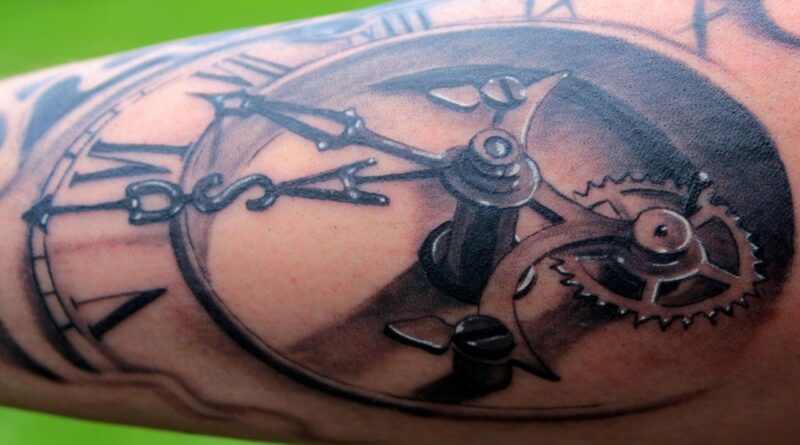
If you want a compass, clock, portrait, lion, skull, or family crest, do not shrink it just to save space. Small tattoos can be great, but small complex tattoos are risky. Details like eyes, teeth, clock numbers, and thin filigree need room to stay readable. A practical rule used in many studios is to remove details that cannot be clearly seen from arm’s length. It is plain advice, but it helps you avoid a muddy patch later. See also: tattoo care.
Color Choices for Your Skin and Routine
Color can look very good on the forearm, especially in traditional, neo-traditional, Japanese-inspired, floral, and illustrative pieces. Still, your routine matters. The American Academy of Dermatology advises protecting tattooed skin from the sun with broad-spectrum, water-resistant sunscreen of SPF 30 or higher once the tattoo has healed. The AAD also notes that petroleum-based products can cause ink to fade during care. If you spend a lot of time outdoors, plan for sun protection before choosing pale yellow, soft pink, or very light gray details.
Which Forearm Tattoo Styles Work Best for First Timers?
First tattoos carry extra pressure. You may not know how your skin heals, how long you can sit, or how you will feel seeing the tattoo every morning. The forearm is friendly for beginners, but the best first design is usually clear, medium-sized, and not packed with too much detail. Leave some room for future taste. People change, and arms do not have unlimited space.
Small Script With a Strong Reason
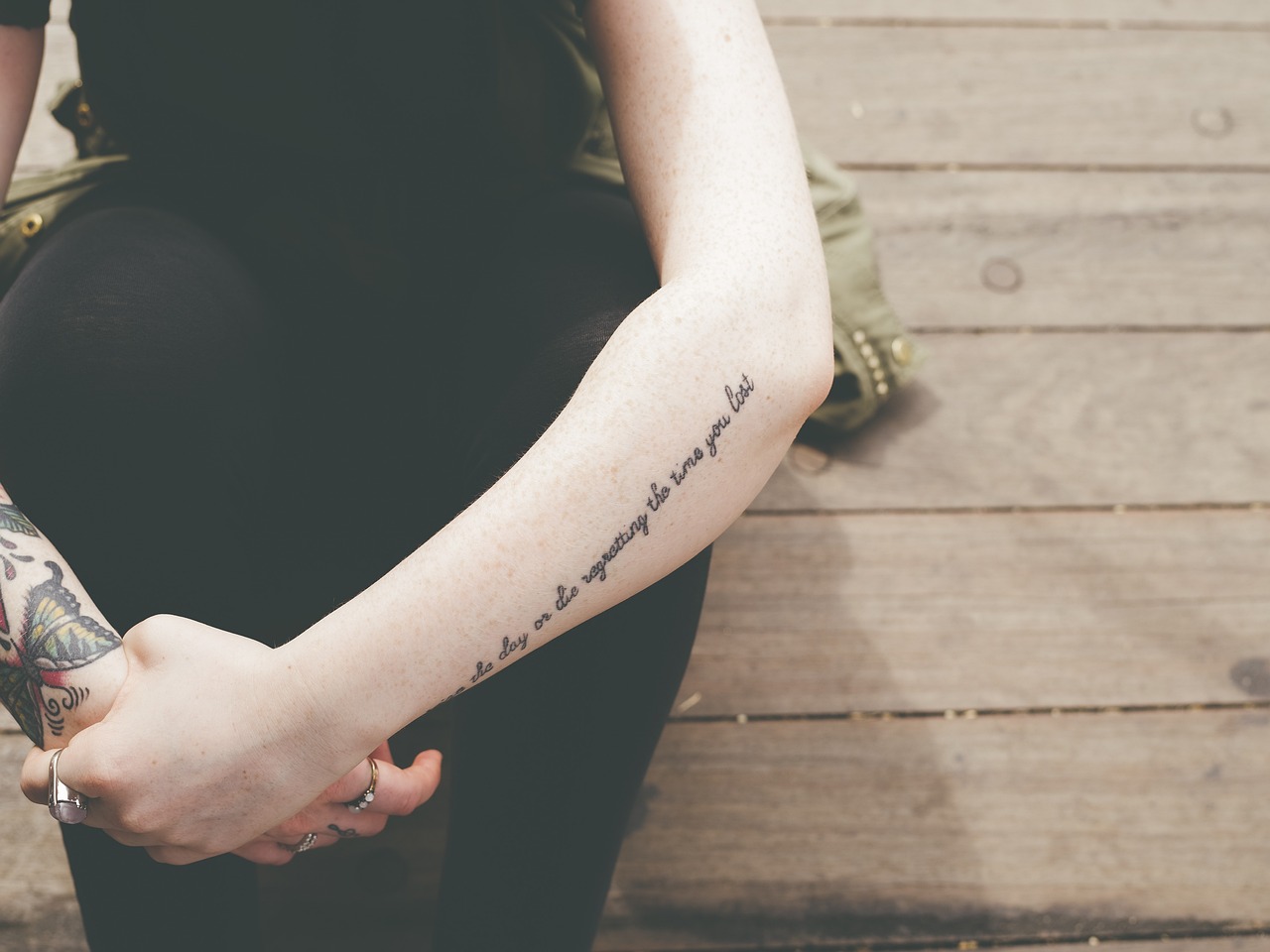
Script can be a good first tattoo when the words truly matter. Names, short phrases, coordinates, and dates work well on the inner forearm or along the side. Choose a readable font instead of a trendy one. Very thin cursive can close up as it ages, while block lettering may feel too stiff for a personal message. Ask for a printed stencil in the exact size. If you have to squint to read it, make it bigger.
Botanical Pieces With Natural Movement
Flowers, leaves, herbs, vines, and branches fit the forearm because they naturally follow length and curve. A single rose can feel classic, while a lavender stem can feel quieter. A peony, chrysanthemum, or lotus can fill more space without needing hard edges. Botanical designs also mix well with later tattoos, which helps if you may build a half sleeve later. Just avoid turning every petal into a tiny line maze.
Geometric Designs With Planned Symmetry
Geometric forearm tattoos look clean and controlled. They work well for people who like balance, pattern, and clear visual order. Bands, cubes, mandalas, sacred geometry, and dotwork gradients all fit this direction. Symmetry takes skill on a curved arm, so choose an artist who shows healed geometric work, not only fresh photos. Fresh lines can look perfect while the skin is swollen. Healed photos show the real result.
How Should You Prepare Before Booking Your Forearm Tattoo?
Good preparation does not take away the fun. It protects the result. Before you pay a deposit, collect references, check healed work, and ask direct questions. A professional artist should be fine with questions about placement, hygiene, ink, and healing. If the conversation feels rushed or defensive, pay attention to that.
Check the Artist Portfolio Closely
Match the artist to the style you want. A fine-line artist may not be the right person for heavy traditional color, and a blackwork specialist may not be the best portrait artist. Look for forearm tattoos in the portfolio because placement experience matters. Also look for healed photos when they are available. Fresh tattoos are glossy, dark, and swollen. Healed tattoos show line control, spacing, and how the color really settles.
Ask About Hygiene and Ink Safety
Tattooing breaks the skin, so safety is not optional. The U.S. Food and Drug Administration states that contaminated tattoo inks and allergic reactions have been reported, and in June 2023 it issued draft guidance about insanitary conditions at tattoo ink manufacturing and distribution facilities. A 2023 Frontiers in Public Health paper reviewed FDA records and reported 18 voluntary recalls of tattoo and permanent makeup inks contaminated with microorganisms between 2003 and 2023. There is no reliable public dataset that gives an exact infection rate for forearm tattoos by style, so any claim like that should be treated with caution. The practical move is simple: choose a licensed studio, ask about sterile needles, and follow aftercare exactly.
Plan Healing Around Real Life
A fresh forearm tattoo can be rubbed by sleeves, gym equipment, backpacks, pets, and bedding. Book the session when you can keep the area clean and avoid heavy sun, swimming, and rough workouts during early healing. If you work with your hands, talk with the artist about bandage timing and clothing. Healing is not the exciting part of getting tattooed, but it decides how the final piece looks. A strong stencil cannot make up for careless aftercare.
FAQ
Q1: What Forearm Tattoo Style Is Best for a First Tattoo? A: Fine-line, small traditional, botanical, and simple geometric designs are often good for beginners because they can stay clear without needing a full-day session. Choose a design with enough size and spacing to heal cleanly.
Q2: Is the Inner Forearm or Outer Forearm Better? A: The inner forearm feels more personal and works well for script or meaningful small art. The outer forearm is better for bold display, traditional pieces, blackwork, and designs that need a flatter visual field.
Q3: Do Forearm Tattoos Fade Faster? A: They can fade if they get frequent sun exposure or poor aftercare. The American Academy of Dermatology recommends SPF 30 or higher sunscreen on healed tattoos when they are in the sun.
Q4: What Size Should a Forearm Tattoo Be? A: The right size depends on detail. Simple symbols can be small, but portraits, clocks, animals, and floral clusters need more room. If fine details look tight in the stencil, the design should usually be larger.
Q5: Can a Forearm Tattoo Become a Sleeve Later? A: Yes, if the first tattoo leaves enough open space and has a style that can connect with future work. Tell your artist if a sleeve may happen later, even if you are only booking one piece now.