
What Makes Blackwork Tattoos Central to Leandro Muniz’s Paris Studio
Leandro Muniz: Custom Micro-Realism and Blackwork Tattoos in Paris
Leandro Muniz’s blackwork tattoos represent a mature synthesis of conceptual art, technical mastery, and cultural dialogue. His practice bridges fine art and tattoo craftsmanship, where black ink becomes both medium and metaphor. Within Paris’s thriving art ecosystem, Muniz has developed a distinctive language that merges micro-realism with the philosophical rigor of minimalism. The result is a body of work that treats skin as canvas and permanence as narrative structure. For experts in tattoo artistry, his approach demonstrates how precision, restraint, and spatial intelligence can redefine the expressive capacity of monochrome tattooing.
The Artistic Philosophy Behind Leandro Muniz’s Blackwork Tattoos
Muniz’s philosophy is rooted in the exploration of black ink as an expressive field rather than mere pigment. His studio functions as both laboratory and atelier, where traditional techniques meet contemporary theory.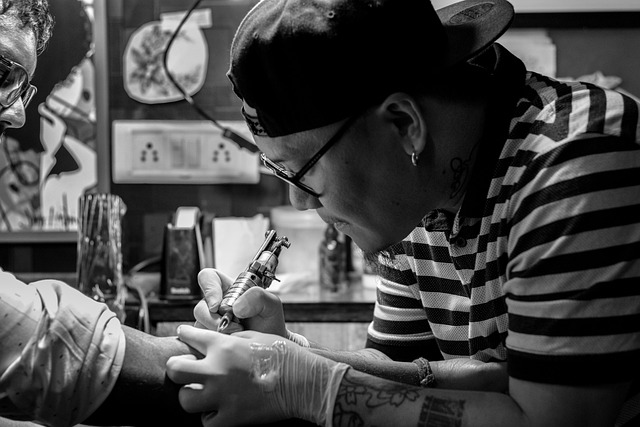
The Conceptual Foundation of Blackwork in Muniz’s Studio
Blackwork tattoos in Muniz’s hands are not simply aesthetic statements but philosophical exercises. The use of pure black ink allows him to explore contrast, depth, and negative space with near-sculptural intent. By integrating minimalism with realism, he creates visual tension—each line or shadow acting as a deliberate gesture rather than decorative flourish. Traditional tattooing principles still guide his compositions: bold outlines, balanced saturation, and respect for skin anatomy. Yet these foundations are reinterpreted through modern sensibilities that treat the body as a site of visual architecture rather than ornamentation.
The Relationship Between Blackwork and Micro-Realism
Muniz’s use of micro-realistic techniques enhances the tactile quality of his blackwork tattoos. Fine needle configurations enable him to achieve subtle tonal shifts within limited grayscale ranges, giving form without color dependency. This balance between abstraction and representation defines his aesthetic signature—every mark calibrated to suggest texture or emotion through restraint. Controlled shading replaces color gradients, creating optical depth that feels photographic yet abstracted enough to remain timeless.
Technical Precision and Methodology in Blackwork Application
The technical execution behind Muniz’s work reveals the discipline required to sustain consistency across dense monochromatic surfaces. Each decision—from needle grouping to ink layering—affects longevity and clarity.
Tools, Techniques, and Ink Selection
Precision begins with tool choice. Needle groupings determine line density and tonal gradation; round liners for contour definition, magnums for smooth shading transitions. Carbon-based inks are favored for their saturation stability over time—they resist fading better than organic blends when exposed to UV light or skin regeneration cycles. Layering through stippling or gradient passes builds tonal variation while preserving surface integrity. This technique allows black areas to breathe visually instead of appearing flat or overworked.
Skin Preparation and Healing Considerations
Dense blackwork demands careful attention to skin preparation to avoid trauma during extended sessions. Pre-tattoo hydration protocols help maintain elasticity while minimizing bleeding under repeated passes. During healing, aftercare must address pigment density—clients are advised on moisture balance rather than excessive ointment use to prevent pigment lift. Long-term maintenance includes periodic touch-ups focused on reinforcing contrast without compromising original line structure.
Aesthetic Identity: The Role of Composition in Muniz’s Work
Composition defines the emotional rhythm of Muniz’s tattoos as much as technique does. His pieces reveal an acute sense of spatial awareness where geometry meets anatomy.
Structural Balance and Spatial Awareness in Design Placement
Negative space operates as an active participant within each design rather than absence of ink. Large-scale compositions flow along muscle lines or bone curvature to enhance anatomical harmony. Geometric elements align with natural contours—shoulder arcs or ribcage slopes—to create coherence between static design logic and dynamic body movement.
Symbolic Narratives Within Monochromatic Expression
Muniz often reinterprets cultural motifs through geometric abstraction rendered solely in black ink. These motifs serve symbolic purposes: protection, transformation, memory inscription. Emotional resonance arises from stark contrasts—the voids between forms suggesting silence or introspection more powerfully than figurative imagery could convey. Patterns thus become metaphors for identity persistence within impermanent flesh.
The Paris Context: Influence on Artistic Direction and Clientele
Paris provides fertile ground for experimentation where fine art sensibilities intersect with tattoo subculture sophistication.
Paris as a Hub for Contemporary Tattoo Art Innovation
Within Parisian creative circles, boundaries between gallery art and tattooing continue to blur. Artists exchange techniques across media—printmaking textures influencing needle motion; sculpture informing spatial mapping on skin surfaces. Art residencies encourage dialogue between disciplines that refine conceptual rigor behind each tattoo project.
Client Expectations in an Expert Audience Environment
Parisian clientele often consists of seasoned collectors who value originality over replication. They approach tattoo sessions as collaborative acts rather than service transactions. This dynamic compels artists like Muniz to maintain authenticity while negotiating client vision through iterative sketch consultations and digital previews before execution begins.
Evolutionary Trends: The Future of Blackwork in Muniz’s Practice
Muniz’s ongoing evolution reflects broader shifts within contemporary tattooing—where technology amplifies craft without diluting its manual essence.
Integrating Emerging Technologies with Traditional Craftsmanship
Digital design tools now allow precise visualization before needle contact occurs, helping refine proportion relationships on complex body areas such as ribs or necklines. AI-assisted pattern generation may enter his workflow selectively—not to replace intuition but to test compositional symmetries faster during conceptual phases. Archiving each completed piece digitally creates a living portfolio documenting stylistic progression across years.
Expanding the Conceptual Boundaries of Blackwork Tattoos
Future directions point toward hybridization: merging blackwork aesthetics with engraving-inspired line systems or printmaking crosshatch logic to expand tonal vocabulary beyond solid fills alone. Such explorations challenge conventional spatial relationships between skin texture, ink absorption behavior, and ambient light reflection—turning each tattoo into a study of material perception itself. Through these experiments, Muniz contributes not only designs but theoretical discourse positioning tattooing firmly within contemporary fine art frameworks.
FAQ
Q1: What distinguishes Leandro Muniz’s blackwork tattoos from other artists’ approaches?
A: His integration of micro-realism within strict monochrome parameters gives tactile depth rarely achieved without color while maintaining minimalist clarity grounded in traditional principles.
Q2: How does he achieve durability in heavy black areas?
A: By using carbon-based inks known for high pigment retention combined with layered application methods that prevent oversaturation or scarring during healing stages.
Q3: Why is negative space so central in his compositions?
A: It functions structurally rather than decoratively—balancing visual weight across anatomical planes while symbolizing silence or absence as expressive elements.
Q4: How has Paris influenced his artistic evolution?
A: Exposure to interdisciplinary art communities encouraged cross-media experimentation that refined both conceptual frameworks and technical execution standards.
Q5: What future innovations might shape his practice?
A: Selective adoption of digital modeling tools for pre-visualization and exploration of hybrid visual languages blending engraving aesthetics with traditional blackwork precision will likely define his next creative phase.