
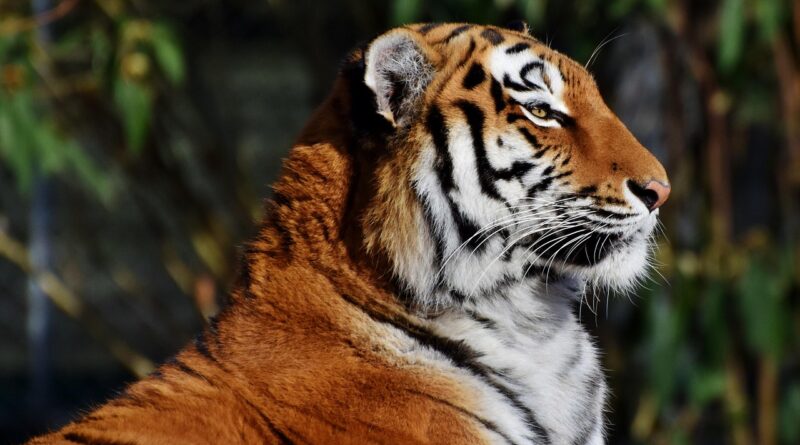
Traditional Japanese tiger tattoo meaning, design rules, and placement ideas
What a traditional Japanese tiger tattoo represents
A traditional Japanese tiger tattoo is rarely just a fierce animal image. In irezumi-inspired design, the tiger, or tora, is usually associated with courage, protection, controlled power, and the ability to move through difficulty without losing direction. That meaning comes from a long visual tradition, not from one fixed rulebook. Japanese artists developed tiger imagery through East Asian painting, literature, imported objects, pelts, inherited artistic models, and later woodblock prints, even though tigers are not native to Japan. For tattoo collectors, this background matters: a strong Japanese tiger piece should feel dynamic, balanced, and integrated with wind, rocks, bamboo, flowers, clouds, or water rather than looking like an isolated animal sticker.
This guide explains the motif’s meaning, why it looks the way it does, how common pairings affect the message, and what to consider before choosing a sleeve, back piece, chest panel, thigh piece, or smaller design.
Where the tiger motif comes from in Japanese art
Museum sources including the Smithsonian, the Ashmolean Museum, the Philadelphia Museum of Art, and The Metropolitan Museum of Art point to an important starting point: tigers are not native to Japan. That absence did not make the animal less important. Instead, the tiger entered Japanese visual culture through Chinese and Korean influence, imported paintings, literary references, pelts, and established artistic models.
Because many premodern Japanese painters did not study live tigers directly, Japanese tiger images often developed a distinctive character. Some look muscular and almost supernatural; others have wide eyes, rounded faces, or catlike expressions. For tattoo design, this helps explain why a traditional Japanese tiger does not need to be wildlife-accurate. It needs to be convincing as a symbolic creature within a Japanese composition.
Tigers in painting before tattooing
In East Asian art, the tiger often appears as a powerful mountain or earth creature. Museum descriptions commonly connect it with bravery, strength, and a protective force able to repel evil. The dragon and tiger pairing is especially old and important, with the two animals commonly used to express opposing but balanced forces. In tattoo design, that contrast can become a dramatic full-back, torso, or sleeve concept: the tiger grounded in rock, bamboo, or wind, and the dragon moving through clouds or water.
Edo print culture and irezumi
The visual language of Japanese tattooing is closely linked to Edo-period popular culture. The Edo period lasted from 1603 to 1868, and woodblock prints helped spread heroic, theatrical, and decorative imagery among urban audiences. The Museum of Fine Arts, Boston has described Japanese tattoo imagery in prints as a bridge from the streets of Edo to modern tattoo shops. This does not mean every traditional tiger tattoo copies a specific print. It means the strongest designs usually share similar priorities: bold silhouettes, readable movement, strong negative space, and supporting background elements that make the body feel like a complete scene.
Design language that makes a tiger feel traditional
A tiger can be drawn in many tattoo styles, but a traditional Japanese tiger tattoo has specific visual expectations. It usually emphasizes flow over strict realism, posture over portraiture, and composition over isolated detail. The animal should appear to move with the body rather than sit flat on top of it.
Composition and motion
Traditional Japanese tattoo composition often uses curves, diagonals, and layered background shapes to guide the eye. A tiger may climb upward, descend through wind, twist around the shoulder, brace against rocks, or emerge from bamboo. These choices are not just decorative. They give the piece a clear action: the tiger is advancing, guarding, resisting, or confronting another force.
For a sleeve, the head may anchor the upper arm while the body and tail wrap around the biceps and forearm. For a back piece, the tiger can be large enough to show the full spine, paws, stripes, and surrounding environment. For a thigh tattoo, the haunches and shoulder mass can create a strong oval composition that fits the leg naturally.
Line, color, and contrast
Traditional Japanese tattoos often rely on strong outlines, controlled black shading, and color fields that remain readable from a distance. A tiger may use orange, yellow, ochre, black, and white, while muted gold or warm brown can also work. The palette should support the whole tattoo rather than simply imitate a photograph.
Stripes are especially important. In a weak design, they become random decoration. In a stronger design, they describe the animal’s turning body, direct the viewer’s eye, and help the tiger remain readable as the tattoo settles and ages.
| Design element | Traditional role | Practical tattoo effect |
|---|---|---|
| Large tiger head | Focuses power, attention, and expression | Works well on chest, shoulder, thigh, or upper arm |
| Curved body | Creates motion and tension | Helps the tattoo follow muscles and joints |
| Bold stripes | Defines the tiger’s identity and rhythm | Improves readability as the tattoo settles over time |
| Wind bars or clouds | Adds atmosphere and movement | Connects separate parts of a sleeve or back piece |
| Rocks or cliffs | Grounds the tiger in a landscape | Creates weight, contrast, and background structure |
| Bamboo | Suggests resilience and endurance | Adds vertical rhythm and useful negative space |
Common motif pairings and how they change the meaning
The tiger’s meaning changes depending on what surrounds it. A tiger alone can suggest courage, independence, and protection. In a larger Japanese composition, it can become part of a more layered story.
Tiger and bamboo
Bamboo is one of the most natural companions for a Japanese tiger tattoo. Visually, it gives the design vertical structure and a stronger sense of place. Symbolically, bamboo is often read as flexible strength because it bends without easily breaking. Together, tiger and bamboo can suggest resilience under pressure rather than uncontrolled aggression.
Tiger and wind
Wind, clouds, and storm-like background elements can make the tiger feel alive. They also help connect the animal to the flow of the body. In a sleeve or back piece, wind bars can separate the tiger from flowers, rocks, or other motifs while keeping the whole tattoo unified.
Tiger and peony
Peonies are common in Japanese-style tattooing and can soften the visual force of the tiger. The combination works because it contrasts power with beauty. A snarling tiger surrounded by peonies feels different from a tiger on bare rock: it becomes less purely aggressive and more balanced, decorative, and ceremonial.
Tiger and dragon
The tiger and dragon pairing is one of the strongest options, but it needs space. In East Asian visual culture, the two creatures often represent contrasting forces rather than simple enemies. A dragon may suggest sky, water, spirit, or transformation, while the tiger suggests earth, body, courage, and grounded force. On skin, this pairing is usually more successful as a large back, torso, or full sleeve concept than as a small tattoo.
Tiger and waves
Waves are not the most obvious tiger background, but they can work when the whole design is planned carefully. Water adds contrast to the tiger’s weight and heat. If waves are used only as filler, the concept can feel confused. If they frame a storm, cliff, or dragon-tiger composition, they can add depth and movement.
Placement and scale for a Japanese tiger tattoo
Scale is one of the biggest decisions. Japanese tattooing traditionally rewards larger compositions because the style depends on movement, background, and body flow. A small tiger head can look good, but it will not carry the same effect as a sleeve or back piece with a full environment. See also: tattoo care.
Back piece: A back piece gives the tiger room to become a complete scene. It can show the full animal, surrounding bamboo or rocks, and a strong upward or downward movement. This is the best option for collectors who want a classic, large-scale irezumi-inspired composition.
Sleeve: A sleeve works well for a tiger climbing, twisting, or emerging through wind. The shoulder and upper arm can hold the head and chest, while the tail, paws, bamboo, and background wrap down the arm. A half sleeve may be enough for a tiger head and limited background; a full sleeve allows more storytelling.
Chest and rib panel: A chest tiger can feel direct and protective, especially when the head faces outward. Rib and side placements allow strong vertical motion but can be more painful and may require careful planning around breathing movement and torso shape.
Thigh: The thigh is practical for a medium or large tiger because it offers a broad surface and can hold a powerful crouching or leaping pose. It is also easier to cover than an arm sleeve, which matters for some workplaces or travel situations.
Small tattoo: A small Japanese tiger is possible, but the design should be simplified. Too many stripes, whiskers, flowers, and background details in a small area can blur. If the tattoo must be small, choose a tiger head, paw, mask-like face, or compact crouching pose rather than forcing a full-body scene.
Cultural respect and planning considerations
A Japanese tiger tattoo can be meaningful even if the wearer is not Japanese, but the design should be approached with care. Respect starts with understanding the style rather than treating it as a random set of exotic symbols. Study museum images, historical prints, and reputable tattoo portfolios. Pay attention to how the tiger fits the body, how backgrounds are used, and how other motifs support the main idea.
Be cautious with kanji, religious imagery, family crests, or symbols you do not understand. A tiger does not need added lettering to feel Japanese. In many cases, a clean composition with tiger, wind, bamboo, rocks, and flowers is stronger than a design crowded with unrelated icons.
It is also worth knowing that tattoos still carry social complications in some Japanese settings. Japan National Tourism Organization guidance has noted that many onsen and bathing facilities have restrictions or special policies for tattooed visitors, although rules vary by place. This should not stop someone from choosing the style, but it is useful context for travelers with visible or large-scale tattoos.
If you are comparing motifs before committing, browse related ideas in the tattoo styles archive and keep notes on scale, placement, and background elements rather than saving only close-up tiger faces.
Frequently asked questions
What does a traditional Japanese tiger tattoo mean?
It usually represents courage, protection, strength, resilience, and controlled power. The exact meaning depends on the pose, placement, and surrounding motifs. A tiger with bamboo may emphasize endurance, while a tiger facing a dragon may suggest balance between opposing forces.
Is a Japanese tiger tattoo the same as a Chinese tiger tattoo?
No. The traditions are connected, and Japanese art inherited much tiger imagery through Chinese and Korean influence, but Japanese tattoo composition has its own visual language. Irezumi-inspired tattoos usually emphasize body flow, bold outlines, patterned backgrounds, and large integrated scenes.
Should the tiger face up or down?
There is no single rule that fits every tattoo. An upward tiger can feel ambitious, climbing, or confrontational. A descending tiger can feel protective, dominant, or ready to strike. The better question is how the direction works with the body part and the story of the whole design.
Can a traditional Japanese tiger tattoo be small?
Yes, but it should be simplified. Traditional Japanese design works best when there is enough room for the animal’s expression, stripes, and movement. For a small piece, a tiger head or compact pose is usually clearer than a full tiger with multiple background elements.
What colors work best for this motif?
Classic tiger palettes often use orange, yellow, ochre, black, and white, supported by muted background colors. However, the best palette depends on the whole composition. Strong contrast and long-term readability matter more than copying a realistic tiger photograph.