
Medieval woodcut tattoo guide to history, design, and placement
What is a medieval woodcut tattoo?
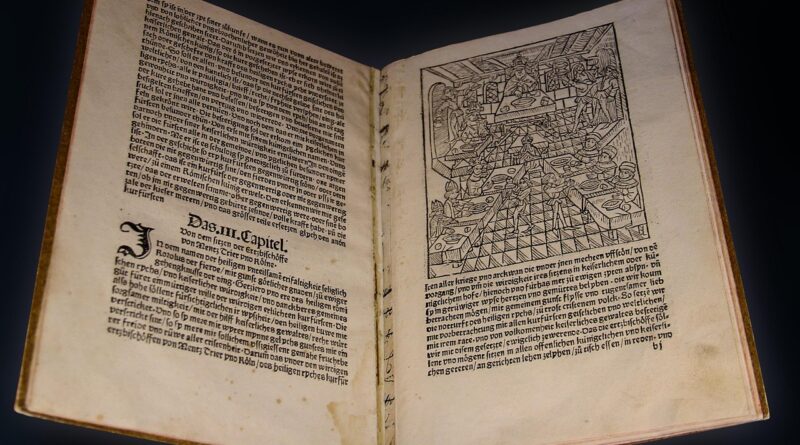
A medieval woodcut tattoo is a blackwork tattoo style influenced by old relief prints, manuscript imagery, religious illustration, folklore, bestiaries, alchemical diagrams, and early printed books. The look is built from bold outlines, visible hatch marks, strong contrast, and a deliberately carved texture rather than soft shading. Depending on the subject, the result can feel ancient, graphic, sacred, strange, darkly humorous, or storybook-like.
The phrase is useful for tattoo searches, but it is not a strict art-historical label. Many tattoos described as “medieval woodcut” also borrow from Renaissance woodcuts, copper engravings, etchings, early modern emblem books, and later gothic illustration. For readers comparing tattoo styles, the key point is the visual language: the tattoo should look printed, carved, and intentionally linear, not smoothly rendered.
Where the woodcut look comes from
In printmaking, a woodcut is a relief process. The artist cuts away the parts of a wooden block that should remain light, leaves the drawing raised, inks the surface, and prints the image onto paper. Museum references such as The Met and Tate describe this raised-surface process as one of the defining features of woodcut printing. Because the technique depends on carved lines and high contrast, historical woodcuts often have a crisp, graphic rhythm that translates naturally into tattooing.
European woodcut became important for image-making in the late medieval period and expanded with early printed books. By the late fifteenth and early sixteenth centuries, artists such as Albrecht Dürer showed how complex tone, movement, and texture could be created with black lines alone. That legacy is relevant to tattoo design because the tattoo artist faces a similar problem on skin: how to suggest shadow, fabric, fur, clouds, fire, feathers, bone, or armor without relying on painterly gradients.
This does not mean every medieval woodcut tattoo should copy a museum print. Direct reproduction can work when the source image is suitable for the body and the chosen size. In many cases, however, stronger tattoos are original compositions built from period-inspired ingredients: a saintly pose, a strange beast, a banner, a sun face, a skeleton, a marginal creature, or a symbolic object rendered with carved-looking marks.
Key visual features of the style
The strongest medieval woodcut tattoos usually share several recognizable traits. They are not fixed rules, but they help separate the style from general fine-line illustration or generic blackwork.
- Bold outer silhouettes: The main shape should read from a distance before the viewer notices the internal detail.
- Hatching and cross-hatching: Parallel and intersecting lines create shadow, texture, and volume without smooth grey shading.
- High contrast: Black areas, open skin, and controlled mid-tone textures create the printed effect.
- Carved movement: Lines often follow the form, like gouge marks or engraved strokes, instead of sitting randomly on top of the drawing.
- Historical subjects: Knights, dragons, saints, devils, angels, skulls, animals, botanicals, suns, moons, banners, and mythical hybrids all suit the style.
- Imperfect charm: Medieval-inspired figures can be solemn, awkward, symbolic, or strange. That slight oddness is part of the appeal.
A useful test is to reduce the design in your mind to black ink and open skin. If the idea still reads clearly without color or smooth shading, it may be a good candidate for this style.
Medieval woodcut vs engraving, etching, and blackwork
These terms overlap in tattoo studios and online searches, but they are not identical. Understanding the differences can help you find better references and brief an artist more clearly.
| Term | What it usually means in tattooing | Typical visual effect |
|---|---|---|
| Medieval woodcut tattoo | A tattoo inspired by old relief prints, medieval imagery, early book illustration, folklore, and carved black-line texture. | Bold, graphic, rougher, symbolic, and often slightly archaic. |
| Engraving tattoo | A tattoo that imitates metal engraving, intaglio printmaking, or old currency-style linework. | Fine, controlled, dense, polished, and often more three-dimensional. |
| Etching tattoo | A related print-inspired style with delicate linear shading and antique illustration cues. | Fine, atmospheric, detailed, and sometimes softer than woodcut. |
| Blackwork tattoo | A broad category using black ink as the main visual material. | Can include solid fills, geometric work, ornamental designs, illustrative pieces, dotwork, and woodcut-inspired tattoos. |
In practice, many artists mix these languages. A dragon might have a woodcut silhouette, engraved scales, and blackwork background shapes. That combination can work well as long as the composition remains readable and the artist understands how line density will age.
Design ideas that fit the medieval woodcut style
The style works best when the subject has a strong outline and clear symbolic weight. Tiny decorative details can be effective, but they should support the main image rather than compete with it.
Folklore creatures and bestiary animals
Dragons, griffins, wolves, ravens, serpents, hares, lions, owls, and hybrid beasts fit naturally because medieval art often used animals as moral, spiritual, or comic symbols. A creature tattoo can look fierce, protective, absurd, or mysterious depending on its posture and expression.
Saints, knights, angels, and devils
Human figures give the style a narrative quality. A knight with a banner, an angel with patterned wings, a skeletal messenger, or a devil with exaggerated features can feel like a fragment from an old printed story. For clarity, faces, hands, weapons, and drapery need enough scale and spacing to breathe.
Skulls, memento mori, and symbolic objects
Hourglasses, bones, candles, swords, crowns, keys, chalices, and flowers work well in compact compositions. They can carry themes of mortality, faith, luck, protection, secrecy, or transformation without requiring a full scene.
Botanical and celestial designs
Black sun faces, crescent moons, stars, thorn branches, herbs, and medieval-style florals are good options for people who want the woodcut look without a heavy horror or religious subject. These designs also adapt well to forearms, calves, ribs, and shoulders.
Placement, scale, and readability
Scale is one of the most important decisions for a medieval woodcut tattoo. Because the style depends on many separate lines, a design that looks crisp on a screen can become crowded if it is tattooed too small. This is especially true for faces, feathers, chainmail, fur, lettering, and dense cross-hatching. See also: tattoo care.
Forearms, upper arms, calves, thighs, backs, and chests often provide enough space for the style to work. Smaller placements can still succeed, but the design usually needs to be simplified with fewer hatch lines, larger negative spaces, and a clear silhouette. Hands, fingers, necks, and feet may be less forgiving because they are high-movement or high-wear areas. If you choose one of those placements, discuss long-term readability carefully with your tattooer.
Placement also changes the mood of the design. A vertical saint, sword, candle, or tower can suit the forearm or calf. A winged creature may fit the shoulder blade or upper back. A circular sun, moon, or emblem can sit well on the chest, elbow area, knee area, or upper arm if the artist adapts the shape to the body rather than forcing a flat print onto a curved surface.
How to brief your tattoo artist
A good brief is specific about mood, subject, and structure, while leaving room for the artist to solve the design. Instead of asking for “a medieval tattoo” in general, describe what you want the image to do visually.
- Bring references that show line quality, not just subject matter.
- Say whether you prefer rough woodcut texture, cleaner engraving detail, or a mix of both.
- Decide how dark you want the tattoo to feel before the drawing begins.
- Ask the artist which details need to be enlarged, removed, or simplified for aging.
- Avoid overcrowding the design with too many symbols unless the piece is large enough.
- If using historical art, clarify whether you want a close adaptation or an original composition inspired by the period.
The artist’s portfolio matters. Look for healed examples if available, especially tattoos with hatching, black fills, and fine internal lines. Fresh tattoos can look impressively sharp, but healed work gives a better sense of spacing, contrast, and long-term readability.
Will a medieval woodcut tattoo age well?
It can age well when the design is scaled properly and the linework is not packed too tightly. The style has an advantage because it often uses black ink, strong silhouettes, and deliberate contrast. However, any tattoo with dense fine lines can lose separation over time if the marks are too close together or the design is placed too small.
For better longevity, choose open negative space, avoid unnecessary micro-detail, and let the artist adjust the hatching to the body part. After the tattoo heals, basic skin care also matters. Dermatology organizations commonly advise protecting tattooed skin from excessive sun exposure, and U.S. FDA consumer materials note that tattoos can involve risks such as infection or allergic reaction. Those safety points are not specific to woodcut tattoos, but they are relevant to any permanent tattoo decision.
A practical approach is to treat the design like a print that still needs to be readable years later. If every shadow depends on hair-thin lines packed tightly together, the tattoo may look impressive at first but less clear with time. If the image has a bold structure first and detail second, it has a stronger chance of staying legible.
Frequently asked questions
Is a medieval woodcut tattoo the same as a blackwork tattoo?
It is usually a type of blackwork, but blackwork is much broader. Blackwork can include geometric patterns, ornamental designs, blackout areas, dotwork, and many illustrative styles. Medieval woodcut tattoos are more specifically tied to carved-looking lines, historical print references, and old-world imagery.
Can this style use color?
It can, but most examples rely on black ink and skin breaks. Limited red, muted ochre, or aged manuscript-style accents can work, yet too much color may weaken the printed effect. If color is important, ask the artist to keep the value structure clear in black first.
What subjects should I avoid?
Avoid subjects that require tiny facial features, miniature lettering, or many small objects unless the tattoo is large enough. The style rewards simplification. A single strong beast, figure, emblem, or symbolic object often works better than a crowded scene at a small size.
How do I search for the right artist?
Search with a mix of terms such as medieval woodcut tattoo, engraving tattoo, etching tattoo, illustrative blackwork, and historical blackwork. Then judge by portfolio quality rather than labels alone. The right artist should show confident line spacing, strong silhouettes, and an understanding of how print-inspired textures sit on skin.