
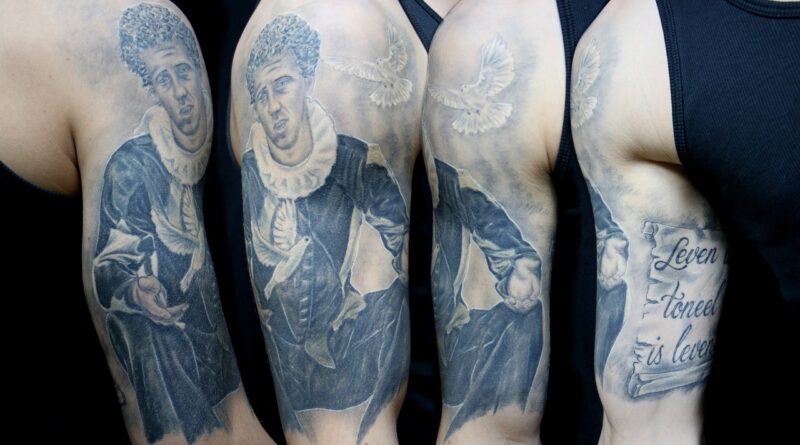
Is a Classical Tattoo the Most Timeless Choice for Your Next Piece?
Why Is a Classical Tattoo Still a Strong Choice?
A classical tattoo gives you a design language that has already passed through many changes in taste. If you are comparing tattoo styles, this style sits close to sculpture, mythology, architecture, and old master drawing. It can look serious, personal, and clean without trying too hard. That matters when the design has to stay on skin for decades, not just look good on the day of the appointment.
Timeless Visual Language
Classical design often takes ideas from Greek and Roman sculpture, laurel wreaths, columns, drapery, myth figures, and well-balanced human forms. The British Museum notes that later artists found new ideas in Greek and Roman sculpture, and that point also makes sense for tattoo design. A classical piece does not have to copy a museum object line by line. It can use the calm face of a bust, the curve of a marble hand, or the movement of a carved robe and turn that into body art.

Broad Appeal Across Ages and Places
Tattooing is no longer a small subculture in many Western markets. Pew Research Center reported in August 2023 that 32% of U.S. adults had at least one tattoo, and 22% had more than one. That gives buyers more reason to be careful with design choices. When tattoos are common, a piece with real art references can stand out in a quiet, direct way.
Lower Risk of Trend Regret
Pew Research Center also found in 2023 that about 24% of tattooed U.S. adults said they regretted one or more tattoos. A classical tattoo cannot remove all risk of regret, and no honest artist would say it can. Still, a design built on proportion, meaning, and clean drawing usually has a better chance of aging well than a meme, a short trend, or a symbol picked in a hurry late at night. One small test helps: if the design still feels right after it has been pinned on a wall for two weeks, that is often a good sign.
What Makes a Tattoo Classical Rather Than Just Old?
“Classical” is not the same as “vintage.” It does not only mean old-looking ink or faded flash. A classical tattoo usually has a clear link to ancient Mediterranean art, Renaissance study, museum sculpture, or academic drawing. The style feels controlled, even when the subject has drama or strong emotion.
Greco Roman Reference Points
Common references include Apollo, Athena, Venus, Medusa, Nike, Hercules, Roman emperors, marble busts, Corinthian columns, amphora shapes, and laurel leaves. The Metropolitan Museum of Art has written about Roman admiration for Classical Greek art, especially as Roman patrons collected, copied, and adapted Greek forms. For tattoo work, that gives you a wide visual group to choose from. You can go with Greek myth, Roman portrait style, or a mixed fine-art approach and still keep the classical mood.
Balance, Proportion, and Clear Line Work
Classical tattooing needs balance. A face should not look squeezed, and a hand should not end up looking like a melted glove. Drapery needs flow, not a pile of small marks. Artists often build these tattoos with firm outlines, soft black and grey shading, and enough open skin so the design can breathe. On a forearm, that may mean a bust from shoulder to collarbone. On a thigh, it may mean a statue fragment with leaves and a broken column.
Restraint Over Novelty
The strongest classical pieces usually avoid packing in too many ideas. A Medusa head, a clock, a lion, smoke, roses, a quote, and lightning can start to look like a poster instead of a tattoo. Restraint helps the eye settle on the main image. If you want meaning, choose one main figure and one or two supporting motifs. A laurel can suggest honor. A broken column can suggest endurance. A torch can suggest knowledge or memory.
Which Classical Tattoo Ideas Work Best on Real Skin?
Skin is not marble, paper, or a phone screen. It moves, stretches, tans, ages, and heals differently from person to person. Good classical tattoo ideas work with that reality. They start with strong shapes, then add detail where the skin can hold it. If the design only looks good at 300% zoom on a tablet, it may not be ready for skin.
Statue Portraits and Busts
Portrait-style busts are among the most common classical choices. They work because the face, neck, hair, and shoulders give the tattoo a clear outside shape. A calm Apollo, a stern Athena, or a soft Venus can fit the upper arm, outer forearm, calf, or thigh. Ask the artist to keep the eyes readable and not make the mouth too small. Tiny lips and deep shadows can blur after healing, especially when the piece is undersized.
Laurel, Acanthus, and Column Details
Not every classical piece has to be a full figure. Laurel wreaths, acanthus leaves, urns, column capitals, and broken marble fragments are useful for smaller tattoos or filler. These details can also frame an older tattoo. A thin laurel around a date can look cleaner than a heavy border, and acanthus leaves can soften a shoulder cap without feeling like a standard floral piece.
Myth Figures With Personal Meaning
Myth tattoos work best when the story matches your own reason for getting the piece. Athena can stand for wisdom and strategy. Nike can suggest victory. Medusa is often chosen for protection, survival, or defiance, though meanings change by wearer and culture. Do not let short online captions make the decision for you. Read a short museum or university source first, then choose the version that fits your life.
- Choose one main figure if the tattoo is smaller than a palm.
- Use supporting motifs only when they improve the story.
- Ask for a stencil view from normal standing distance, not just close up.
How Should You Choose Placement and Size?
Placement can make or break a classical tattoo. The design often needs space for faces, folds, shadows, and negative space. A good placement should follow the natural shape of your body instead of fighting it. This is where a skilled artist earns trust, because a drawing that looks right on a flat sheet may feel awkward once it wraps around an arm.
Forearm and Upper Arm for Clean Reading
The forearm works well for busts, small statues, torches, and laurel designs because people can read the piece quickly. The upper arm gives more curve and space, especially for shoulder-to-bicep work. If your job has dress rules, the upper arm is easier to cover. That practical detail can matter after the excitement of booking day has passed.
Chest, Back, and Thigh for Larger Scenes
If you want a full myth scene, go larger. The chest can hold symmetrical wings, a central bust, or a strong face. The back can handle temple architecture, multiple figures, and broad shading. The thigh is often better than people expect because it offers a wide and fairly flat surface. Larger work costs more and takes more time, but it lets the artist keep the detail clean.
Hands, Neck, and Ribs With More Caution
Hands and necks are visible and still carry social weight, even now that tattoos are more accepted. Ribs can look clean and elegant, but the pain and skin movement can make long sessions harder. The U.S. FDA reminds consumers that permanent tattoos are designed to last a lifetime and can be difficult to remove. That is not meant to scare anyone. It is just a plain check before putting a classical face somewhere you cannot easily hide. See also: tattoo care.
Is Black and Grey Better Than Color for a Classical Tattoo?
Black and grey is common for classical work because it can echo marble, charcoal, and old engraving. Color is not wrong, though. The real question is whether the palette supports the design and whether the ink choice is safe and suitable for your skin tone. Nice color does not mean much if the tattoo heals poorly.
Black and Grey for Marble Like Depth
Black and grey can give the look of carved stone. Smooth shading helps cheeks, noses, curls, and folds feel more sculptural. It also fits many wardrobes and skin tones. For a first classical tattoo, black and grey is often the safer visual choice because the artist can focus on form, contrast, and long-term readability.
Limited Color for Antique Warmth
Small touches of warm gold, muted red, olive green, or blue can work well. Think of a laurel with a soft olive tint or a small red thread around a wrist. Avoid turning a classical design into a rainbow unless that is the clear purpose. Getty Museum materials on Greek and Roman influence show that classical motifs have been reused in many later decorative settings, so a little color can feel historic instead of trendy when it is handled with care.
Ink Safety Comes Before Palette
Ink safety needs real attention. The U.S. FDA stated in 2023 that firms conducted 18 recalls of tattoo inks contaminated with microorganisms between 2003 and 2023. The FDA also notes that sealed bottles can still be contaminated and that tattoo pigments are not approved for injection into the skin for cosmetic purposes. The practical point is simple: choose a licensed studio, ask about ink brands, avoid bargain setups, and follow aftercare. The American Academy of Dermatology also advises watching for reactions such as rash, swelling, scarring, or skin conditions around a tattoo and seeking medical care when symptoms look unusual.
How Can You Brief an Artist Without Overdirecting?
A clear brief saves time, but too much control can make the work stiff. You want to give your artist direction, not lock every line in place. Classical tattooing needs drawing skill, skin experience, and good judgment about what to remove. In many cases, the right choice is deleting a tiny decorative line that would only heal as a smudge.
Two or Three Reference Images
Bring two or three references, not a full folder of random images. One can show the main subject, one can show shading style, and one can show placement. Museum images, sculpture photos, and healed tattoo photos are usually more useful than heavily edited social posts. Tell the artist what you like in each image, such as the face angle, the soft shadow, the broken marble edge, or the oval frame.
A Clear Meaning and Mood
Give the mood in plain words. Calm, protective, severe, romantic, memorial, or victorious tells the artist more than a long explanation. If the tattoo honors a person, say whether it should feel private or bold. Pew Research Center found in 2023 that 69% of tattooed U.S. adults said honoring or remembering someone or something was a reason for getting tattooed. That fits classical work well, because myth and sculpture can carry memory without using a literal portrait.
A Practical Aftercare Plan
Before the appointment, ask how long the session may take, how many passes are likely, and what aftercare the studio recommends. Plan loose clothing, clean bedding, and a few quiet days after longer work. Skip swimming and strong sun while healing if your artist tells you to. It sounds basic, but basic care is often what keeps fine shading clean.
FAQ
Q1: Is a classical tattoo only Greek or Roman? A: No. Greek and Roman art are major roots, but classical tattoo design can also borrow from Renaissance drawing, academic sculpture studies, old engravings, and architectural ornament.
Q2: Does a classical tattoo have to be black and grey? A: No. Black and grey is popular because it suits marble-like shading, but limited color can look good if it supports the subject and stays readable after healing.
Q3: What size is best for a classical tattoo? A: For faces or statue busts, medium to large usually works best. Very small classical tattoos often lose facial features, hair texture, and shadow detail as they age.
Q4: Is Medusa a good classical tattoo idea? A: Yes, if the meaning fits you. Medusa can suggest protection, survival, power, or transformation. Choose the expression and style carefully, because the face sets the whole tone.
Q5: How do you avoid regretting a classical tattoo? A: Take time with the concept, use strong references, choose an artist with healed examples, avoid overcrowding, and place the tattoo where it fits your daily life.