

Classical tattoo guide to timeless styles and design choices
What a classical tattoo means today
A classical tattoo usually refers to a design that draws on long-established visual traditions rather than short-lived trends. In everyday search language, the phrase often points in three directions: American traditional tattoos with bold outlines and familiar flash motifs, older cultural tattoo traditions such as Japanese or Polynesian work, or tattoos based on classical art from Greece and Rome.
The distinction matters. Each route has different visual rules, meanings, and planning requirements. If you are considering a classical tattoo, start by deciding whether you want a durable old-school piece, a historically inspired art design, or a culturally specific tattoo that calls for deeper research and a specialist artist.
For readers comparing broader categories, our tattoo styles section offers more style-focused guides.
The three main interpretations of classical tattoo style
The phrase classical tattoo is useful, but it is not very precise. Unlike “American traditional” or “blackwork,” it is not a single technical category with one fixed rulebook. Many planning problems start here: a client may bring a marble-statue reference while an artist hears “classic traditional.” Clarifying the visual language before booking helps avoid a design that looks right in description but wrong on skin.
American traditional and old-school classic tattoos
In Western tattoo language, “classic” often means American traditional or old-school. This style is known for heavy black outlines, solid color, simplified shading, and motifs that stay readable as the skin changes over time. Maritime and military history shaped many of its best-known images, including anchors, swallows, eagles, clipper ships, daggers, roses, hearts, panthers, and banners.
Public history sources such as the U.S. Naval History and Heritage Command connect sailor tattoo culture with the spread of tattooing through maritime communities. PBS history material on tattooing also describes how machinery, flash sheets, and color helped create a distinctly American tattoo language. The practical lesson is straightforward: old-school classical tattoos work because they are built for clarity, not microscopic detail.
Classical art tattoos based on Greece and Rome
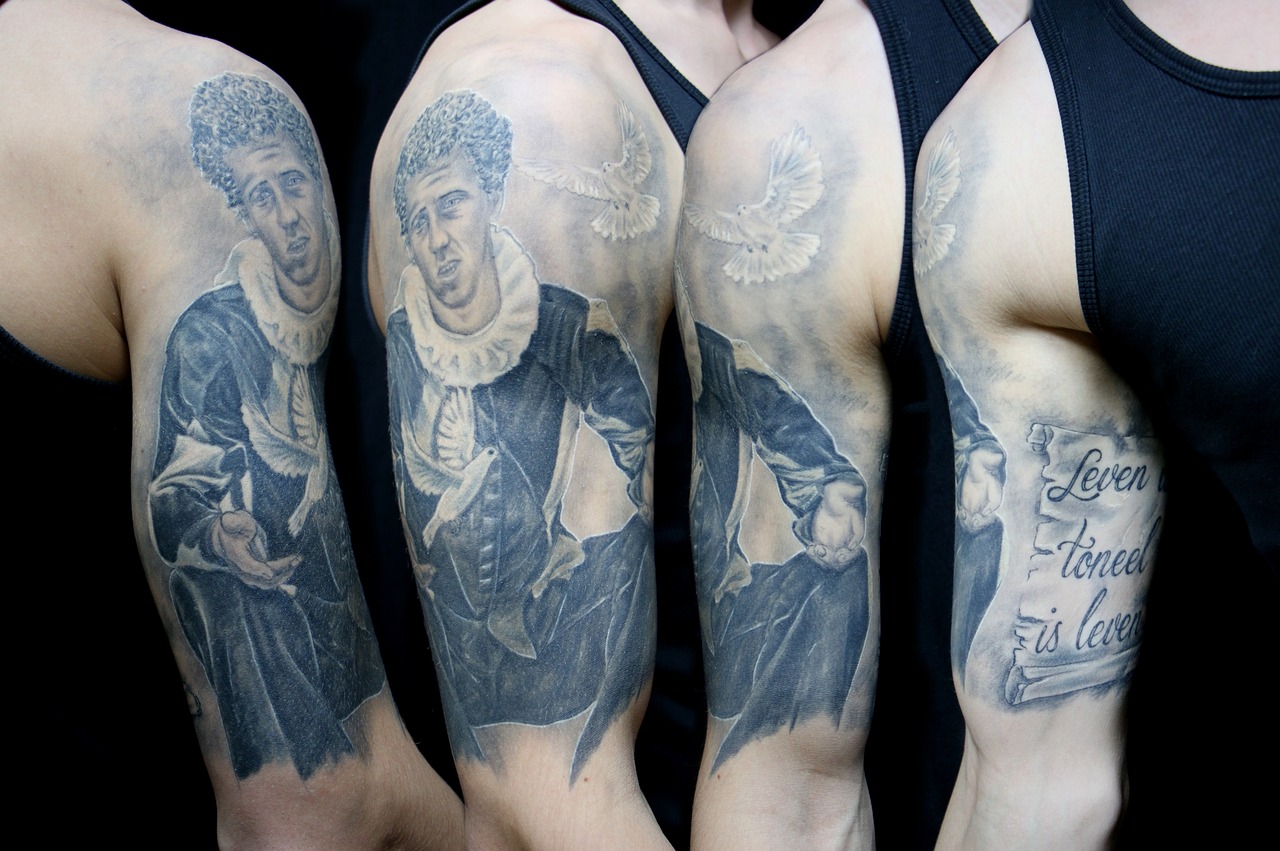
For many clients, a classical tattoo means imagery from ancient Greek and Roman art: marble busts, statues, columns, laurel wreaths, mythological figures, amphora shapes, or fragments of architecture. Getty Museum education material notes that ancient Greek and Roman sculpture placed strong emphasis on the human form, while classical and later neoclassical art often favored idealized anatomy and balanced proportions.
On skin, this influence usually appears as black-and-grey realism, fine-line work, engraving-style shading, or illustrative composition. These tattoos can look refined and museum-like, but they depend heavily on scale. A tiny Apollo bust, for example, may lose the nose, eyes, curls, and shadow structure after healing. Classical art tattoos generally need enough space for facial planes, fabric folds, and contrast to remain legible.
Culturally rooted traditional tattooing
A third meaning of classical tattoo points to older living traditions, including Japanese irezumi, Polynesian tatau, Indigenous tattooing, and other regional practices. Smithsonian and National Geographic coverage of tattoo history emphasizes that tattoos have carried religious, protective, social, genealogical, and status-related meanings across many cultures. In Polynesian contexts, tattooing can be connected with identity, story, knowledge, and community, not just decoration.
This category needs particular care. Some motifs are widely adapted in modern studios, while others are culturally specific, sacred, family-linked, or inappropriate to copy casually. When a design comes from a living tradition, research should go beyond image boards. A respectful plan includes understanding the origin of the motif, asking whether it is appropriate for outsiders, and choosing an artist with demonstrated experience in that tradition.
Design elements that make a tattoo feel classical
Whether the reference comes from a sailor flash sheet or a Roman statue, classical tattoos tend to share a few practical qualities. They avoid excessive novelty, use stable compositions, and rely on symbols that have survived repeated reinterpretation. The goal is not to make a tattoo look old for its own sake, but to make it feel anchored, intentional, and readable.
- Clear silhouette: The design can be recognized from a normal viewing distance.
- Controlled detail: Decorative elements support the main image instead of crowding it.
- Strong contrast: Black, skin breaks, and shading separate the subject from the background.
- Symbolic weight: Motifs such as laurel, eagles, snakes, daggers, roses, waves, masks, or mythological figures carry meaning beyond decoration.
- Balanced composition: Classical tattoos often look strongest when the design follows the body’s natural flow rather than floating like a sticker.
Color choices depend on the branch of classical style. American traditional tattoos often use saturated reds, yellows, greens, and blues. Greco-Roman art tattoos usually lean toward black-and-grey, stone-like shading, or restrained color accents. Japanese and Polynesian-influenced work follows its own compositional logic, often using large fields, repeated pattern, wind, waves, clouds, or body-mapped forms.
Motifs and meanings worth considering
No motif has one universal meaning. A rose in American traditional tattooing may suggest love, beauty, grief, or remembrance. A laurel wreath may point to victory, honor, learning, or classical antiquity. A snake can represent danger, rebirth, healing, wisdom, or temptation depending on the surrounding imagery. Meaning is strongest when the symbol, style, and placement support each other.
| Motif | Common classical association | Style fit | Planning note |
|---|---|---|---|
| Anchor | Stability, sea travel, endurance | American traditional | Works well at small to medium sizes if the outline is bold. |
| Swallow | Travel, return, distance, loyalty | American traditional | Often paired symmetrically on chest, shoulders, or arms. |
| Rose | Love, beauty, memory, contrast with danger | Traditional, neo-traditional, blackwork | Petal shapes need breathing room to age cleanly. |
| Laurel wreath | Victory, honor, scholarship, antiquity | Classical art, fine line, blackwork | Can become weak if drawn too thin or too small. |
| Greek or Roman bust | Ideal form, philosophy, mythology, history | Black-and-grey realism, engraving, illustrative | Needs enough scale for facial structure and shadow. |
| Dragon, koi, waves | Transformation, force, perseverance, movement | Japanese traditional | Large placement and an experienced specialist matter. |
| Geometric cultural pattern | Identity, lineage, protection, place-based meaning | Polynesian and other traditional systems | Do not copy sacred or identity-specific motifs without context. |
The table is a starting point, not a substitute for a consultation. A good artist will ask what the symbol means to you, how much space is available, and whether the reference belongs to a style that should be handled with particular cultural care.
How to choose the right placement
Placement can decide whether a classical tattoo feels powerful or cramped. Old-school designs are relatively forgiving because their outlines are bold, but even they need enough space for color and negative space. Classical statue tattoos are less forgiving: faces, fingers, curls, drapery, and broken marble edges can blur if reduced too far.
Arms and shoulders
The upper arm, forearm, and shoulder are versatile choices for classical tattoos. An eagle, dagger, rose, or anchor can sit cleanly on the arm, while a bust or mythological portrait can use the outer forearm or upper arm as a framed panel. The shoulder works well for rounder motifs such as wreaths, roses, shields, or sun-like compositions. See also: tattoo care.
Chest and back
The chest suits symmetrical classical work: paired swallows, facing animals, a central sacred heart, or a mythological figure framed by ornament. The back offers the most space for large Japanese compositions, Greco-Roman scenes, full statues, or complex architectural layouts. If the design includes multiple figures, the back usually reads better than trying to force the same idea onto a narrow limb.
Hands, neck, ribs, and small placements
Small placements can work for simple symbols such as a small laurel, single rose, tiny column, or bold flash icon. They are not ideal for detailed sculpture references. Hands and neck are also highly visible and may fade faster because of sun exposure, movement, and daily wear. For a first classical tattoo, a more forgiving placement is usually easier to live with and easier to maintain.
Classical tattoo versus traditional, neo-traditional, and realism
Because “classical” overlaps with several categories, comparing nearby styles helps narrow the decision. Traditional tattooing values boldness and longevity. Neo-traditional expands the palette, line variation, and detail while keeping a strong illustrative structure. Realism focuses on accurate light, anatomy, texture, and depth. Classical art tattoos often borrow from realism or engraving, while classic old-school tattoos stay closer to flash tradition.
| Style label | Visual traits | Best for | Possible limitation |
|---|---|---|---|
| American traditional | Bold outline, limited color, simplified shading | Readable symbols, flash designs, durable pieces | Less suited to subtle facial realism |
| Neo-traditional | Bold structure with more color, detail, and dimension | Animals, portraits, ornate flowers, updated classics | Can lose the old-school simplicity some clients want |
| Black-and-grey realism | Smooth shading, depth, accurate anatomy | Statues, mythological portraits, sculpture fragments | Needs scale and a specialist artist |
| Engraving or etching style | Line-based shading, antique print feeling | Classical art, architecture, historical references | Fine lines need careful spacing to age well |
| Japanese traditional | Large composition, strong flow, symbolic background | Sleeves, back pieces, bodysuit-inspired work | Requires cultural and stylistic knowledge |
Safety, aging, and consultation questions
A classical tattoo is meant to last, so planning should include health and aging as much as symbolism. The U.S. Food and Drug Administration has warned that tattoo risks can include infections, allergic reactions, granulomas, keloid formation, MRI-related swelling or burning in rare cases, and difficulty with removal. In 2024, the FDA also issued final guidance addressing insanitary conditions and microbial contamination risks in tattoo inks. These safety notes do not mean people should avoid tattoos; they mean clients should treat tattooing as a permanent body procedure, not a casual accessory.
Before booking, ask practical questions:
- Does the artist have healed examples of this exact style, not only fresh photos?
- Will the design remain readable at the proposed size?
- Which details can be simplified without losing the idea?
- What aftercare instructions does the studio provide?
- How does the studio handle sterile needles, single-use supplies, ink caps, and hygiene?
- If the design uses cultural motifs, has the artist explained their origin and appropriateness?
Fresh tattoos often look sharper online than healed tattoos do months or years later. For classical designs, healed work is especially important because the appeal depends on structure. Bold outlines, well-spaced shading, and clean negative space usually age better than crowded micro-detail.
Frequently asked questions
Is a classical tattoo the same as an American traditional tattoo?
Not always. Many people use “classical” or “classic” to describe American traditional tattoos, but the phrase can also refer to Greco-Roman art tattoos or older cultural tattoo traditions. Bring visual references so the artist understands which meaning you intend.
Are classical tattoos good for a first tattoo?
They can be, especially if the design is clear, appropriately sized, and placed somewhere easy to heal. A simple rose, anchor, laurel, or traditional animal design is usually more beginner-friendly than a small, highly detailed statue portrait.
Do classical art tattoos have to be black and grey?
No, but black and grey is common because it echoes marble, drawing, engraving, and sculpture references. Color can work if it supports the concept, but overly soft tones may reduce the timeless, carved quality many clients want.
How small can a classical tattoo be?
Simple symbols can be small, but detailed classical designs need space. Busts, mythological faces, architectural fragments, and draped figures should not be reduced so far that the eyes, shadows, and line spacing collapse after healing.
How can I make a cultural traditional tattoo respectful?
Start with research, avoid copying sacred or identity-specific motifs, and choose an artist who understands the tradition. If a symbol is tied to lineage, ceremony, rank, or community role, it may not be appropriate as a decorative design.
Final thoughts
The strongest classical tattoo is not simply old-looking. It is a design with structure, context, and enough visual discipline to age well. Decide first whether your reference point is old-school flash, Greco-Roman art, Japanese composition, Polynesian pattern, or another traditional system. Then choose an artist whose healed work shows they can handle that specific visual language. A classical tattoo feels timeless when it is well chosen, well placed, and well made.