
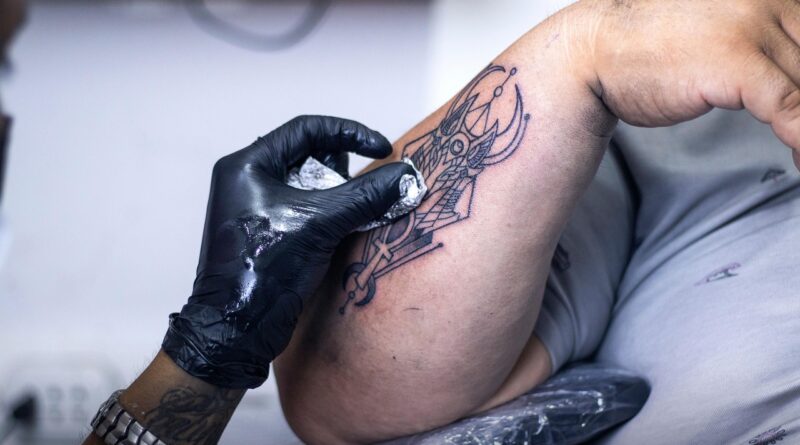
What Does a Cross Tattoo for Men Really Mean?
Why Is a Cross Tattoo for Men Still So Popular?
A cross tattoo for men can look simple when you first see it, but the meaning is often personal. It may relate to faith, family, loss, discipline, or a hard time a man got through. If you are comparing symbols before booking an appointment, the tattoo meanings section can help you match design ideas with real symbolism.
Public data also shows why this topic keeps coming up. Pew Research Center reported in August 2023 that 32% of U.S. adults have at least one tattoo, based on a July 2023 survey of 8,480 adults. The same report found that 27% of men have a tattoo. It does not show how many men pick cross designs, because reliable public motif-level data is not available. Even so, tattoos are now common, and a cross is still one of the easiest symbols to recognize.

Faith That Reads Fast
The cross is closely tied to Christianity, where it points to the crucifixion of Jesus and the hope connected with redemption and resurrection. For many men, this design shows faith without needing a long line of text. A small cross near the wrist can feel quiet and personal. A larger cross on the chest can feel stronger and more open, even if it stays under a shirt most days.
Clean Shape for Masculine Styling
The cross works well on the body because the shape is balanced and direct. The vertical and horizontal lines fit the forearm, bicep, chest, back, and calf without forcing the design. It can stay plain black, take stone texture, use shading, or become part of a sleeve. Not every tattoo needs many symbols in one space; sometimes the better design is the one that stays clean.
Personal Memory Without Heavy Detail
A cross can also carry grief, thanks, or respect for someone important. Pew Research Center found that 69% of tattooed U.S. adults say honoring or remembering someone or something is a major or minor reason for their tattoos. That matters here because many cross tattoos are chosen after a death, recovery, military service, family promise, or private turning point. In these cases, the meaning is often stronger than the amount of detail in the artwork.
What Does a Cross Tattoo for Men Usually Mean?
There is no one meaning that fits every man. The same cross can mean church, pain, survival, a father’s memory, a promise to stay sober, or a reminder to live better. The design should start with the meaning first, then the style. If the meaning is weak, the tattoo may feel like a logo after a few years.
Faith and Daily Commitment
For Christian wearers, a cross tattoo often points to belief, prayer, sacrifice, and spiritual identity. A plain Latin cross can feel humble and clear. A crucifix, which includes the figure of Jesus, carries a more specific devotional meaning and often feels more serious. If you belong to a certain denomination, it is worth checking whether a style has a special use before copying it from a random flash sheet.
Protection After Hard Seasons
Some men choose a cross as a sign of protection. It may mark a car accident, addiction recovery, a dangerous job, or a time when life nearly broke down. In that case, the tattoo does not need to be loud. A small cross on the inner forearm, ribs, or shoulder can work as a private reminder to keep going when things get rough.
Family, Loss, and Remembrance
When a cross honors someone, names and dates need careful planning. Tiny script can blur, and too many dates can make a clean design look packed. A simple cross with one name, initials, a birth year, or a short phrase usually ages better. The point is to keep the memory clear, not to place a full family record on a small area of skin.
Which Cross Tattoo Styles Work Best for Men?
Style changes how the tattoo feels. A thin-line cross feels quiet, while a blackwork cross looks heavier and more direct. A Celtic cross can point to heritage, and a rosary cross may show Catholic devotion. Before choosing, look at healed tattoos, not only fresh photos, because fresh ink always looks cleaner than it will after months of wear.
Simple Latin Cross
The simple Latin cross is the most direct option. It suits men who want a clean faith symbol, a memorial, or a minimalist tattoo. On the wrist, it feels personal; on the forearm, it is more visible; on the chest, it can connect with the heart. The main risk is that it may look too plain, so line weight and placement matter more than people think.
Celtic Cross With Knotwork
A Celtic cross usually includes a circle and knot-like patterns. Many men choose it for Irish or Scottish family roots, Christian faith, or both. The detail needs enough room, so it usually works better on the upper arm, shoulder, calf, or back than on a small wrist area. If the knots are too tight, they can heal into a dark patch, so a good artist will simplify the pattern before tattooing.
Rosary, Wings, Script, or Skull Details
Extra elements can change the tone of the cross tattoo. A rosary can make it feel devotional, while wings may point to a lost loved one. Scripture or short script can add context, but it should still be readable at a normal distance. Skulls, flames, thorns, or broken stone can give the design a darker look, often linked with mortality, struggle, and toughness. Use the details that support the story, and leave out the ones that only fill space.
Where Should You Place a Cross Tattoo?
Placement decides who sees the tattoo and how well the design holds up. Men often choose the forearm, chest, upper arm, back, hand, neck, or calf. Each area sends a different message. It also affects pain, healing, work visibility, and how much detail can stay clear over time.
Forearm for Clear Visibility
The forearm is one of the most common placements because it gives the cross a natural vertical frame. It is easy to show, easy to cover with long sleeves, and usually works well for clean linework. A cross on the outer forearm looks more open, while the inner forearm feels more personal. For many first tattoos, this area is a practical middle choice.
Chest for Private Faith
A chest cross often connects with the heart, devotion, and memory. It can be small near the collarbone or larger across the sternum. The chest is more private in daily life, so it fits men who want meaning without constant attention. It can hurt more than the forearm, especially near bone, but a centered design can look very solid when done well.
Shoulder, Back, or Neck Choices
The shoulder and upper back give more space for shading, wings, scripture, and larger cross shapes. The neck and hand are different because they are seen right away. These high-visibility spots can affect first impressions in conservative workplaces. Pew Research Center reported in 2023 that 80% of U.S. adults think society has become more accepting of people with tattoos over the past 20 years, but acceptance still changes by job, family, and town. See also: tattoo care.
How Should You Plan a Cross Tattoo Before the Appointment?
Planning helps reduce regret. Pew Research Center found that 24% of tattooed Americans say they regret one or more tattoos. That does not mean you should think so much that the idea dies. It means you should slow down enough to choose the right size, style, and artist.
Match Scale to Line Weight
Small tattoos need simple lines. Larger tattoos can hold texture, shadows, banners, beads, thorns, or background clouds. A fine-line cross on the finger may look good on the first day, but it can fade faster because hands get used so much. A bold black cross on the forearm may age better, but it also has a stronger look. Ask your artist to show healed examples in a similar size before you decide.
Respect Religious and Cultural Context
The cross has moved through many cultures and settings. The Smithsonian National Museum of American History notes that Lorraine or Patriarchal double-barred crosses were introduced by missionaries to Indigenous communities and later appeared in fur trade contexts, where the silver itself could matter as much as the religious meaning. That example is a reminder that cross designs are not empty shapes. If you choose a specific cross type, learn what it has meant to real people before putting it on your skin.
Choose Studio Safety and Aftercare
Safety is not the exciting part, but it is part of the job. The U.S. Food and Drug Administration says tattoo inks can be linked with infections and allergic reactions, and even sealed inks can be contaminated. The American Academy of Dermatology says reactions may happen right away or even years later, and warning signs include spreading redness, worsening pain, pus, fever, or chills. Choose a licensed studio, follow aftercare, and get medical help if healing does not look right.
What Design Details Make a Cross Tattoo More Personal?
Personal does not always mean complex. A tattoo can feel personal because of placement, one small word, a date, a certain angle, or a style tied to your background. The aim is to make the tattoo yours without turning it into a crowded poster. Clean choices usually age better and are easier to understand.
Names, Dates, and Short Words
For memorial tattoos, keep the text limited. One name, initials, or a date can be enough. A phrase like “Faith,” “Grace,” “Saved,” or “Still Here” can work if it fits your story. Keep script large enough to heal clearly. If a phrase needs a magnifying glass, it probably belongs in a notebook rather than on skin.
Blackwork, Shading, and Negative Space
Blackwork can make a cross feel strong and long-lasting. Soft shading can add depth, especially with stone, wood, or light rays. Negative space can form the cross inside a dark panel, which gives a clean modern look. These choices are not only decoration; they set the mood. A rough wooden cross feels different from a polished geometric one.
Sleeve and Cover-Up Potential
If you might build a sleeve later, tell your artist before the first stencil goes on. A floating cross in the middle of the arm can be harder to connect later. If you need a cover-up, a cross can work well because the vertical form and dark shading can hide older lines. Still, not every old tattoo can disappear cleanly, so be ready for some compromise.
FAQ
Q1: Is a Cross Tattoo for Men Always Religious? A: No. Many cross tattoos are religious, but others mark loss, protection, family, recovery, or personal strength. The meaning depends on the wearer and the design details.
Q2: What Is the Best Placement for a First Cross Tattoo? A: The forearm, upper arm, shoulder, and chest are strong first choices. They offer enough space, age well, and can be covered more easily than the hand or neck.
Q3: Should a Cross Tattoo Be Simple or Detailed? A: Choose simple if you want a clean symbol that ages well. Choose detailed if the tattoo is large enough for knotwork, shading, rosary beads, wings, or script.
Q4: Can You Add a Name or Date to a Cross Tattoo? A: Yes, but keep it readable. Short names, initials, or one date usually work better than long text, especially on small forearm, wrist, or chest designs.
Q5: How Do You Avoid Regret With a Cross Tattoo? A: Pick a meaning that will still matter in five years, review healed work from the artist, avoid tiny crowded details, and choose a studio that follows safe tattoo practices.