
Celtic knot tattoo designs and meanings explained
What Celtic knot tattoos usually mean
Celtic knot tattoo designs are popular because they combine strong visual structure with meanings that can feel personal without being overly literal. Most knotwork tattoos use continuous, interlaced lines to suggest continuity, connection, loyalty, protection, faith, ancestry, or the cycles of life. The important point is precision: many meanings attached to Celtic knots today are modern interpretations, not fixed ancient translations. A knot does not work like an alphabet in which every loop has one universal definition. The strongest designs usually start with a broad theme, then use shape, placement, scale, and added details to make that meaning clear.
For readers exploring tattoo meanings, Celtic knotwork is a flexible starting point. It can feel spiritual without being tied to one belief system, ancestral without requiring a family crest, and decorative without losing symbolic depth. The goal is to choose a design that respects the style’s historical roots while still working as a tattoo on the body today.
Why knotwork became such a lasting tattoo motif
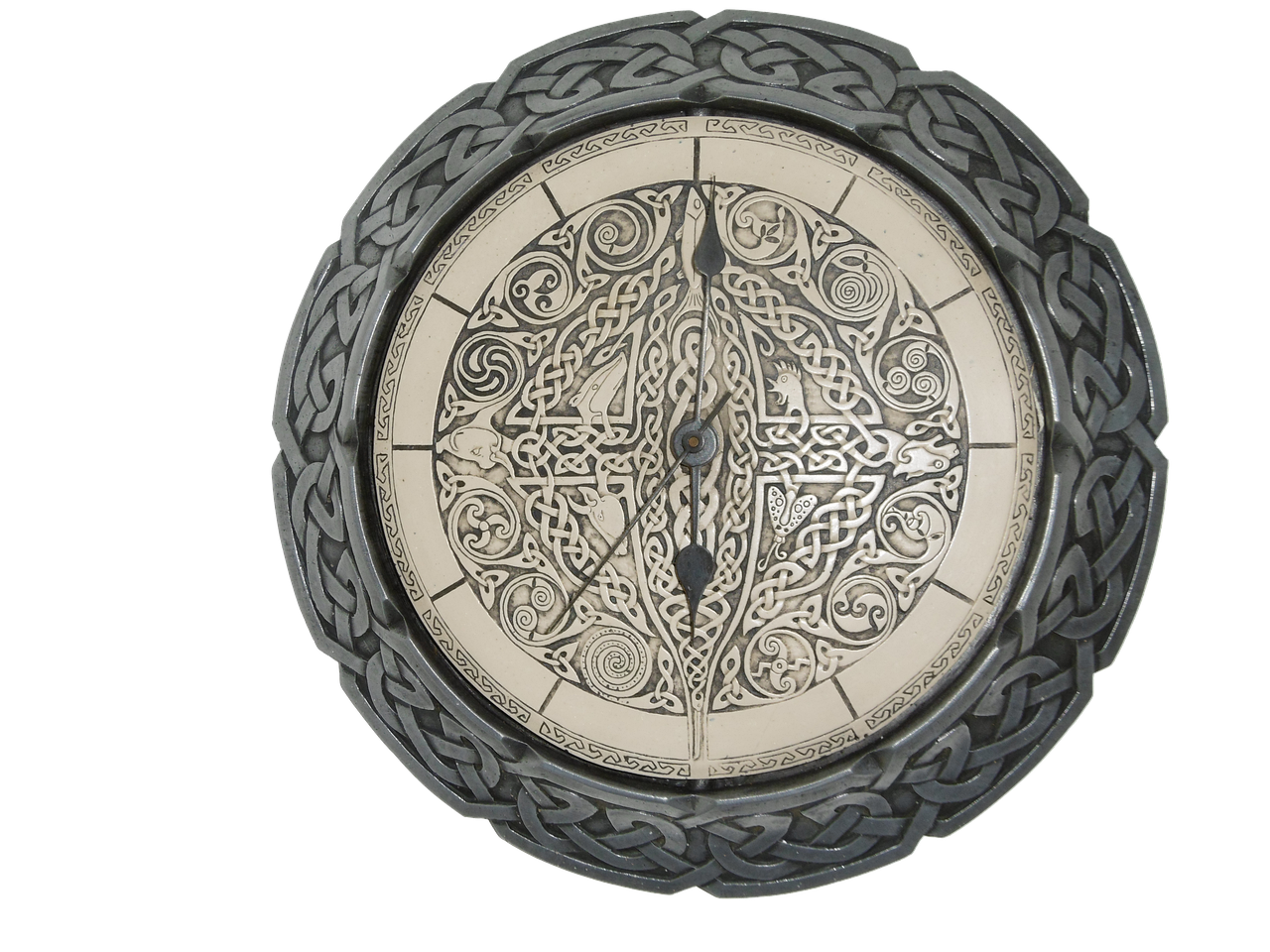
Celtic knotwork is closely associated with early medieval Insular art, especially the interlaced decoration found in manuscripts, stone crosses, metalwork, and carved objects from Ireland and Britain. One of the best-known examples is the Book of Kells, an illuminated Gospel manuscript known for dense ornamental patterns, including interlace, spirals, and stylized animal forms. Tattoo culture has adapted these visual traditions into bands, crosses, sleeves, shoulder pieces, and small symbolic designs.
The style also suits tattooing when it is planned carefully. Knotwork has a clear line rhythm, and that rhythm can wrap around an arm, wrist, ankle, or shoulder without needing a central image. A compact knot can stand alone as a small tattoo, while a larger design can support shading, negative space, dotwork, or geometric framing.
Its emotional appeal is just as important. Because knots appear to have no clear beginning or end, they are often used to represent commitment, memory, endurance, and interconnected lives. That visual logic is easy to understand even when the viewer does not know the exact name of the pattern.
Common Celtic knot tattoo designs
Many tattoo concepts are described under the broad label of Celtic knotwork. Some are rooted in historic decorative traditions, while others are modern tattoo terms inspired by Celtic-style interlace. The distinction matters because a respectful tattoo does not need to claim more historical certainty than the design can support.
Trinity knot tattoo
The trinity knot, often called the triquetra, is one of the most recognizable Celtic-inspired tattoo designs. It usually has three connected points formed by a single continuous line. In Christian contexts, it may be associated with the Holy Trinity. In modern symbolic tattoos, people also use it for family bonds, mind-body-spirit balance, past-present-future, or three important people. A circle around the triquetra can strengthen the idea of unity or eternity.
Celtic cross with knotwork
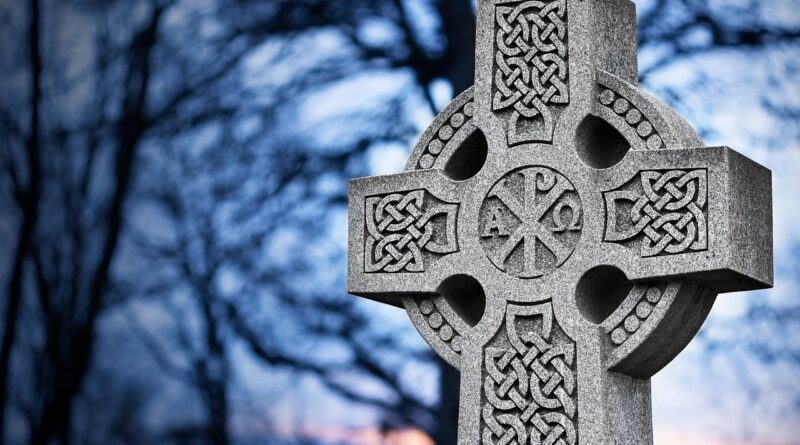
A Celtic cross tattoo combines a cross shape with a ring or halo and often includes interlaced patterns inside the arms or around the center. It can carry religious meaning, cultural identity, memorial symbolism, or a connection to Irish and Scottish heritage. Because the cross is a sacred symbol for many people, the design works best when the wearer is clear about whether the tattoo is devotional, ancestral, memorial, or primarily artistic.
Endless knot or continuous knot tattoo
An endless Celtic-style knot uses repeating loops that seem to continue without a break. It is commonly chosen for endurance, long-term love, friendship, recovery, or a life path that keeps moving despite setbacks. This is one of the most versatile options because it can be drawn as a bracelet, a ring-like finger tattoo, a shoulder band, or a central emblem.
Shield knot tattoo
Shield knot designs are usually built around a square, cross-like, or symmetrical form. In modern tattoo language, they are often associated with protection, strength, and grounding. The protection meaning is popular, but it should be framed as a contemporary interpretation unless a specific historical source is being used. As a tattoo, the shield knot works well on the chest, upper arm, back, or forearm because symmetry helps the design read clearly.
Lover’s knot and family knot tattoos
Interwoven double-line knots are often used for partnership tattoos, wedding tattoos, sibling tattoos, or parent-child designs. These tattoos may include initials, birth flowers, dates, or two different line weights to represent separate lives joined together. A family knot does not have to be historically named to be meaningful; its strength comes from the visible interlacing of separate paths.
Dara knot and tree-inspired knotwork
The Dara knot is widely described in modern tattoo culture as a design inspired by oak roots, with meanings such as strength, wisdom, and resilience. The word is often linked to the Irish word for oak, but many Dara knot tattoo examples are contemporary interpretations rather than standardized ancient patterns. For that reason, it is best treated as a modern Celtic-inspired design with tree symbolism.
Design choices that change the meaning
Two Celtic knot tattoos can use similar linework but communicate different ideas. Meaning depends on composition, placement, scale, and surrounding imagery.
- Closed circular knots often suggest wholeness, cycles, eternity, or a bond that continues.
- Vertical knot designs can feel like a personal path, spiritual growth, or a memorial marker.
- Band tattoos emphasize continuity and can represent commitment, ancestry, or protection around the body.
- Knots with animals add another symbolic layer, such as loyalty, courage, transformation, or guardianship.
- Knots with names or dates make the meaning more personal, but they can also make the design harder to adapt later.
- Minimal knot tattoos feel modern and subtle, while dense knotwork looks more traditional and ornamental.
Color changes the impression as well. Blackwork is the most common choice because it preserves the graphic strength of the lines. Green can emphasize Irish identity, though it is not necessary for a Celtic design. Red may suggest passion, sacrifice, or life force, while blue can feel calm, spiritual, or memorial. If the tattoo uses fine lines, color should be added carefully so the knot does not blur over time.
Best placements for Celtic knot tattoo designs
Knotwork needs enough space for the eye to follow the line. Placement should be chosen not only for symbolism but also for long-term readability. Very small knots can look elegant at first, but the negative spaces may close as the tattoo ages. A skilled artist will usually simplify the pattern when the placement is small. See also: tattoo care.
| Placement | Why it works | Design notes |
|---|---|---|
| Forearm | Clear visibility and enough length for vertical knots or bands | Good for trinity knots, memorial designs, and medium interlace |
| Upper arm | Allows wider bands and bolder linework | Works well for shield knots, Celtic crosses, and half-sleeve concepts |
| Chest | Strong location for personal or protective symbolism | Symmetrical knots and cross-based designs read well here |
| Back or shoulder blade | Offers space for complex patterns | Useful for large knotwork, animal knots, or tree-inspired designs |
| Wrist or ankle | Suitable for bracelet-style knots | Keep the pattern simple so it stays readable |
| Finger | Works for very minimal knot rings | Fine details may fade faster because of frequent use and skin turnover |
Curved areas such as the shoulder, elbow, knee, or ribcage require careful stencil placement. A knot that looks balanced on paper may stretch or compress on the body. For bands, the pattern should connect cleanly at the seam; otherwise, the break can distract from the idea of a continuous line.
How to choose a respectful and durable design
A good Celtic knot tattoo balances symbolism, cultural awareness, and tattoo craft. Start by deciding whether the design is mainly about heritage, faith, family, protection, grief, or personal resilience. Then choose the knot style that visually supports that idea. Avoid adding every possible symbol into one tattoo. Knotwork already carries detail, so overcrowding can weaken both the design and the meaning.
If cultural heritage matters to you, consider the difference between Celtic, Irish, Scottish, Welsh, and broader Insular influences. These categories overlap in popular tattoo language, but they are not identical. A person honoring Irish family history may prefer a knot paired with an Irish-language word, a Claddagh-inspired element, shamrock, or Celtic cross. Someone drawn to Scottish identity may choose knotwork alongside thistle, stag, or clan-related imagery. If you use language, names, or heraldic references, verify spelling and context before the appointment.
From a technical standpoint, line spacing is critical. Knotwork depends on over-under movement, so the tattoo needs enough separation between lines to show where the strands pass. Designs with extremely thin gaps may age into a dark mass. For long-term clarity, ask the artist to simplify small sections, use consistent line weight, and preserve open space.
It is also worth checking whether the artist has experience with geometric or ornamental tattooing. Celtic knot tattoos are unforgiving because small alignment errors can break the rhythm of the pattern. A portfolio with clean bands, symmetrical mandalas, blackwork, or ornamental linework is a good sign.
Meaning ideas by personal theme
The following examples can help translate a personal intention into a specific tattoo direction without claiming that every meaning is ancient or universal.
- For commitment: choose a continuous band, lover’s knot, or two-strand knot with balanced spacing.
- For protection: choose a shield knot, chest placement, upper-arm placement, or a knot framed by a circle.
- For family: use a trinity knot for three relatives, a custom interlace for multiple family members, or a knot with birth flowers.
- For grief or remembrance: use a vertical knot, Celtic cross, date, or subtle initials integrated into the pattern.
- For resilience: consider tree-inspired knotwork, root-like interlace, or a bold blackwork design.
- For spiritual balance: consider a triquetra, circular knot, spiral elements, or a simple symmetrical design.
The most effective tattoo often explains itself visually. If the design represents family, the viewer should feel connection. If it represents protection, the shape should feel strong and grounded. If it represents continuity, the line should visibly travel without confusion.
Frequently asked questions
Do Celtic knot tattoos have one exact meaning?
No. Celtic knot tattoos do not have one exact meaning that applies to every design. Many common interpretations, such as eternity, connection, and protection, come from the visual idea of interlaced lines rather than a single fixed code.
Are Celtic knot tattoos only for people with Celtic ancestry?
No, but context matters. Many people choose Celtic knotwork for its beauty or symbolism. If the tattoo includes religious imagery, clan references, language, or national symbols, it is more respectful to understand what those elements mean before wearing them permanently.
What is the best size for a Celtic knot tattoo?
The best size depends on detail. Simple knots can be small, but complex interlace usually needs medium or large scale so the over-under pattern stays readable. If you want a wrist, ankle, or finger tattoo, choose a simplified version.
Do Celtic knot tattoos age well?
They can age well when the design uses clear spacing, strong linework, and enough negative space. Tiny knots with crowded lines are more likely to blur. Bold blackwork and simplified patterns usually have better long-term readability.
Can I combine Celtic knotwork with other symbols?
Yes. Common additions include crosses, flowers, animals, trees, names, dates, moons, or geometric frames. The best combinations keep one main idea in focus so the tattoo does not become visually crowded or symbolically unclear.