
Native American bison tattoo meaning and respectful design ideas
A Native American bison tattoo carries weight because the bison, often called buffalo in cultural contexts, has deep connections to many Indigenous peoples of the Great Plains. It may suggest life, survival, provision, resilience, community, and respect for land. It is not, however, a generic “tribal” symbol, and there is no single Native American meaning that applies to every Nation. A respectful tattoo starts with research, a clear personal reason, and careful design choices. If you do not belong to the culture you want to reference, a safer approach is to keep the bison central as an animal and avoid copying sacred items, ceremonial patterns, clan symbols, headdresses, medicine wheels, or specific tribal artwork without permission.
For more context on symbol research and tattoo interpretation, visit our tattoo culture section.
Why the bison carries more weight than a generic animal tattoo
In tattoo culture, animal tattoos are often chosen for personal traits such as strength, endurance, protection, freedom, or a bond with nature. The bison can represent those ideas, but a Native American bison tattoo has a more complex cultural background because the animal is tied to history, foodways, spirituality, economy, land stewardship, and survival for many Native communities, especially Plains Nations.
Public resources from the National Park Service, the Smithsonian Institution, and the National Museum of the American Indian describe the buffalo as central to the lifeways of many Plains peoples. Historically, buffalo provided food, hides, tools, shelter materials, and ceremonial meaning. The animal was not only a resource; in many communities, it was understood through relationship, responsibility, and respect.
That is why a bison tattoo should not be treated as a quick aesthetic choice. A realistic bison head, a full-body bison in motion, or a landscape scene can be a respectful way to honor resilience and the natural world. A design that turns Indigenous culture into a costume, by contrast, can feel extractive. The difference often comes down to whether the tattoo honors context or uses cultural markers as decoration.
Bison, buffalo, and wording in tattoo design
Scientifically, the North American animal is the American bison. In many cultural and community contexts, “buffalo” is also widely used and may carry more emotional or traditional meaning. The National Park Service notes this difference in usage: “bison” is common in scientific language, while “buffalo” often appears in cultural contexts.
For a tattoo, either word may appear in a consultation brief, but wording matters if you plan to include text. Avoid adding a Native language word simply because it looks beautiful online. Languages belong to living communities, and spellings, meanings, and ceremonial associations can be specific. If the word is not from your own community, family, or a relationship where you have permission, it is better to leave it out.
Common meanings connected with a bison tattoo
The strongest bison tattoo meanings usually come from the animal’s real history rather than from vague symbolism. A good design can express one clear idea or combine several ideas in a restrained way.
| Meaning | How it can appear in a tattoo | Cultural note |
|---|---|---|
| Survival | A bison standing in wind, snow, or open prairie | Connects to endurance without needing sacred imagery |
| Provision | A calm bison with grasses, plains, or sunlit land | Reflects the buffalo’s role in foodways and material life |
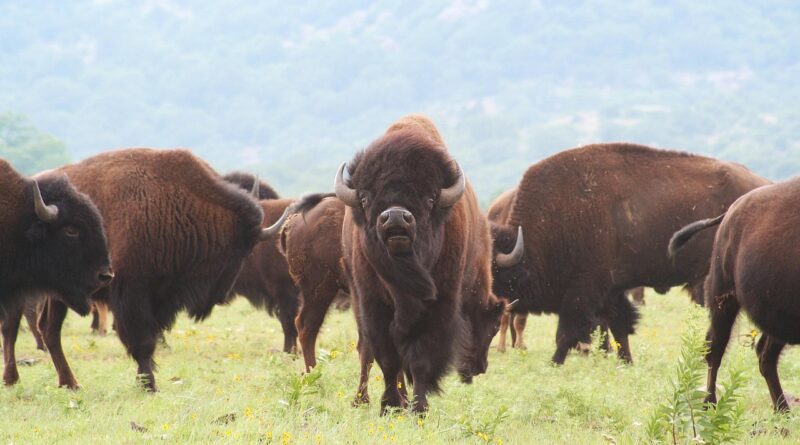
| Community | A small herd rather than a lone animal | Can suggest kinship, family, and shared responsibility |
| Respect for land | Prairie plants, horizon lines, or natural movement | Keeps the focus on ecology rather than borrowed ceremony |
| Resilience | A forward-facing bison or heavy-shouldered profile | Works well in blackwork, realism, or illustrative styles |
The key point is that these meanings should not be presented as universal Native beliefs. Native Nations are distinct, with their own histories, languages, protocols, and relationships to the buffalo. A tattoo can be inspired by broad historical understanding, but it should not claim to represent a specific Nation unless that connection is real, informed, and appropriate.
Respectful design choices and what to avoid
A respectful Native American bison tattoo does not need to be visually complicated. In many cases, simpler is stronger. A bison drawn with careful anatomy, natural movement, and a thoughtful setting can say more than a crowded design filled with disconnected cultural references.
- Keep the bison as the subject. Let the animal carry the meaning instead of surrounding it with symbols you do not fully understand.
- Avoid generic “tribal” patterns. Many online pattern sheets mix unrelated styles and erase cultural specificity.
- Do not copy ceremonial objects. Items such as medicine wheels, pipes, shields, masks, feathers, and regalia can have specific meanings and responsibilities.
- Be careful with headdresses. War bonnets and feathered regalia are often specific to status, community, and ceremony; using them as decoration is a common source of harm.
- Avoid portraits of imagined Native people. A fictional face with stereotyped clothing can reduce living cultures to fantasy.
- Ask who benefits from the image. If the design borrows from Native culture while ignoring Native voices, it needs revision.
If you are Native, the right path may include family history, Nation-specific art forms, community guidance, or an Indigenous tattoo artist who understands the symbols involved. If you are not Native, you can still choose a bison tattoo, but it is usually more respectful to frame it as wildlife, resilience, ecological memory, or admiration for the animal rather than as a claim to Native identity.
Design ideas that keep the bison central
Realistic bison portrait. A realistic head or shoulder study works well on the upper arm, chest, back, or thigh. This approach emphasizes dignity, weight, and presence. Texture in the fur, horns, and eyes can make the design feel grounded without adding cultural symbols.
Prairie landscape scene. A bison walking through grassland, snow, or a wide horizon can connect the animal to place. Native plants, wind, dust, or sky can add movement while keeping the design natural and respectful.
Blackwork silhouette. A strong silhouette can suit smaller placements such as the forearm, calf, or shoulder blade. To avoid a flat logo effect, ask for subtle line variation, negative space, or a textured edge. See also: tattoo care.
Illustrative bison skull. A skull can symbolize mortality, memory, and the consequences of history. It should be handled carefully. A bison skull paired with grasses or open land may feel reflective; a skull overloaded with sacred-looking symbols can become confusing or disrespectful.
Geometric framing. Geometry can work if it is original and not copied from tribal patterns. Simple circles, horizon bands, or abstract framing can support the composition without pretending to be Indigenous design.
Placement, size, and readability
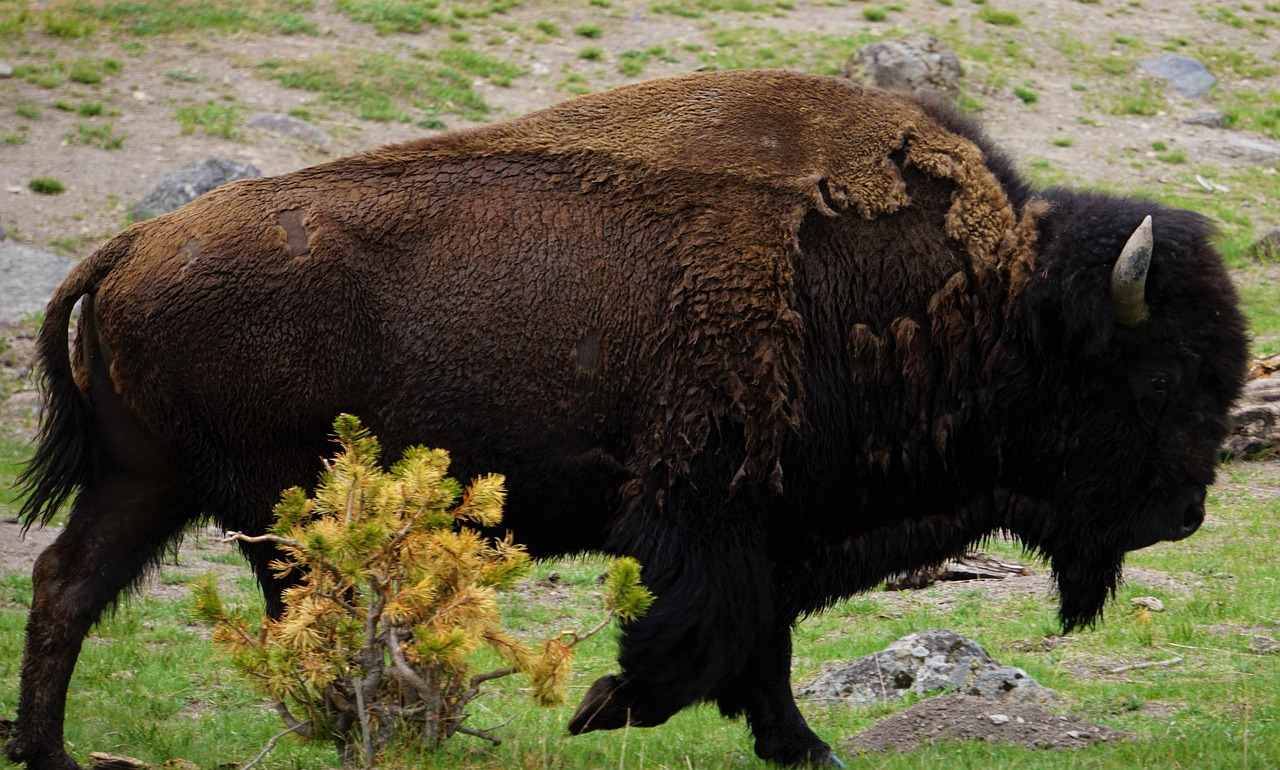
Bison tattoos need enough space for the animal’s distinctive shape: the heavy shoulder hump, lowered head, curved horns, beard, and compact body. If the design is too small, it may blur into a dark mass after healing. Medium and large placements are usually better for detail.
- Forearm: good for a side profile, walking bison, or blackwork silhouette.
- Upper arm: strong for a rounded portrait or bison head with fur texture.
- Chest or back: suitable for a larger landscape or herd composition.
- Calf or thigh: useful for vertical movement, full-body forms, and prairie scenes.
Think about visibility as well. A culturally sensitive tattoo may invite questions. If someone asks what it means, your answer should be honest and specific. “I chose the bison for endurance and respect for the land” is clearer than claiming a broad Native meaning that you cannot explain.
How to brief your tattoo artist
Bring references of real bison anatomy, natural landscapes, and the mood you want. Avoid asking your artist to “make it more Native” unless you have a specific, appropriate cultural basis. That phrase often leads to visual shortcuts such as feathers, arrows, war paint, or invented patterns. Instead, describe the feeling and the limits of the design.
A useful brief might say: “I want a bison tattoo about resilience and respect for the prairie. Please keep the design naturalistic, avoid sacred or ceremonial Native imagery, and use original framing rather than copied tribal patterns.” This gives the artist creative room while setting ethical boundaries.
Frequently asked questions
Is a Native American bison tattoo cultural appropriation?
It depends on the design, the wearer’s relationship to the culture, and how specific symbols are used. A naturalistic bison tattoo is generally different from copying sacred imagery, regalia, or Nation-specific artwork. When in doubt, simplify the design and seek guidance from knowledgeable Native voices or an Indigenous artist.
Can I get a bison tattoo if I am not Native American?
Yes, but avoid presenting it as a Native identity marker. Focus on the bison as an animal, a landscape presence, or a symbol of endurance. Do not use ceremonial objects, tribal patterns, or Native language text without permission and understanding.
What is the difference between a bison tattoo and a buffalo tattoo?
In North America, the animal is scientifically called the American bison, but “buffalo” is widely used in cultural and everyday language. In tattoo searches, people often use both terms. The design itself matters more than the label, but the wording should be thoughtful.
What symbols should not be added to a bison tattoo?
Avoid sacred or community-specific symbols unless they belong to your own culture and you have the right to use them. This includes ceremonial pipes, medicine wheels, shields, headdresses, clan marks, copied beadwork patterns, and Native language phrases pulled from the internet.
What is the most respectful style for this tattoo?
There is no single required style, but realistic, illustrative, blackwork, and landscape-based designs are often safer because they keep attention on the bison. The most respectful style is researched, original, and honest about the wearer’s connection to the meaning.