
What Defines the Blackwork Tattoo Style in Leandro Muniz’s Paris Studio
Leandro Muniz: Custom Micro-Realism and Blackwork Tattoos in Paris
The blackwork tattoo style has evolved into a refined artistic language that merges historical craftsmanship with contemporary visual codes. In Paris, Leandro Muniz redefines this medium through a synthesis of micro-realism and conceptual blackwork, transforming the body into a living canvas of precision and abstraction. His approach combines the discipline of engraving-like detail with the emotional restraint of monochrome design, resulting in tattoos that are both technically rigorous and narratively profound.
The Aesthetic Foundations of the Blackwork Tattoo Style
Blackwork’s identity is rooted in centuries of visual culture. It draws on ancient traditions yet thrives within modern minimalism, making it one of the most conceptually rich genres in tattoo artistry.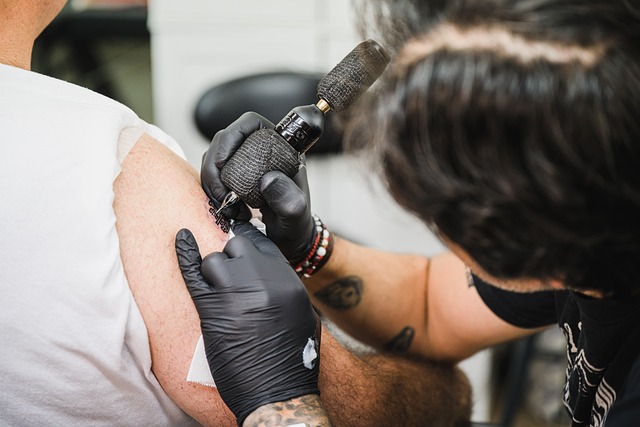
Historical and Artistic Origins of Blackwork
The origins of blackwork trace back to tribal tattooing practices across Polynesian, African, and Celtic cultures, where solid black pigment symbolized strength, lineage, and spiritual protection. These early forms used repetition and symmetry to convey social identity long before tattooing became an aesthetic pursuit. In Europe, the style found new life during the Renaissance through etching and woodcut engraving. Artists like Albrecht Dürer demonstrated how line density could create tonal illusion—a principle later mirrored in tattoo shading techniques. Over time, blackwork transitioned from purely linear motifs to complex compositions integrating abstract geometry and figurative realism.
Defining Visual Characteristics of Blackwork Tattoos
The visual grammar of blackwork relies on contrast. Artists manipulate dense black fills against untouched skin to construct rhythm and balance. Negative space becomes as expressive as inked areas, guiding the viewer’s perception through tension between light and void. Within this framework, geometric precision coexists with organic flow—straight lines meet curved anatomy without losing coherence. Texture is achieved through controlled stippling or layered hatching rather than color gradients, producing depth that feels sculptural rather than pictorial.
Leandro Muniz’s Interpretation of Blackwork in a Parisian Context
In Paris’s evolving art landscape, Leandro Muniz situates his practice at the intersection of classical technique and avant-garde experimentation. His work bridges micro-realism’s photographic clarity with the structural integrity of blackwork.
The Intersection Between Micro-Realism and Blackwork Techniques
Muniz integrates micro-realistic rendering into the bold architecture of black ink compositions. Fine-line detailing—often reserved for grayscale realism—is adapted here to serve within solid frameworks. This duality allows him to capture lifelike textures while maintaining graphic cohesion. The result is an image that feels tangible yet restrained by abstraction. Micro-realistic fragments—an eye, a hand, or natural elements—emerge from darkness as narrative anchors within minimalist fields.
The Paris Studio as a Space for Artistic Experimentation
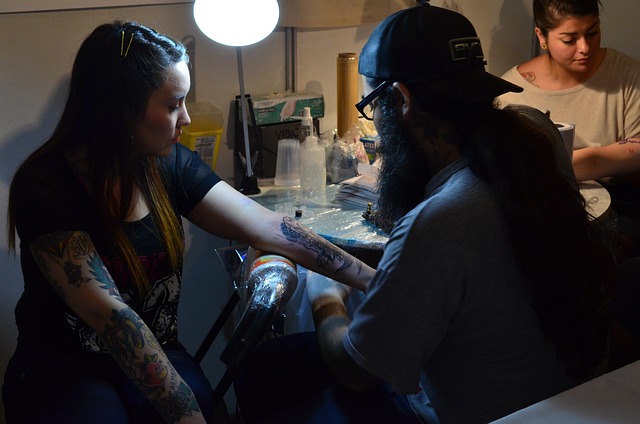
His Paris studio functions more like an atelier than a commercial parlor. Clients participate in collaborative design sessions where ideas evolve organically through dialogue rather than templates. The city’s vibrant contemporary art scene influences his process; exhibitions and cross-disciplinary collaborations inform his visual vocabulary. Each tattoo becomes a site-specific artwork shaped by conversation, anatomy, and light conditions within the studio environment.
Technical Execution and Methodology in Muniz’s Blackwork Practice
Muniz’s technical discipline reflects years of refinement grounded in both traditional craftsmanship and digital innovation.
Tools, Materials, and Application Techniques
He employs needle configurations tailored to each task: magnum needles for broad saturation zones and round liners for intricate detailing. Achieving consistent black saturation demands layering—applying successive passes without damaging skin integrity. Controlled hand motion ensures crisp edges while preventing pigment blowout beneath dermal layers. Precision is not only aesthetic but physiological; skin type dictates ink absorption rates requiring constant adjustment mid-session.
Design Process: From Conceptualization to Skin Application
Every project begins with anatomical mapping that determines how design interacts with muscle movement and bone structure. Initial sketches evolve into digital mockups where composition can be tested under simulated lighting or curvature models. Once approved, stencils guide placement but remain flexible during application; Muniz often refines proportions directly on skin to harmonize flow across limbs or torso segments.
Symbolism, Narrative, and Conceptual Depth in Muniz’s Work
Beyond formal beauty lies an intellectual dimension where symbolism replaces literal storytelling.
The Role of Minimalism and Abstraction in Storytelling
Muniz employs reductionist strategies—distilling complex emotions into pure form rather than illustrative scenes. A single geometric void might represent absence or transformation; repetitive patterns can echo cycles of time or memory erosion. This minimalism invites interpretation rather than dictating meaning, aligning his tattoos closer to conceptual art than decorative craft.
Cultural Resonance and Individual Expression Through Black Ink
Black ink serves as both medium and metaphor: permanence against transience, identity inscribed upon impermanence of flesh. Clients often view these tattoos as personal archives marking transition points—grief processed through geometry or resilience encoded in pattern repetition. Monochrome intensity amplifies emotional tone by stripping distraction; what remains is essence distilled into contrast.
The Influence of Muniz’s Style on Contemporary Tattoo Artistry
Muniz occupies a distinct position within global blackwork movements that increasingly blur boundaries between fine art and body modification.
Positioning Within Global Blackwork Movements
Internationally, artists from Berlin to São Paulo explore similar integrations of abstraction with realism, yet Muniz distinguishes himself through compositional restraint reminiscent of printmaking traditions. His contribution reinforces a shift toward conceptual tattooing where meaning outweighs ornamentation—a direction gaining recognition among curators who now include tattoo works in gallery contexts.
Future Directions for Blackwork Under Muniz’s Vision
Looking ahead, he explores hybrid workflows combining digital 3D modeling with manual sketching to visualize tattoos across dynamic body surfaces before execution. Large-scale projects spanning multiple sessions aim for continuity across anatomical planes—transforming torsos or limbs into unified narratives rather than discrete images. His trajectory suggests continued refinement toward merging surgical precision with expressive spontaneity—a balance few practitioners maintain over time.
FAQ
Q1: What distinguishes Leandro Muniz’s blackwork tattoo style?
A: His work merges micro-realistic detail with pure black composition, emphasizing contrast and narrative minimalism uncommon in conventional tattooing.
Q2: How does negative space function in his designs?
A: Negative space shapes rhythm within each piece; it defines structure by allowing skin tone to act as part of the composition itself.
Q3: Why is Paris significant to his artistic development?
A: The city’s experimental art culture encourages cross-pollination between mediums, giving Muniz exposure to conceptual frameworks beyond traditional tattoo norms.
Q4: What technical skills are critical for executing dense black fills?
A: Mastery over needle pressure control and layering technique prevents overworking skin while achieving uniform saturation essential for long-term clarity.
Q5: How does minimalism enhance emotional storytelling?
A: By reducing imagery to essential forms, minimalism directs focus toward symbolic resonance—the viewer completes meaning through personal association rather than explicit depiction.