
Mexican tattoo meanings, motifs, and cultural context
What does a Mexican tattoo usually mean?
A Mexican tattoo can carry many meanings because Mexican identity is not defined by one symbol, period, or visual style. Some designs honor family, faith, grief, or regional pride. Others draw from Indigenous Mexican art, Día de los Muertos imagery, Chicano lettering, Catholic devotional symbols, or national emblems such as the eagle, serpent, and cactus. The strongest designs tend to work when the wearer understands where the image comes from, what it may mean to different communities, and whether it is being used respectfully.
For readers exploring tattoo culture, Mexican-inspired tattooing is a useful example of how body art can hold memory, identity, and visual history at the same time. It also shows why context matters. A sugar skull, a Virgen de Guadalupe, an Aztec-style serpent, and a fine-line script surname may all be described online as “Mexican tattoos,” but they do not come from the same tradition or carry the same cultural weight.
Mexican tattoo is an umbrella term, not one fixed style
Search results and tattoo flash often reduce Mexican tattooing to a small set of familiar icons: skulls, roses, Aztec calendars, sacred hearts, lowrider script, and portraits. In practice, the category is much broader. It can refer to tattoos made by Mexican artists, tattoos worn by Mexican or Mexican American clients, tattoos about Mexican heritage, or tattoos that borrow from Mexican visual culture.
This distinction matters. Mexico includes many Indigenous nations, colonial and postcolonial histories, regional folk traditions, and modern urban styles. A design inspired by Mexica or Aztec sculpture is different from a tattoo based on Maya glyphs, and both differ from Catholic devotional imagery or Chicano black-and-gray work developed in Mexican American communities. Treating these references as interchangeable can make a tattoo look generic or culturally careless.
A more accurate approach is to identify the visual source before choosing the design. Ask whether the reference is national, religious, Indigenous, family-based, regional, or contemporary. That step can make the final tattoo more personal and less dependent on recycled internet symbolism.
Common motifs and what they often represent
The meanings below are not universal rules. They are common associations, and they can change by family, region, religion, and personal story.
| Motif | Common associations | Context to consider |
|---|---|---|
| Calavera or sugar skull | Remembrance, mortality, humor in the face of death, Día de los Muertos | It is strongest when tied to memory rather than used only as a spooky skull. |
| Cempasúchil marigold | Guidance, offering, remembrance, seasonal ritual | Often connected with Day of the Dead altars and family remembrance. |
| Virgen de Guadalupe | Faith, protection, Mexican Catholic identity, maternal devotion | A sacred image for many people; placement and treatment should be considered carefully. |
| Sacred heart | Devotion, sacrifice, endurance, grief, love | Can be Catholic, personal, or decorative depending on composition. |
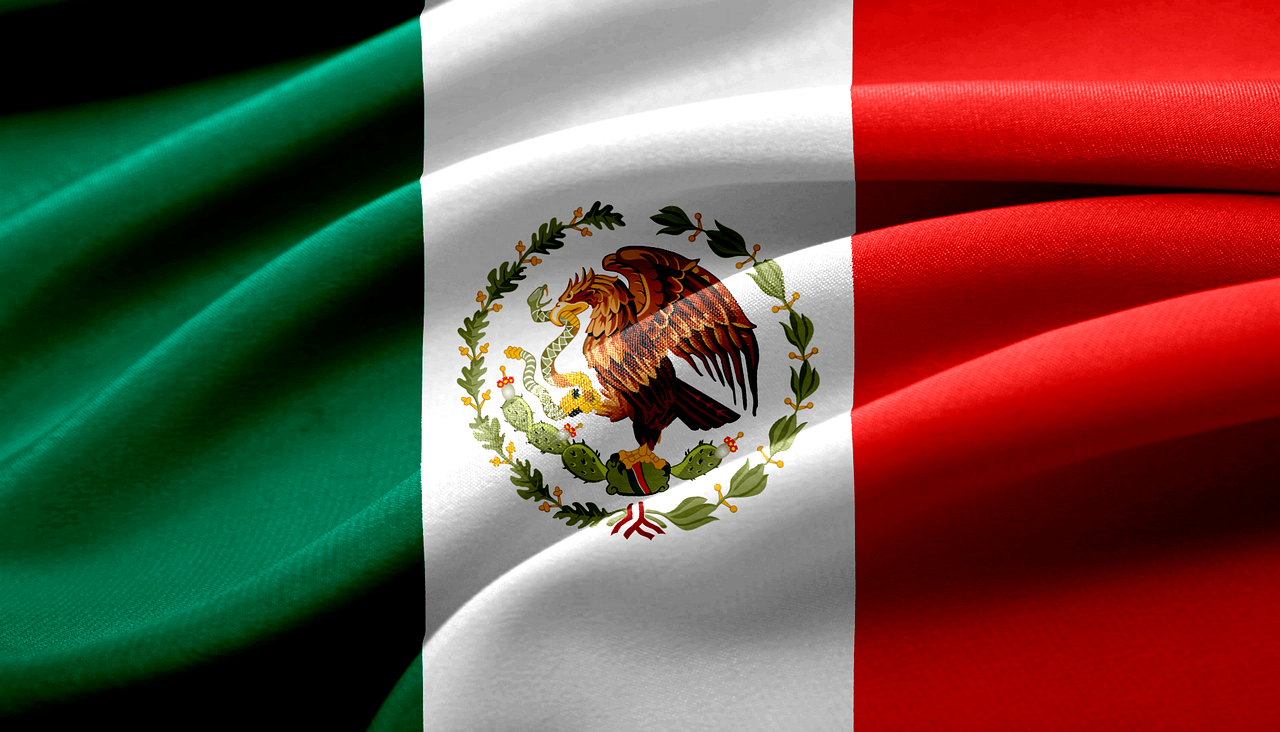
| Eagle, serpent, cactus | Mexican national identity, founding myth, resilience | Closely linked to Mexico’s flag and the story of Tenochtitlan. |
| Feathered serpent | Cosmology, wind, learning, transformation, power | Often associated with Quetzalcóatl, but interpretation depends on source and period. |
| Chicano script | Family names, neighborhood identity, memory, pride | Lettering style has a history in Mexican American visual culture and should be customized. |
Día de los Muertos imagery and the meaning of remembrance
Día de los Muertos imagery is one of the most visible sources for Mexican tattoo design. Public cultural institutions such as the Smithsonian describe the celebration as rooted in ancient Mesoamerican practices and later intertwined with Catholic observances around All Saints’ Day and All Souls’ Day on November 1 and 2. That layered history is one reason Day of the Dead tattoos often feel both spiritual and deeply personal.
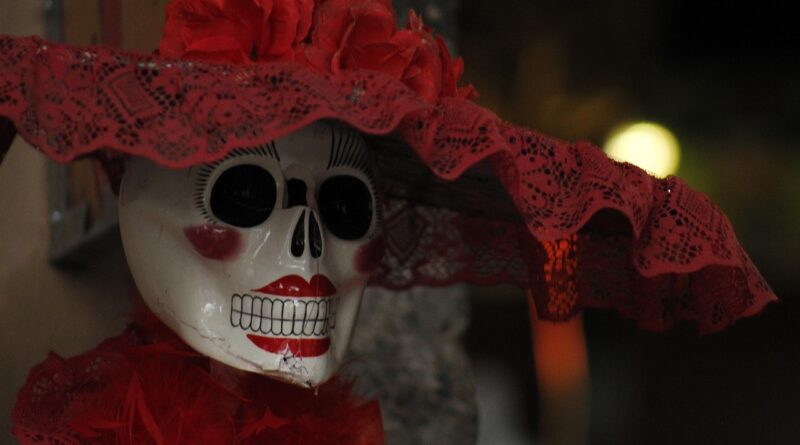
Calaveras, decorated skulls, candles, papel picado, food offerings, and marigolds can all appear in tattoo compositions. In this context, a skull does not simply mean death in a gothic sense. It can represent an ongoing relationship with the dead, acceptance of mortality, and the idea that remembrance keeps loved ones present. For that reason, many meaningful Day of the Dead tattoos include names, dates, portraits, or symbols connected to a specific person.
Design choices can change the tone. A colorful sugar skull with marigolds may feel celebratory. A black-and-gray skull with candles and script may feel more solemn. A portrait blended with calavera makeup can honor a person, but it should be handled carefully because it sits close to memorial portraiture. If the tattoo is for a loved one, the personal details should guide the design rather than letting the skull become a generic decoration.
Indigenous Mexican references need careful research
Many people use “Aztec tattoo” as shorthand for Mexican Indigenous-inspired design. The label is common in tattoo search, but it can be imprecise. The people often called Aztec are also referred to as Mexica, and Mexico’s Indigenous visual traditions extend far beyond one empire. Maya, Zapotec, Mixtec, Otomí, Huichol or Wixárika, Nahua, and many other traditions have distinct histories and aesthetics.
Several museum sources show why accuracy matters. The Metropolitan Museum of Art describes Mesoamerican objects through specific cultures, periods, materials, and ritual contexts rather than treating them as generic tribal patterns. The Getty Research Institute also notes that the famous Aztec Calendar Stone, often used as a tattoo reference, is more complex than a simple “calendar” image and has been interpreted as a ritual monument connected to Mexica cosmology. In tattoo terms, this means a circular calendar-style chest or back piece may look powerful, but it should not be treated as a neutral pattern with no cultural or religious context.
Common Indigenous-inspired motifs include serpents, eagles, jaguars, stepped geometry, calendar signs, masks, and warrior figures. Before using one, it helps to ask three questions: which culture is this from, what was the object or symbol used for, and am I simplifying a sacred or ceremonial image into decoration? Not every historical reference is off-limits, but strong design starts with knowing what the reference is.
Faith, family, and Chicano visual language
Mexican tattoo culture often overlaps with Catholic imagery. The Virgen de Guadalupe, crosses, rosaries, praying hands, sacred hearts, and angels appear frequently because faith is part of many families’ visual and emotional vocabulary. These designs can represent protection, gratitude, grief, or a promise. They can also become memorial tattoos, especially when paired with names, dates, or portrait work.
Chicano tattooing, closely associated with Mexican American communities, adds another important strand. Black-and-gray realism, fine-line portraits, script lettering, roses, clowns, religious imagery, and neighborhood or family references are often part of this visual language. The style developed through community, street, prison, lowrider, and studio influences, and it continues to evolve through contemporary artists who bring technical precision and personal storytelling to the form.
A lettering tattoo can look simple, but it often carries some of the most personal meaning. Surnames, children’s names, hometowns, and short Spanish phrases can work well when the lettering is custom-drawn instead of copied from a font. If Spanish is not your first language, translation should be checked by a fluent speaker, especially for idioms, gendered words, accents, and religious phrases.
Placement, scale, and style choices
Mexican tattoo ideas often rely on detail, so scale matters. A highly detailed calendar stone or feathered serpent may need a large placement such as the back, chest, thigh, or sleeve to remain readable over time. A small version can blur if it contains too many thin lines. Simpler symbols, such as a marigold, a sacred heart, a small cross, or a short word, can work on the forearm, wrist, ankle, or behind the ear. See also: tattoo care.
Black-and-gray designs
Black-and-gray is widely used for Chicano-inspired portraits, religious pieces, roses, lettering, and memorial tattoos. It can create a serious, timeless tone and usually ages well when contrast is planned properly. It is also useful for large compositions that combine portraits, architecture, clouds, script, and devotional imagery.
Color designs
Color works especially well for Día de los Muertos themes, marigolds, papel picado, folk-art-inspired animals, and vibrant sacred hearts. Color can make the tattoo more celebratory, but it also requires planning for skin tone, pigment longevity, and future touch-ups.
Fine-line and ornamental designs
Fine-line Mexican-inspired tattoos can be elegant, but they should not overload small spaces with museum-level detail. A simplified marigold, small milagro charm, minimal serpent, or single script word often ages better than a tiny calendar stone filled with microscopic symbols.
How to approach a Mexican-inspired tattoo respectfully
Respectful design does not mean avoiding Mexican imagery altogether. It means being specific, honest, and careful with symbols that other people hold as sacred, ancestral, or memorial. A tattoo can be appreciation when it is researched, personalized, and created with awareness. It becomes more questionable when it copies ceremonial imagery without context, mixes unrelated symbols only for aesthetics, or uses stereotypes as decoration.
- Identify the source. Know whether the design is Mexica, Maya, Catholic, Chicano, folk, national, or personal.
- Avoid random symbol mixing. A Maya glyph, Aztec-style calendar, Guadalupe image, and sugar skull may not belong together just because they are all associated with Mexico online.
- Be careful with sacred images. Religious figures and Indigenous ceremonial symbols may deserve more thoughtful placement and composition.
- Use personal connection where possible. Family names, hometown flowers, recipes, dates, regional patterns, or memorial details can make a design more authentic.
- Choose an artist with relevant experience. Look for healed examples of lettering, black-and-gray shading, portrait work, or Indigenous-inspired geometry, depending on the design.
A useful test is whether you can explain the tattoo without relying on vague phrases such as “it just looks Mexican.” If you can name the reference, explain the connection, and describe why the design belongs on your body, the idea is already stronger.
Frequently asked questions
Is it okay to get a Mexican tattoo if I am not Mexican?
It depends on the design and your approach. A respectful tattoo is researched, avoids stereotypes, and does not treat sacred or memorial imagery as a costume. Designs connected to personal relationships, study, travel, faith, or artistic appreciation are easier to explain than designs chosen only because they look exotic or intimidating.
What is the difference between a Mexican tattoo and a Chicano tattoo?
A Mexican tattoo can refer broadly to imagery connected with Mexico, Mexican heritage, or Mexican visual culture. Chicano tattooing is more specific and is tied to Mexican American identity, especially in the United States. It is often associated with black-and-gray realism, fine-line script, religious imagery, portraits, roses, and community-based storytelling.
Are sugar skull tattoos only for Día de los Muertos?
They are strongly associated with Día de los Muertos, but tattoo meanings vary. A sugar skull tattoo often works best when it connects to remembrance, family, or the acceptance of mortality. Without that context, it can become a generic skull design with decorative patterns.
What should I check before getting an Aztec-inspired tattoo?
Check the exact source of the symbol, whether it is truly Mexica or from another culture, and whether it has ceremonial or sacred meaning. Large, complex symbols such as calendar-stone designs should be planned at a size that preserves detail and should not be copied blindly from low-quality online graphics.
Which Mexican tattoo ideas age well?
Clear script, bold sacred hearts, marigolds, roses, simplified eagle or serpent designs, and well-planned black-and-gray portraits can age well when they have enough contrast and space. Very small tattoos with dense calendar details, tiny glyphs, or overly thin decorative lines may lose clarity faster.
The lasting value of context
The best Mexican-inspired tattoos are rarely just collections of popular symbols. They are specific. They know the difference between a memorial calavera and a horror skull, between a national emblem and a sacred image, and between Mexica history and a generic “tribal” pattern. They also leave room for the wearer’s own story.
As tattoos become more common, cultural literacy becomes part of good design. A 2023 Pew Research Center survey found that many tattooed adults in the United States use tattoos to remember or honor someone or something, and that insight fits especially well here. Mexican tattoo culture is rich because it can hold grief, humor, devotion, ancestry, migration, pride, and art in one image. The more clearly the design understands its source, the more meaningful it can be on skin.