
Native American Indian tattoo meanings, history, and respectful design choices
What a Native American Indian tattoo really means
A Native American Indian tattoo is not one fixed design language. The phrase can refer to many different Indigenous tattoo traditions, contemporary work by Native artists, or loosely Native-inspired images that circulate in popular tattoo culture. Meaning depends on the specific Nation, community, family, ceremony, artist, and wearer. A feather, animal, face marking, geometric band, or hand tattoo should not be treated as a universal symbol with one simple definition.
For anyone exploring this subject, the better starting question is not only “What does this symbol mean?” but “Whose symbol is it, who has the right to wear it, and what context would make it appropriate?” That distinction matters because Indigenous tattooing in North America has a long history, was disrupted by colonization and assimilation policies, and is now being actively revived by Native artists and communities.
For more cultural background on tattoo symbolism and changing tattoo traditions, visit our tattoo culture section.
There is no single Native American tattoo tradition
Broad terms such as Native American, American Indian, Indigenous, and Native can be useful in general discussion, but they also place hundreds of distinct peoples under one label. The Smithsonian’s Native Knowledge 360° guidance emphasizes that there is no single American Indian culture or language. The same caution applies to tattooing. If a design is connected to Haida, Tlingit, Choctaw, Diné, Lakota, Inuit, Mvskoke, Anishinaabe, or another people, it should not be described only as “Native American” when a more specific origin is known.
Historical evidence shows that tattooing and other forms of body marking were practiced by many Indigenous peoples in North America, but techniques and meanings varied widely. A 2021 study in the Journal of Archaeological Science: Reports examined sharpened turkey bone tools and pigments from the Fernvale site in central Tennessee, adding important archaeological evidence for ancient tattooing in the region. Colonial-era accounts and illustrations also describe tattooing among Eastern Woodlands and Southeastern peoples, including marks on the face, arms, legs, chest, thighs, hands, and back.
Techniques varied by region
The Smithsonian’s National Museum of the American Indian describes several traditional tattooing methods. Hand-poking used sharpened natural or later metal tools dipped in pigment and inserted into the skin. Pigments could come from charcoal, soot, ochre, clay, minerals, or plant-based sources. In some Southeastern traditions, designs could be traced and then cut so pigment could be rubbed into the skin. In parts of the Pacific Northwest, hand-tapping used comb-like tools and a tapping stick. In Arctic Indigenous traditions, skin stitching placed pigment under the skin with a threaded needle.
These differences are not minor technical details. Copying the surface appearance of a tattoo without understanding the method, language, family meaning, or ceremonial setting can turn a living cultural practice into decoration.
Meaning was often social, spiritual, and personal
Historical sources describe tattoos as markers of identity, role, achievement, healing, protection, adornment, family connection, spiritual relationship, or community belonging. Some markings were public and visible. Others were private, gendered, ceremonial, or restricted. The same visual form could mean different things in different communities, and some designs may not be open for outsiders to copy at all.
How colonization changed Indigenous tattooing
Many Native tattoo traditions did not fade because people simply lost interest in them. They were disrupted by colonization, missionization, forced assimilation, and government policies aimed at suppressing Indigenous ceremony, language, dress, and spiritual practice. The National Museum of the American Indian’s 2026 discussion of Native tattoo history points to the 1883 Code of Indian Offenses, Christian mission pressure, and Native boarding schools as part of the broader environment that pushed many communities to abandon, hide, or interrupt ceremonial practices, including tattooing.
That history is why contemporary Native tattoo revival carries more weight than a design trend. For many Native artists and wearers, tattooing is a way to reclaim identity, reconnect with ancestors, restore family knowledge, and express cultural sovereignty. A modern Native tattoo may use contemporary machines and aesthetics, but its meaning can still be rooted in community memory, language, clan identity, ceremony, or a deliberate act of decolonization.
This is also why casual copying can be painful. When outsiders use Indigenous designs only as an exotic look, they may be taking from traditions that Indigenous people were once punished or pressured to give up.
Common motifs and why simple meanings can mislead
Searches for Native American Indian tattoo ideas often bring up wolves, eagles, feathers, dreamcatchers, arrows, geometric bands, portraits in headdresses, skulls with warbonnets, or generalized “tribal” shapes. Some of these images may have Indigenous connections in certain contexts. Many online design boards, however, mix traditions, regions, and stereotypes without explanation. Treating the internet’s most repeated images as authentic meaning guides is risky.
| Motif or design type | Why context matters | Respectful approach |
|---|---|---|
| Clan, family, or community markings | These may identify belonging, lineage, responsibilities, or relationships that are not transferable. | Use only when the relevant community, family, or artist has given clear permission. |
| Facial or hand markings | In some Indigenous traditions, these can relate to life stages, identity, gendered knowledge, beauty, or ceremony. | Do not copy from photographs or museum images without cultural guidance. |
| Animal imagery | Animals may connect to clans, stories, land, protection, or local cosmologies, but meanings are not universal. | Avoid claiming one fixed Native meaning for a wolf, bear, eagle, raven, or serpent. |
| Geometric bands and patterning | Patterns may relate to basketry, beadwork, carving, pottery, or regional design systems. | Work with an artist who understands the source tradition and can explain what is open for use. |
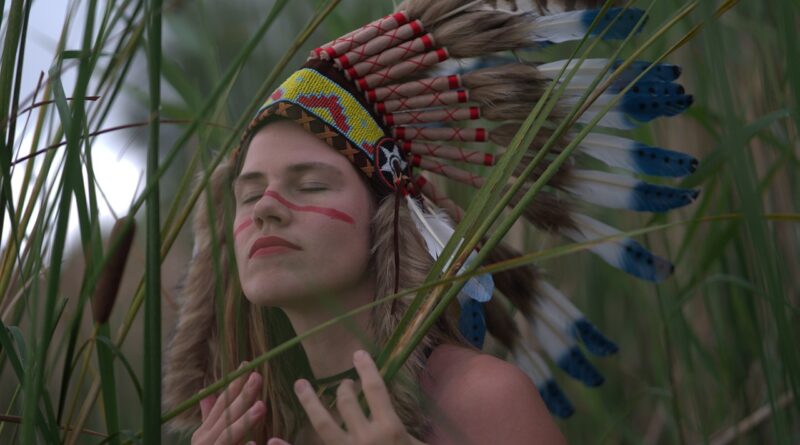
| Feathers and warbonnets | Plains feathered warbonnets are tied to earned honor, leadership, and ceremony, not general fashion. | Avoid generic headdress portraits, skulls in warbonnets, and pin-up imagery that turns regalia into costume. |
A practical rule is simple: if a design is sacred, earned, community-specific, ceremonial, or tied to a living people’s restricted knowledge, it should not be used as a casual tattoo concept.
Cultural respect, appropriation, and permission
Cultural respect does not mean every Native-inspired tattoo idea is automatically forbidden. It does mean the wearer has a responsibility to understand origin, permission, and impact. The National Museum of the American Indian has described appropriation and commodification as major concerns in contemporary Indigenous tattoo revival, especially when outsiders replicate deeply meaningful designs without understanding or consent. See also: tattoo care.
Appropriation is not only about personal intention. A person may intend admiration but still use a design in a way that erases its origin, mislabels it, profits from it, or separates it from the people who carry its meaning. Tattoo shops, flash sheets, and merchandise sellers should also be careful about marketing designs as “authentic Native,” “tribal,” or connected to a specific Nation unless that claim is accurate and authorized. In the United States, the Indian Arts and Crafts Act is a truth-in-advertising law for Indian art and craft products. Personal tattoo ethics are broader than one law, but the law reflects a real concern about false claims and the commercial misuse of Native identity.
For non-Native clients, the most respectful choices usually fall into one of three paths. First, choose a personal design inspired by your own story rather than borrowing a closed Indigenous symbol. Second, collaborate with a Native artist who is willing to create work appropriate for you. Third, if you have Native ancestry, seek guidance from your family or community rather than relying only on DNA results, social media, or generic design lists.
How to plan a respectful Native-inspired tattoo
If you are drawn to this subject, slow down before booking the appointment. A thoughtful design process can prevent regret and reduce harm.
- Identify the source. Find out whether the motif belongs to a specific Nation, region, family, artist, or ceremony.
- Avoid pan-Indian mixing. Do not combine Plains regalia, Northwest Coast forms, Southwestern patterns, Arctic facial markings, and dreamcatchers as if they all come from one culture.
- Ask whether it is open or restricted. Some designs are public, some are personal, and some should not be copied.
- Do not use sacred or earned symbols casually. Warbonnets, medicine-related imagery, ceremonial marks, and clan-specific symbols require special care.
- Credit living artists. Never lift a design from an Indigenous artist’s portfolio, museum image, social media post, beadwork, carving, or regalia.
- Consider abstraction. A tattoo can honor values such as resilience, kinship, land, memory, or protection without copying a restricted cultural mark.
- Be honest about your connection. If the design reflects personal appreciation rather than community identity, do not present it as a tribal tattoo or proof of Native belonging.
A respectful tattoo should have a truthful story behind it. If the story depends on vague claims such as “it means strength in Native culture,” the design needs more research or a different direction.
Tattoo safety still matters
Cultural research should not replace basic tattoo safety. The U.S. Food and Drug Administration has warned that tattoo inks can be associated with infections, allergic reactions, granulomas, scarring, and contamination issues. The agency also notes that pigments used in tattoo inks are not approved for injection into the skin for cosmetic purposes, even though the FDA may take action when safety problems arise.
Before any tattoo, choose a licensed artist working in a clean studio that follows local health rules. Ask about sterile needles, single-use supplies, ink handling, surface disinfection, aftercare instructions, and what to do if redness, swelling, fever, rash, or unusual pain develops. A meaningful design deserves safe application and responsible healing.
Frequently asked questions
Is it okay for a non-Native person to get a Native American Indian tattoo?
It depends on the design, source, permission, and presentation. A non-Native person should avoid sacred, ceremonial, earned, clan-specific, or community-restricted designs. If the tattoo is inspired by Native art, the most respectful route is to work with a Native artist who can create something appropriate and explain its limits.
What Native American tattoo symbols mean strength?
There is no single Native American symbol that universally means strength. Animals, weapons, patterns, feathers, or marks may carry strength-related meanings in some communities, but those meanings are specific. A better approach is to define what strength means in your own life and build an original design rather than borrowing a cultural symbol without context.
Are dreamcatcher tattoos Native American?
Dreamcatchers are commonly associated with Ojibwe and broader pan-Indigenous popular culture, but many mass-market dreamcatcher tattoos simplify or detach the object from its cultural setting. If you choose one, avoid presenting it as a universal Native symbol and do not copy an Indigenous artist’s exact work.
Why are headdress tattoos often criticized?
Many headdress tattoos use Plains warbonnets as a generic symbol for all Native people. Feathered warbonnets are connected to specific communities, earned honor, leadership, and ceremony. Turning them into fashion images, pin-up portraits, skull designs, or anonymous “Indian chief” tattoos can reinforce stereotypes and disrespect regalia.
What is a respectful alternative to copying a traditional Native tattoo?
Consider an original design about your own ancestry, landscape, values, or life story. If your goal is respect for Indigenous cultures, support Native artists, learn from Native-led resources, and avoid taking symbols that are not yours to wear.