
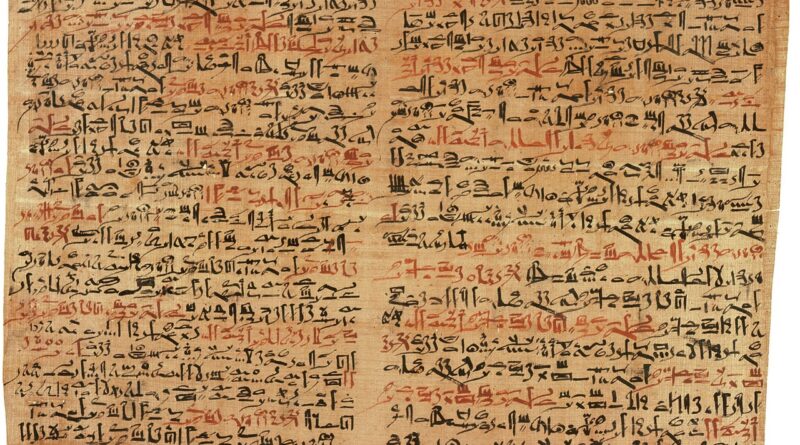
Egyptian traditional tattoo meanings, history, and design ideas
What an Egyptian traditional tattoo means
An Egyptian traditional tattoo is best understood as a modern design inspired by ancient Egyptian symbols, archaeological tattoo evidence, and the visual language of amulets, gods, animals, hieroglyphs, and ritual objects. It is not a single historical tattoo style with a fixed rulebook. The strongest designs usually connect a clear personal meaning with careful historical context: an Eye of Horus for protection and healing, an ankh for life, a scarab for renewal, or lotus imagery for rebirth. For readers exploring tattoo culture, the key is to separate what is supported by ancient evidence from what belongs to modern tattoo fashion. Egyptian imagery is visually powerful, but it works best when the design respects the symbol rather than using it as decoration only.
The historical record behind Egyptian tattooing
Ancient Egypt has one of the most discussed tattoo records in archaeology, although the evidence is still limited. Tattoos survive only when skin is preserved, so each discovery carries unusual weight. Museum research, infrared imaging, and bioarchaeology have also changed older assumptions that Egyptian tattooing was rare, purely decorative, or limited to simple patterns.
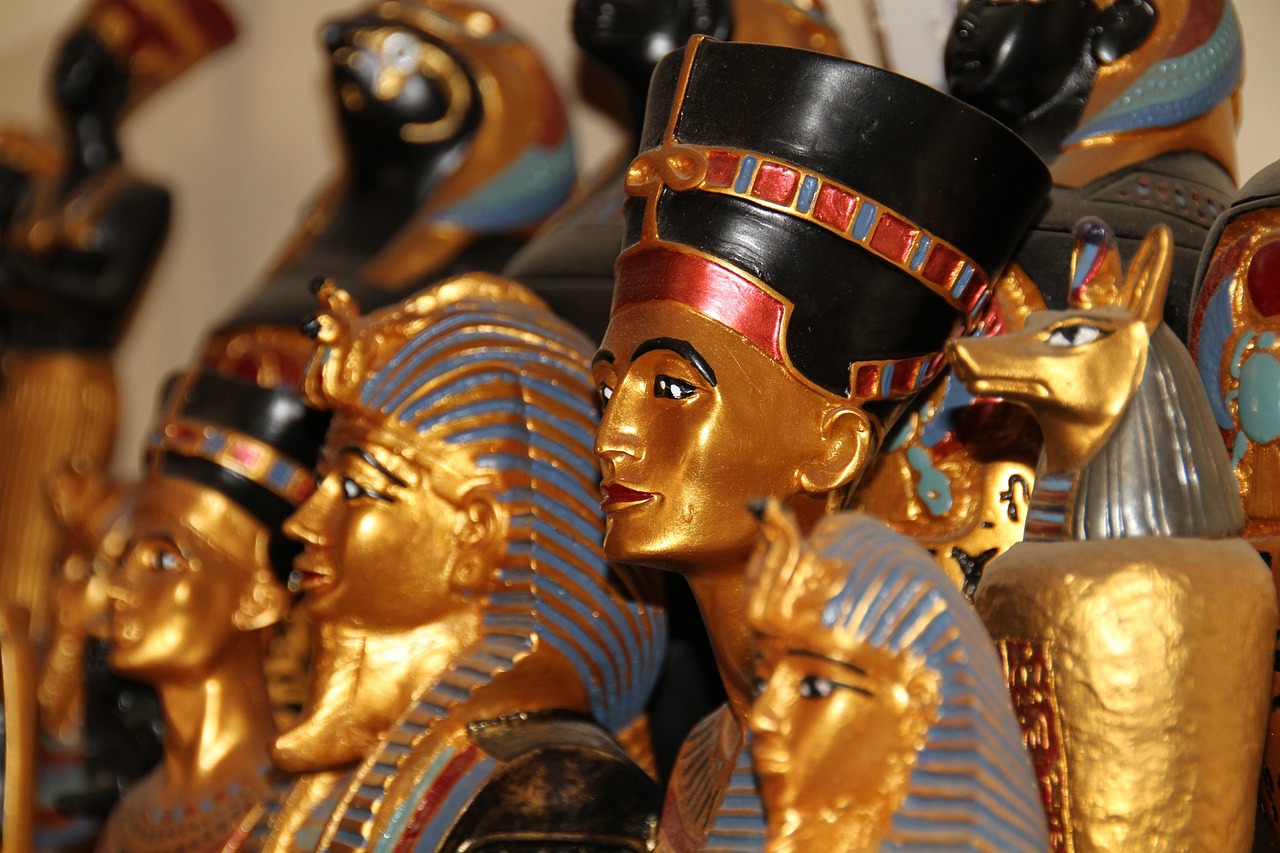
A major turning point came in 2018, when researchers reported in the Journal of Archaeological Science that two naturally mummified people from Gebelein in Upper Egypt had figurative tattoos. The mummies were radiocarbon dated to roughly 3351–3017 BCE. The male mummy, often known as Gebelein Man, had animal tattoos interpreted as a wild bull and a Barbary sheep. The female mummy had linear or staff-like motifs on the arm and shoulder. The find mattered because it showed that figural tattooing was practiced in Predynastic Egypt and that men as well as women could be tattooed.
Later Egyptian evidence adds another layer. At Deir el-Medina, the New Kingdom village associated with the workers who built and decorated royal tombs in the Valley of the Kings, bioarchaeologist Anne Austin and Cédric Gobeil documented more than 30 tattoos on one female mummy. Their published analysis identified motifs such as Wadjet eyes, nefer signs, seated baboons, cobras, lotus imagery, and symbols connected with Hathor. Their interpretation is deliberately careful: the tattoos suggest a public and religious role, but they do not allow researchers to assign a precise priestly title to the woman.
This history matters when planning a modern Egyptian traditional tattoo. The design does not have to be limited to pyramids and pharaoh masks. The archaeological record points toward protection, status, devotion, movement, visibility, and the body as an active surface for meaning.
Common Egyptian tattoo symbols and what they can represent
Many popular Egyptian tattoo motifs come from amulets, temple art, funerary objects, and hieroglyphs rather than from preserved tattoos themselves. That does not make them invalid for modern tattooing, but it does mean they should be described accurately. A scarab tattoo, for example, can be inspired by ancient Egyptian renewal symbolism without claiming that every scarab design copies an ancient tattoo pattern.
| Motif | Common meaning in modern tattooing | Historical context to keep in mind |
|---|---|---|
| Eye of Horus or Wadjet eye | Protection, healing, watchfulness, restoration | Used widely in Egyptian amulets and appears in tattoo evidence from Deir el-Medina. |
| Ankh | Life, vitality, continuity, spiritual endurance | The ankh was a hieroglyphic sign connected with life and became one of Egypt’s most recognizable symbols. |
| Scarab | Renewal, transformation, rebirth, resilience | Scarab amulets were linked with regeneration and the solar cycle, especially through associations with Khepri. |
| Lotus | Rebirth, emergence, beauty, renewal after darkness | Lotus imagery appears across Egyptian art and is also reported among tattoo motifs at Deir el-Medina. |
| Hathor imagery | Joy, music, devotion, feminine divine power | Hathor-linked motifs in tattoo research suggest religious and public identity rather than simple ornament. |
| Hieroglyphs or cartouche | Name, identity, memory, dedication | Accurate translation matters. Decorative fonts can easily create incorrect or meaningless inscriptions. |
| Pyramids, sphinx, pharaoh portraits | Egyptian revival style, mystery, monumentality | These are popular modern tattoo subjects, but they are not the strongest evidence for ancient tattoo practice. |
Traditional style versus Egyptian-inspired realism
The phrase Egyptian traditional tattoo can mean two different things. Some people use it for tattoos inspired by ancient Egyptian tradition. Others mean Egyptian subject matter drawn in a traditional tattoo style, with bold outlines, compact shapes, strong silhouettes, and a limited color palette. Both approaches can work, but they lead to different design choices.
If you want a traditional tattoo look
A traditional tattoo approach depends on clarity. The design should read well from a distance and age cleanly over time. An Eye of Horus, scarab, ankh, lotus, cobra, or sun disk can be simplified into bold black shapes with a few controlled color accents. Gold, deep blue, red, black, and turquoise-inspired tones often fit Egyptian visual references, although the final palette should depend on skin tone, placement, and the artist’s experience.
This style works especially well for forearms, calves, shoulders, and upper arms because those areas give the symbol enough room to stay legible. For a small tattoo, one strong symbol is usually better than a crowded group of tiny details.
If you want archaeological or fine-line detail
An archaeological or fine-line Egyptian tattoo can include more precise references: a Wadjet eye shaped after amulet examples, a lotus arrangement, a Deir el-Medina-inspired composition, or a cartouche with a verified name. The risk is that highly detailed linework can blur if the tattoo is too small. Fine-line hieroglyphs, small scarabs, and miniature deity figures need enough space to remain readable after healing.
For realism, statues, mummy masks, temple reliefs, and papyrus-like compositions can be visually striking. The limitation is that realism often emphasizes Egyptian aesthetics more than tattoo history. That is not a problem if the design is presented honestly as Egyptian-inspired body art rather than a reconstruction of an ancient tattoo.
Placement ideas with cultural logic
Ancient placement cannot be translated directly into modern tattoo rules, but it can still inspire thoughtful choices. The Deir el-Medina tattoos are especially interesting because many appear on visible parts of the body, including the neck, shoulders, arms, and back. Researchers have argued that visibility may have mattered, especially for symbols connected with protection, speech, gesture, and religious presence.
- Wrist or inner forearm: Good for an ankh, small Eye of Horus, or short verified inscription. This placement makes the symbol personal but visible.
- Upper arm or shoulder: Suitable for bolder traditional designs, paired eyes, cobras, lotus elements, or a scarab with wings.
- Back or upper back: Works for larger protective compositions, symmetrical eyes, sun disk motifs, or a design that needs horizontal balance.
- Chest or sternum: Can suit amulet-inspired work, but sacred or funerary symbolism should be chosen carefully because the placement feels intimate and central.
- Leg or calf: A strong choice for larger Egyptian revival pieces such as a pharaoh portrait, temple column, sphinx, or scarab design.
For most people, the best placement is the one that balances meaning, visibility, pain tolerance, and long-term readability. A meaningful Egyptian traditional tattoo does not need to be large; it needs to be coherent.
How to design an Egyptian tattoo respectfully
Egyptian imagery carries historical, religious, and cultural weight. A respectful design does not require academic perfection, but it should avoid careless mixing, false claims, and symbols chosen only because they look mysterious. The strongest tattoos usually begin with one central idea: protection, life, renewal, devotion, ancestry, memory, or transformation. See also: tattoo care.
Before booking, check the design in four ways. First, confirm the symbol’s basic meaning through reputable museum or academic sources. Second, avoid using hieroglyphs unless the translation has been checked by someone with real knowledge of the Egyptian language. Third, do not combine deities, funerary symbols, and personal names at random. Fourth, be honest about the design’s nature: inspired by ancient Egyptian symbolism is often more accurate than authentic ancient Egyptian tattoo.
It is also worth thinking about cultural sensitivity. Ancient Egypt belongs to a long and complex African and Mediterranean history, and modern Egypt has living communities, religious traditions, and cultural memory. A tattoo that treats Egyptian symbols as exotic props can feel shallow. A tattoo that acknowledges meaning, uses accurate references, and avoids disrespectful placement or parody is more likely to age well culturally as well as visually.
Design combinations that work well
Some Egyptian tattoo combinations are popular because the symbols support one another. An ankh with lotus flowers can express life and renewal. A scarab with a sun disk can emphasize transformation and forward movement. A Wadjet eye with symmetrical framing can suggest protection and watchfulness. A cartouche with a verified name can become a personal memorial or identity piece.
Other combinations need caution. A deity portrait with unrelated hieroglyphs may look impressive but say very little. A funerary scene used as a fashion sleeve can feel disconnected from its original context. A random mix of pyramids, aliens, pharaoh masks, and sacred symbols may create visual noise rather than meaning. Egyptian tattoo design is usually stronger when it is edited down.
A practical method is to choose one primary symbol, one supporting element, and one stylistic direction. For example, the primary symbol could be an Eye of Horus, the supporting element could be lotus petals, and the stylistic direction could be blackwork traditional. That structure gives the artist a clear brief and helps prevent the tattoo from becoming a collage.
Frequently asked questions
Did ancient Egyptians really have tattoos?
Yes. Preserved mummies show that tattooing was practiced in ancient Egypt, including Predynastic examples from Gebelein and later evidence from sites such as Deir el-Medina. The surviving record is limited because skin rarely preserves, so scholars avoid claiming that all Egyptians were tattooed.
What is the most meaningful Egyptian traditional tattoo?
The most meaningful choice depends on the wearer. For broad symbolism, the Eye of Horus is often chosen for protection and healing, the ankh for life, the scarab for renewal, and the lotus for rebirth. A personal design should connect the symbol’s historical meaning with the wearer’s own reason for choosing it.
Are hieroglyph tattoos a good idea?
They can be, but only if the translation is verified. Online generators and decorative alphabets often produce inaccurate results. If the tattoo includes a name, date, or phrase, treat the translation as seriously as the artwork.
Is an Egyptian tattoo cultural appropriation?
It depends on the design and intent. Egyptian-inspired tattoos are common in global tattoo culture, but respectful use matters. Avoid parody, random sacred symbols, false historical claims, and careless hieroglyphs. Choose accurate references and be clear that the work is a modern interpretation.
What style ages best for Egyptian tattoo designs?
Bold blackwork, traditional tattooing, and clean illustrative designs often age better than tiny, highly detailed pieces. Egyptian symbols rely on clear silhouettes, so enough size, spacing, and contrast are essential for long-term readability.