
Koi fish Polynesian tattoo meanings and respectful design ideas
What a koi fish Polynesian tattoo means
A koi fish Polynesian tattoo usually represents a personal journey through challenge, growth, protection, and identity. The koi is most often understood through Japanese and East Asian symbolism, where carp imagery is associated with perseverance, ambition, transformation, and movement against a difficult current. Polynesian tattoo traditions, however, are not one universal style. They include culture-specific practices such as Sāmoan tatau, Māori tā moko, Hawaiian kākau, Tahitian tatau, and Marquesan tattooing, each with its own history, protocols, and visual language.
For that reason, the strongest version of this design is not a random mix of a fish and tribal filler. It is a carefully planned contemporary fusion piece. The koi can carry the central story of struggle or transformation, while Polynesian-inspired structure can frame ideas of ocean, ancestry, direction, strength, or protection. The key boundary is respect: avoid copying sacred, genealogical, rank-specific, or identity-specific patterns unless they belong to your own cultural context and are created with the right practitioner.
The two traditions behind the design
Koi symbolism in Japanese and East Asian art
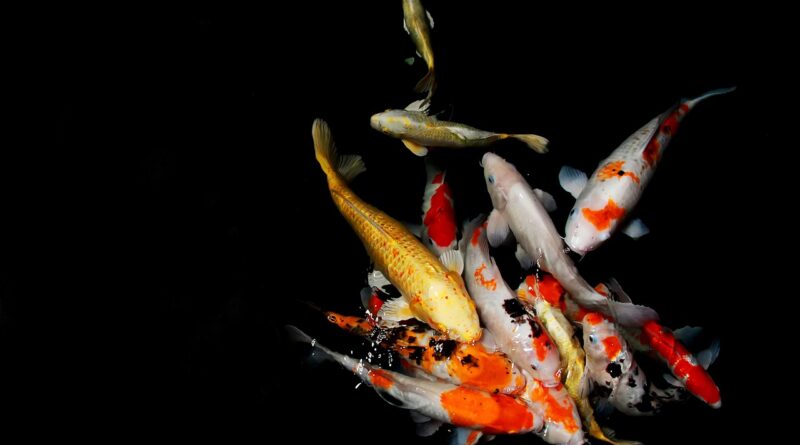
Koi are ornamental carp, but tattoo culture usually treats them as more than decorative fish. In East Asian art, a carp swimming against strong water is often connected with perseverance and the desire to rise through hardship. Museum descriptions of Japanese and East Asian imagery commonly connect carp with human ambition, and the well-known carp-to-dragon story links struggle with transformation.
In tattoo design, this makes the koi useful for stories about recovery, discipline, migration, career change, athletic endurance, family responsibility, or a personal chapter that required patience. Direction, water movement, color, and surrounding elements all affect the final reading. A koi swimming upward may suggest effort or pursuit. A koi moving with flowing water can suggest acceptance, maturity, or harmony after resistance. These meanings are not fixed rules, but they are common interpretations in contemporary tattoo culture.
Polynesian tattoo is not one visual language
Polynesian tattooing is often reduced online to a list of symbols and meanings, but that approach misses important context. Te Papa and Te Ara, two major New Zealand cultural references, describe Māori moko as a deep cultural practice tied to identity, role, status, and visual language. Sāmoan tatau also has ceremonial and social significance, especially in forms such as the pe‘a and malu. Hawaiian, Tahitian, Marquesan, Cook Islands, and other Pacific traditions have their own histories and design conventions.
This matters because a koi is not a traditional Polynesian tattoo subject in the same way it is a Japanese tattoo subject. A design that combines koi and Polynesian elements should be understood as contemporary fusion, not as an ancient Polynesian formula. That distinction does not make the design invalid, but it does change how it should be planned. The safest approach is to work with an artist who can explain which elements are broadly ornamental, which are culturally sensitive, and which should not be used outside a specific community or lineage.
How to combine koi and Polynesian elements with respect
A respectful fusion tattoo starts with the wearer’s story rather than a copied pattern sheet. Ask what the koi is meant to express: overcoming illness, leaving an old life, honoring a parent, crossing an ocean, building discipline, or choosing a new direction. Then decide whether Polynesian-inspired structure genuinely supports that story or is only being used because it looks bold.
One effective approach is to keep the koi as the main image and use the surrounding geometry as a frame, current, border, or background. This keeps the design readable and prevents two visual systems from competing. Another option is to place the koi within wave movement, using blackwork panels, negative space, and flowing bands to suggest water and direction without copying restricted motifs.
| Design choice | Why it can work | What to be careful about |
|---|---|---|
| Koi as the central figure | Keeps the main symbolism clear and readable | Do not bury the fish under heavy patterning |
| Polynesian-inspired border | Adds rhythm, strength, and structure | Avoid copying sacred or identity-specific compositions |
| Ocean and wave flow | Connects koi movement with Pacific water imagery | Keep the water style coherent so it does not look like filler |
| Blackwork with limited color | Balances bold tribal geometry with koi detail | Plan contrast carefully so the koi does not disappear over time |
| Full sleeve or calf wrap | Gives the artist room for movement and pattern transitions | Wrapping designs need strong stencil planning and body-flow awareness |
If you are not from a Polynesian culture, it is usually more accurate to describe the piece as Polynesian-inspired rather than traditional Polynesian. That wording avoids claiming a cultural authority the design may not have. For more background on tattoo symbolism and cultural context, visit our tattoo culture section.
Motifs, placement, and composition ideas
Placement affects both the meaning and the technical success of a koi fish Polynesian tattoo. Koi need movement. Polynesian-inspired patterning also depends on flow, symmetry, and the way lines follow muscle and bone. A cramped placement can make the fish look stiff and reduce the clarity of the geometric work.
Upper arm and sleeve
The upper arm is one of the most practical placements because it gives enough space for the koi body, fins, water, and surrounding blackwork. A half sleeve can place the koi head near the shoulder and let the body curve down the arm. A full sleeve allows more storytelling: water at the wrist, transformation or protection motifs near the shoulder, and stronger pattern transitions around the elbow. The main challenge is the elbow area, where dense detail can distort, fade unevenly, or become visually crowded.
Shoulder, chest, and back
The shoulder and chest work well for designs about strength, responsibility, or protection because the tattoo can follow the natural curve of the body. The back gives the most room for a larger koi, dramatic water, and structured panels. If the design references Polynesian tattoo placement, discuss that carefully with the artist. Some placements can carry cultural associations that are not obvious to someone outside the tradition.
Calf and thigh
The calf is useful for vertical movement. A koi swimming upward can follow the line from ankle to knee, while Polynesian-inspired bands can wrap around the leg. The thigh gives more space for a larger fish and stronger contrast. These placements also tend to be easier to cover than forearm or hand tattoos, which can matter in work or family settings.
Forearm
A forearm koi tattoo is highly visible and works best when the design is simplified. Too many small scales, tiny triangles, and narrow bands can merge visually. If the forearm is the chosen placement, consider one bold koi silhouette, larger water movement, and fewer but stronger pattern sections.
Color and style choices
Blackwork is the most common bridge between koi imagery and Polynesian-inspired structure because it gives the piece weight and unity. A black and grey koi can sit naturally inside bold geometric panels, especially when the artist uses negative space for water and highlights. This approach is also less dependent on bright pigment for readability.
Color can work, but it needs restraint. Red, orange, gold, and white are common koi tattoo colors in Japanese-inspired work, but a highly saturated koi beside dense black geometry creates strong contrast. That contrast can be striking when planned well. If the background does not support it, the fish may look pasted on rather than integrated. A practical compromise is a mostly black tattoo with selective color in the koi, the eye, or a small water accent. See also: tattoo care.
Scale detail is another important choice. Realistic scales may look impressive in a large back or thigh piece, but they can become too busy in a narrow sleeve. Stylized scales are often better for fusion work because they echo the rhythm of geometric patterning without becoming visually noisy. The goal is not to make every inch detailed; it is to make the tattoo readable from across the room and meaningful up close.
Cultural respect before the appointment
The most important planning question is not simply “What does this symbol mean?” A better question is “Who does this symbol belong to, and what context does it carry?” Many online charts present Polynesian symbols as if they were universal icons, but traditional tattoo systems are more complex. Meanings can change according to placement, sequence, family history, island tradition, practitioner, and ceremony.
Before approving a stencil, ask your artist direct questions:
- Which parts of the design are Japanese-inspired, Polynesian-inspired, or purely contemporary?
- Are any motifs associated with a specific family, rank, ceremony, gendered practice, or sacred placement?
- Can the design express my story without copying a traditional pe‘a, malu, moko kanohi, or other restricted form?
- Will the pattern be drawn for my body, or is it copied from a stock design?
- How will the tattoo read after five or ten years?
These questions do not remove every concern, but they show that the tattoo is being approached as cultural art rather than decoration alone. If an artist cannot explain the source, context, or limits of the motifs, pause before booking. A skilled artist should be comfortable saying when an element is not appropriate to use.
Safety, healing, and long-term readability
Design meaning matters, but a tattoo is also a skin procedure. U.S. FDA consumer guidance notes that tattoos involve inserting ink into the skin and that infections or allergic reactions can occur, including from contaminated ink. Dermatology guidance also emphasizes watching for unusual redness, swelling, rash, pain, discharge, or symptoms that do not improve after the normal early healing period.
For a large koi Polynesian fusion tattoo, plan the session schedule realistically. Sleeves, backs, and thigh pieces may require multiple appointments. Rushing a large design can compromise line quality and healing. Ask the studio about sterile needles, single-use supplies, ink handling, surface cleaning, and aftercare instructions. Follow the artist’s aftercare precisely, and seek medical advice if signs of infection or a severe reaction appear.
Long-term readability is especially important with this style because it often combines detailed koi features with bold black geometry. Leave enough open skin and negative space. Use larger shapes where the body bends. Avoid packing tiny repeated marks into areas that stretch or crease. A tattoo that looks slightly simpler on stencil day may age better than one that tries to include every possible symbol.
Frequently asked questions
Is a koi fish Polynesian tattoo traditional?
Not usually. Koi imagery is strongly associated with Japanese and East Asian symbolism, while Polynesian tattoo traditions have separate cultural histories. A design that combines them is best described as a contemporary fusion tattoo unless it is created within a specific cultural practice by an appropriate practitioner.
Can I use Māori moko patterns with a koi?
Be very cautious. Māori moko, especially facial moko and identity-based designs, carries deep cultural meaning. If you are not Māori, do not copy moko patterns from images. Discuss alternatives with an artist who understands the difference between respectful inspiration and inappropriate borrowing.
What direction should the koi face?
There is no universal rule. Many people choose an upward-swimming koi to suggest struggle, ambition, or perseverance. A koi moving with the current can suggest peace, acceptance, or completion. The direction should support the story of the tattoo and the flow of the body placement.
Does color change the meaning?
Color can influence interpretation, but meanings are not fixed across all tattoo cultures. Red, gold, black, and white koi are often used for different emotional effects in contemporary tattooing. Choose color for contrast, longevity, and personal symbolism rather than relying on a rigid online meaning chart.
How do I avoid cultural appropriation?
Do not copy sacred, ceremonial, genealogical, or rank-specific designs. Avoid presenting a fusion tattoo as an authentic traditional Polynesian piece. Work with an artist who can explain the cultural boundaries of the motifs, and choose a design that tells your story without claiming someone else’s identity.