
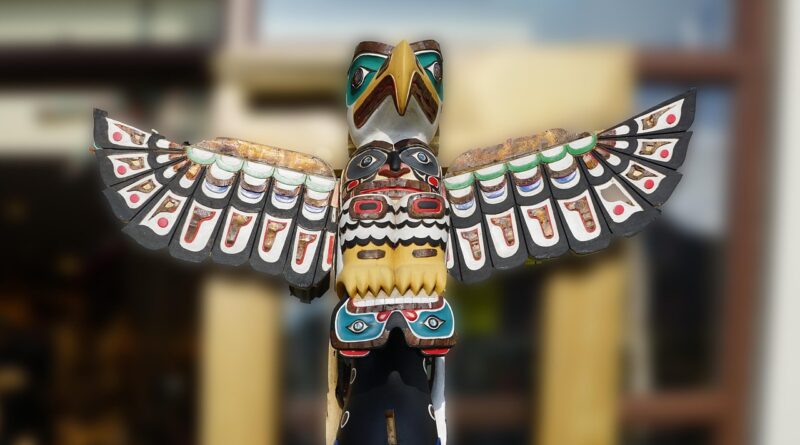
Native American totem pole tattoo meanings and cultural considerations
What this tattoo idea really refers to
A Native American totem pole tattoo usually refers to imagery from Indigenous peoples of the Pacific Northwest Coast, not to Native American cultures as a whole. Totem poles are carved works connected to specific families, clans, histories, territories, ceremonies, and stories. They are not the same as a generic animal tattoo or a personal “spirit animal” design.
If you are considering this motif, the most respectful approach is to avoid copying a living clan crest, ceremonial image, museum object, or artist’s work. Learn the cultural background first, work with an artist who understands Northwest Coast visual traditions, and choose a design that is clear about inspiration without claiming a heritage or meaning that is not yours. For broader context on tattoo symbolism and cultural choices, see our tattoo culture section.
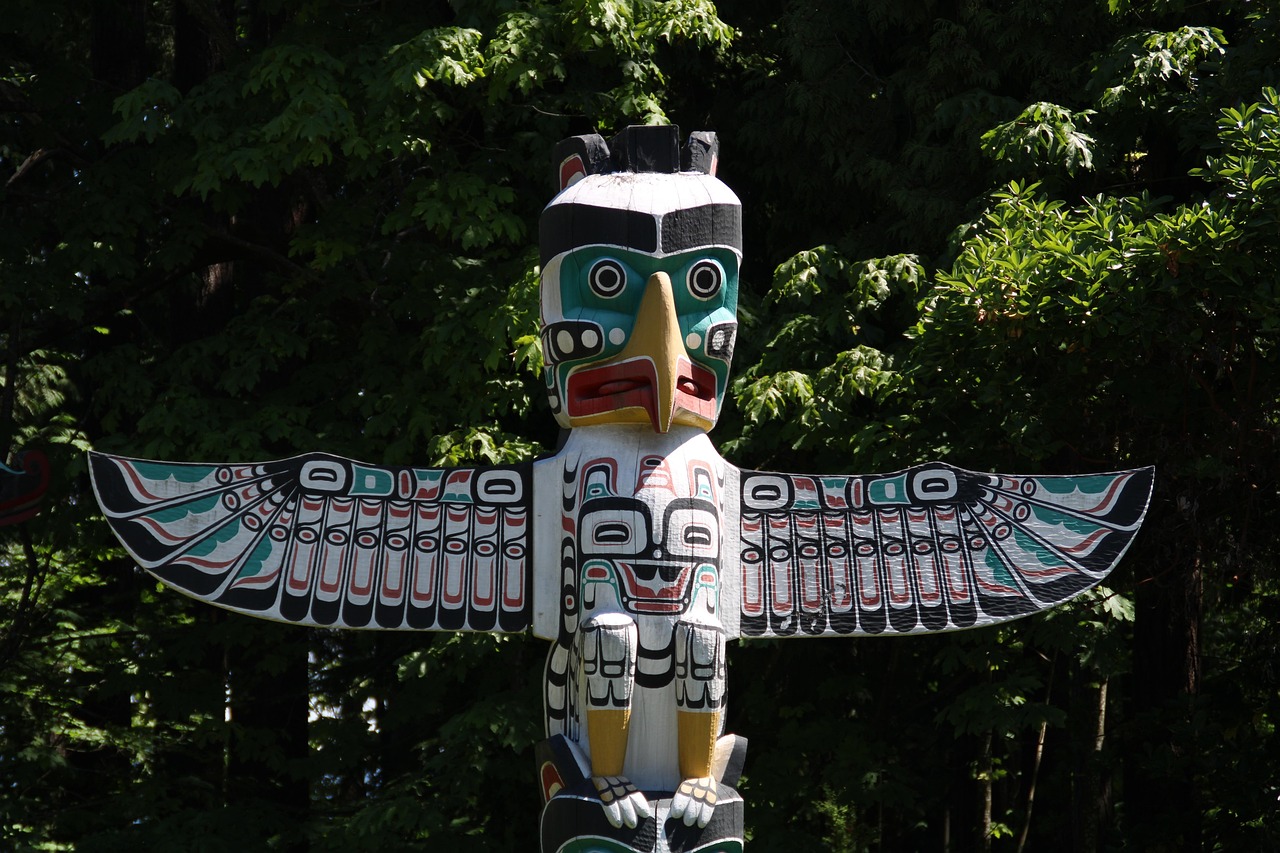
Why the phrase Native American totem pole tattoo can be misleading
The phrase is common in search because many people use “Native American” as a broad label. Culturally, however, it is too broad. Totem poles are most closely associated with Indigenous peoples of the Northwest Coast, including communities such as Tlingit, Haida, Tsimshian, Kwakwaka’wakw, Nuu-chah-nulth, Coast Salish, and others in regions that include parts of present-day Alaska, British Columbia, Washington, and nearby coastal areas.
That distinction matters because Native American cultures are not interchangeable. A totem pole should not be mixed casually with unrelated pan-Indigenous symbols such as Plains-style war bonnets, dreamcatchers, Southwest patterns, or generic “tribal” fillers unless there is a clear, culturally grounded reason. Without that context, the design can become a collage of stereotypes rather than a meaningful tattoo.
Public interpretive materials from the National Park Service and Canadian cultural references describe totem poles as objects that can record clan ancestry, commemorate important people, represent stories, mark houses, or show inherited rights. They are not simply decorative stacks of animals. In many contexts, the right to display a figure is connected to family, clan, or community history.
Core meanings behind totem pole imagery
There is no single universal meaning for a totem pole tattoo. Meaning depends on the nation, community, carver, family history, figure, and story. Even so, several broad themes help explain why the image carries cultural weight.
Lineage and identity
Many totem poles function as visual records of ancestry or family identity. A crest figure can be tied to a clan or house and may represent inherited rights. This is where extra caution is needed in tattoo design. Copying a crest because it “looks strong” can unintentionally claim a relationship, status, or story that belongs to someone else.
History and remembrance
Some poles commemorate a person, remember an event, or preserve a community story. A memorial or history-related pole is not equivalent to a general memorial tattoo chosen from flash. If a tattoo design is based on an existing pole, the wearer should understand whose history it represents and whether reproducing it on skin is appropriate.
Storytelling rather than simple symbolism
Popular tattoo pages often reduce animals to one-word meanings: raven equals wisdom, bear equals strength, eagle equals vision. That is usually too simple. In Northwest Coast art, a raven, bear, eagle, wolf, thunderbird, killer whale, frog, or human figure may appear within a specific narrative or lineage. The same figure can carry different associations in different communities.
Place-based culture
Totem poles are strongly connected to place. Red cedar, coastal villages, house fronts, potlatch traditions, memorial practices, and public raising ceremonies all shape how the form is understood. A tattoo that ignores place can flatten the design into an exotic image. A better design process recognizes that the style belongs to living cultures, not to a vague ancient past.
Respectful design choices and what to avoid
A respectful tattoo does not have to be timid, but it should be informed. The goal is not to make inspiration off-limits. The goal is to avoid misrepresentation, theft, and casual use of restricted imagery.
| Design choice | Why it matters | Better approach |
|---|---|---|
| Copying an existing pole | It may reproduce a family, clan, memorial, or artist-owned design. | Use the image only for study unless you have permission. |
| Using a clan crest as personal symbolism | Crests can represent inherited rights and relationships. | Choose a non-claiming composition or work with an Indigenous artist. |
| Mixing unrelated Indigenous symbols | It can create a pan-Native stereotype. | Keep the visual language coherent and researched. |
| Asking for a “tribal totem” look | The word “tribal” is often vague and commercialized. | Name the inspiration accurately and discuss cultural boundaries. |
| Using sacred or ceremonial imagery | Some images may not be meant for casual display. | Ask, research, and accept that some designs are not yours to use. |
If you are not Indigenous to the communities connected with totem pole carving, consider describing the tattoo as Northwest Coast-inspired rather than as a claim of identity. Even then, the design should be handled carefully. A tattoo artist who understands formline design, cultural permissions, and contemporary Indigenous art will be better equipped than an artist who sees the image only as a bold graphic style.
One of the strongest choices is to commission or consult an Indigenous artist where possible. That does not automatically make every idea appropriate, but it improves the chance that the work is informed, credited, and ethically handled. If an artist says a particular figure, crest, or layout should not be used, that boundary deserves respect.
Visual style, placement, and readability on skin
Totem pole imagery naturally suggests a vertical composition. This can work well on the forearm, upper arm, calf, thigh, spine, or side body. The design usually needs enough height to keep faces, beaks, paws, wings, and internal shapes readable. A very small tattoo may lose the structure that makes the motif recognizable.
Placement also affects distortion. A long stacked design can become difficult to read if it wraps too far around a narrow limb. A flat vertical area, such as the outer forearm or calf, may show the structure more clearly. If the design includes multiple figures, the artist should plan spacing so each form has room to breathe.
Blackwork, color, and formline influence
Many people picture a totem pole tattoo in black and red because those colors are common in Northwest Coast art. Others prefer blackwork, dotwork, or illustrative shading. The issue is not only color but visual language. Formline is a distinctive design system, not just a decorative outline. If the tattoo borrows from that style, the artist should understand its balance, curves, negative space, and figure construction. See also: tattoo care.
Size and aging
Fine internal details may blur as a tattoo ages, especially when they are packed into a small space. Bolder shapes usually hold better over time. For a totem pole tattoo, that means simplifying thoughtfully rather than cramming many figures into a narrow strip. A single figure, or two well-developed figures, may age better than a miniature full pole with six compressed symbols.
Questions to ask before booking the tattoo
Before taking a design to the stencil stage, slow down and ask practical and cultural questions. They help separate meaningful inspiration from impulse copying.
- Which specific culture or region is the design inspired by?
- Is the reference image an existing pole, museum piece, living artist’s work, or clan crest?
- Do I understand what the figure means in its original context, or only what a generic tattoo site says?
- Am I claiming ancestry, rights, spiritual authority, or identity through this image?
- Has the artist worked respectfully with Indigenous visual traditions before?
- Can the design be changed so it is inspired by the form without copying protected or sensitive imagery?
- Would I be comfortable explaining the tattoo without inventing a false cultural connection?
These questions do not remove every possible concern, but they make the process more honest. A tattoo is permanent, and cultural meaning does not disappear once an image is placed on skin.
Tattoo safety still matters
Cultural research is only one part of the decision. A totem pole tattoo is often medium to large, which can mean longer sessions, more skin trauma, and a greater need for careful healing. Health sources such as the U.S. Food and Drug Administration, CDC outbreak reports, and Mayo Clinic guidance have all noted that tattoos can involve risks including infection, allergic reaction, scarring, granulomas, and complications from contaminated ink or unsafe practice.
Choose a licensed studio where regulations require licensing, and look for visible hygiene practices: single-use needles, fresh gloves, covered work surfaces, sterile equipment, tattoo ink made for tattooing, and clean water or sterile products when dilution is needed. Avoid bargain setups, home tattooing, or any artist who refuses to discuss sanitation.
Aftercare should come from the tattoo artist and match the size, placement, and technique of the work. In general, healing tattoos should be kept clean, protected from unnecessary friction, and watched for warning signs such as spreading redness, increasing pain, pus, fever, or persistent bumps. If symptoms suggest infection or an allergic reaction, medical advice is more reliable than social media comments.
Frequently asked questions
Is it disrespectful to get a Native American totem pole tattoo?
It can be disrespectful if the design copies a clan crest, sacred image, memorial pole, museum object, or living artist’s work without permission. It can also be problematic if it treats all Native cultures as interchangeable. A more respectful path is to research the specific Northwest Coast context, avoid restricted imagery, and consult an artist with cultural knowledge.
What animals are common in totem pole tattoo designs?
Common tattoo references include raven, eagle, bear, wolf, thunderbird, killer whale, frog, and human figures. Their meanings are not universal. A raven or bear may have different roles depending on the community and story, so it is better to research context than rely on a one-word meaning list.
Can I design a totem pole tattoo for my family?
You can create a vertical family-inspired tattoo, but calling it a totem pole may imply cultural meanings that do not belong to your family. If you are not connected to a Northwest Coast tradition, consider a personal stacked-symbol design that does not imitate clan crests or ceremonial carving styles.
Where does a totem pole tattoo look best?
Vertical placements usually work best, including the forearm, calf, upper arm, thigh, spine, or ribs. The right placement depends on size and detail. A readable design needs enough space for bold shapes and should avoid excessive wrapping that distorts the figures.
Should I use color or blackwork?
Either can work visually. The more important issue is whether the design is culturally informed and technically durable. Bold blackwork may age well, while color can emphasize traditional-looking contrast, but neither choice makes an inappropriate design respectful by itself.
A careful final takeaway
A Native American totem pole tattoo is not just a dramatic vertical animal design. It points toward living Northwest Coast Indigenous cultures, where carved poles can hold family, clan, historical, memorial, and ceremonial meaning. The best tattoo decision balances visual impact with accuracy, permission, humility, and technical planning. If the design cannot be explained without stereotypes or borrowed authority, it needs more work before it belongs on skin.