
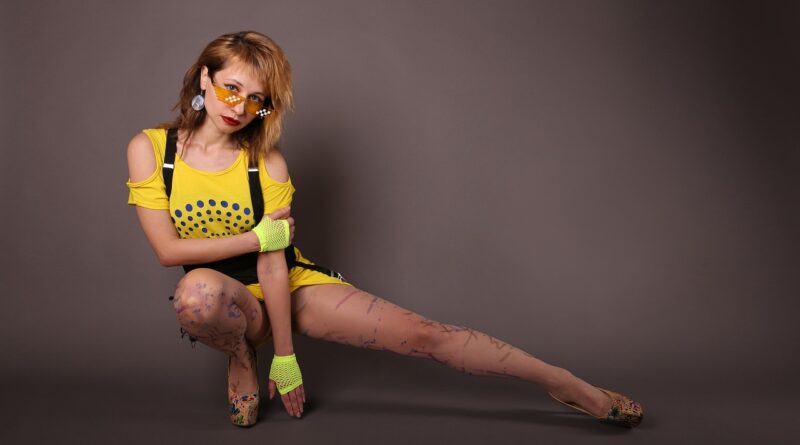
Leg tattoo styles that work with placement, scale, and movement
Why leg tattoo styles depend on placement first
The strongest leg tattoo styles are not chosen by trend alone. A leg tattoo has to work on a curved, moving surface that changes from the broad thigh to the narrow ankle, and from the rounded calf to the sharper shin and knee. Placement affects scale, line weight, detail, visibility, and how the design will read when you walk, sit, or bend the leg.
A fine-line floral piece may suit the ankle or outer calf, while a large Japanese-inspired composition, blackwork panel, or realism portrait usually needs more room on the thigh or across the full leg. This guide compares the main style options and explains how to match each one to the part of the leg where it will sit.

For readers comparing broader body-art directions, the tattoo styles section can help place leg designs within a wider style vocabulary. This article focuses on the leg because it is one of the most flexible tattoo canvases: it can be discreet or highly visible, small or full-coverage, ornamental or narrative.
How each leg area changes the design
The leg is not a single flat surface. A design that looks strong on the outer thigh may lose clarity if it is compressed around the ankle. A delicate piece that feels balanced on the calf may not have enough presence across the full thigh. Before choosing imagery, it helps to understand what each area naturally supports.
Thigh tattoos
The thigh offers the most space for large compositions. It can carry portraits, animals, mythological scenes, floral arrangements, mandalas, script with decorative elements, or large blackwork shapes. The outer thigh is often easier to show in summer clothing, while the front and upper thigh can remain more private depending on wardrobe. Because the surface area is larger, the thigh is a strong choice for designs that need shading, background texture, or multiple subjects.
Calf tattoos
The calf is one of the most popular leg placements because it gives the artist a clear vertical display area. Designs on the back or outer calf can be visible in shorts and covered easily with pants. The rounded muscle works well for animals, daggers, flowers, geometric frames, traditional flash, illustrative designs, and medium-size blackwork. A calf piece can also become the starting point for a lower-leg sleeve.
Shin tattoos
The shin creates a long vertical line. It suits daggers, snakes, ornamental columns, symmetrical florals, fine-line panels, bold lettering, and narrow blackwork shapes. Because the shin has less padding than the thigh or calf, many people describe it as a more intense placement. The design also needs enough contrast because the front of the leg is highly visible and catches light directly.
Knee and knee ditch tattoos
The knee is visually powerful but technically demanding. Circular forms, webs, mandalas, peonies, animal heads, and bold traditional pieces are often chosen because they can wrap around the kneecap. The knee bends constantly, so the design needs smart spacing and a strong structure. The knee ditch, behind the knee, is a more sensitive and high-movement area. It can work for small ornamental elements, but it is rarely the easiest place for a first tattoo.
Ankle and foot-adjacent tattoos
The ankle is ideal for small, subtle, or wraparound designs. Fine-line symbols, small flowers, script, bracelets, dots, stars, minimalist animals, and ornamental bands are common choices. The tradeoff is scale: very small details can blur over time if they are packed too tightly. The ankle also faces friction from socks and shoes, so planning the placement around footwear can make healing and maintenance easier.
Style families that work well on the leg
Most tattoo styles can be adapted to the leg, but some fit certain placements more naturally than others. The goal is not to choose a category name for its own sake. It is to choose a visual language that supports the size, anatomy, and meaning of the piece.
Fine-line and minimalist designs
Fine-line leg tattoos are popular for their light, clean appearance. They work well for small florals, delicate animals, celestial motifs, thin script, ornamental lines, and simple symbolic designs. On the leg, fine-line work is often strongest on the ankle, outer calf, side of the shin, or upper thigh. The main limitation is detail density. If a design depends on tiny internal lines, ask the artist whether the spacing is large enough to stay readable as the tattoo settles.
American traditional and neo-traditional tattoos
Traditional leg tattoos use bold outlines, clear shapes, and strong color blocks. Common subjects include roses, daggers, eagles, panthers, snakes, hearts, ships, and skulls. These designs are well suited to calves, shins, knees, and thighs because they hold their impact from a distance. Neo-traditional work builds on that structure with more varied line weights, richer color palettes, and illustrative detail. It can be a good option if you want bold readability with a more modern finish.
Japanese-inspired leg compositions
Japanese-inspired tattooing often works well on the leg because it uses flow, background, and large connected forms. Koi, dragons, tigers, snakes, peonies, chrysanthemums, waves, clouds, and wind bars can follow the shape of the thigh, calf, and full leg. This style usually benefits from larger scale. It also has deep cultural and visual traditions, so it is worth working with an artist who understands composition rules, symbolism, and respectful use of motifs rather than treating them as random decoration.
Blackwork, geometric, and ornamental tattoos
Blackwork can range from bold blackout panels to delicate ornamental patterns. Geometric and ornamental leg tattoos often use symmetry, repeating lines, dotwork, sacred geometry, mandala structures, or jewelry-like forms. The shin and calf are especially strong for vertical symmetry, while the thigh can hold larger mandalas or abstract panels. Blackwork also creates high contrast, which can make a leg tattoo visible from a distance.
Realism and illustrative tattoos
Realism needs space. Portraits, animals, statues, film-inspired imagery, and detailed natural scenes usually work best on the thigh or calf, where the artist can build smooth shading and recognizable forms. Illustrative tattoos are more flexible because they can simplify reality through line, texture, and stylized shading. If you want realism on the shin or ankle, discuss whether the available space can support the detail without making the piece feel cramped.
Lettering and script
Script can look elegant on the side of the calf, along the shin, around the ankle, or across the thigh. The most important decision is readability. Very thin lettering, tight spacing, and long quotes in small areas can become hard to read. Short phrases, names, dates, coordinates, or single words usually work better on narrow placements. For longer text, the thigh gives more room for clean spacing.
Quick comparison by placement
| Leg area | Styles that often fit | Design notes |
|---|---|---|
| Outer thigh | Realism, Japanese-inspired, neo-traditional, large florals, blackwork | Best for medium to large designs with shading, background, or multiple subjects. |
| Front thigh | Ornamental, portrait, animal, mandala, statement lettering | Creates a strong focal point and can be private or visible depending on clothing. |
| Calf | Traditional, illustrative, blackwork, animals, florals, geometric panels | Excellent for vertical designs that should read clearly when standing or walking. |
| Shin | Daggers, snakes, script, ornamental columns, symmetrical blackwork | Works best with long, clean shapes and enough contrast to remain legible. |
| Knee | Mandala, web, flower, animal head, bold traditional forms | Requires a design that can bend and wrap without losing structure. |
| Ankle | Minimalist, fine-line, small script, bracelet, symbols, micro florals | Good for discreet tattoos, but tiny detail and footwear friction need consideration. |
How to choose scale, detail, and color
Scale is the first practical decision. A small tattoo can be meaningful and elegant, but it cannot hold the same amount of internal detail as a thigh panel or full lower-leg sleeve. If the reference image contains hair texture, jewelry, lace, tiny leaves, facial features, or a detailed background, it may need to be enlarged. A good artist may simplify the design rather than shrink every detail.
Line weight is just as important. Fine-line tattoos rely on restraint and open space. Traditional tattoos rely on strong outlines. Blackwork relies on contrast and negative space. Realism relies on tonal transitions. These approaches age and read differently, so the design should be planned for the style rather than forced into a placement that does not support it. See also: tattoo care.
Color brings its own practical considerations. Color tattoos can create warmth, symbolism, and visual richness, especially in neo-traditional, Japanese-inspired, floral, and illustrative work. Black and grey tattoos often feel more subtle and versatile with clothing. Neither choice is automatically better. The right option depends on your skin tone, the subject, your tolerance for future touch-ups, and whether you want the piece to look soft or high contrast.
Negative space deserves attention, especially on the leg. Skin breaks can separate petals, scales, hair, smoke, geometry, and lettering so the tattoo does not become visually heavy. This matters on curved areas such as the calf and knee, where shapes can compress from certain angles.
Pain, healing, and safety considerations
Pain is subjective, but placement changes the experience. Areas with more muscle or fat, such as parts of the thigh and calf, are often easier for many people than bonier or high-movement areas such as the shin, ankle, knee, and behind the knee. Session length also matters. A small ankle tattoo may be quick but sharp, while a thigh piece may feel more manageable at first and then become tiring over several hours.
Health guidance from sources such as the U.S. Food and Drug Administration, Mayo Clinic, and the American Academy of Dermatology emphasizes that tattooing breaks the skin barrier, so infection, allergic reaction, scarring, and delayed reactions are possible. This does not mean tattoos are unsafe for everyone, but it does mean you should choose a licensed professional, follow aftercare instructions, and pay attention to unusual symptoms. Redness, warmth, swelling, and tenderness can be part of early healing, but spreading redness, fever, pus, severe pain, or a rash should be taken seriously and checked by a health professional.
Leg tattoos also need lifestyle planning. If your job requires standing all day, heavy workouts, tight uniforms, dusty environments, or frequent swimming, discuss timing with your artist. Friction from leggings, boots, socks, and knee pads can irritate fresh work. Sun exposure can also affect the appearance of healed tattoos, so covering or protecting healed tattoos is part of long-term care.
A planning framework before you book
A leg tattoo is easier to plan when you move from broad decisions to details. Use this sequence before sending references to an artist:
- Choose visibility level. Decide whether the tattoo should be easy to hide, visible in shorts, or designed as a statement piece.
- Pick the main placement. Thigh, calf, shin, knee, and ankle each support different shapes and sizes.
- Select a style family. Fine-line, traditional, realism, blackwork, ornamental, Japanese-inspired, and illustrative work all need different planning.
- Define the subject. Choose the image, symbol, phrase, or theme before collecting too many unrelated references.
- Check scale and detail. Ask whether the design needs to be larger to stay readable over time.
- Plan future expansion. If you may want a sleeve later, leave room for background, fillers, or connected composition.
- Discuss aftercare timing. Avoid booking right before a beach trip, major athletic event, or any period when you cannot protect the tattoo.
The strongest designs usually come from a clear brief rather than a rigid copy of another tattoo. Bring references for mood, composition, and style, but allow the artist to adapt the piece to your anatomy. A leg tattoo should look balanced not only in a still photo, but also when you walk, sit, bend the knee, and wear normal clothing.
Common mistakes to avoid
One common mistake is choosing an image without considering body movement. A perfectly symmetrical design may distort when placed across the knee or wrapped too far around the calf. Another is making detailed work too small. Tiny eyes, thin lettering, and dense textures can look impressive in a digital mockup but become unclear on skin.
A third mistake is ignoring future tattoos. If you place a small design in the center of the calf without thinking ahead, it may limit the flow of a later sleeve. This is not always a problem, but it should be intentional. Finally, avoid choosing a style only because it is popular online. Trend visibility changes; placement, quality, and personal meaning tend to matter longer.
Frequently asked questions
What leg tattoo style is best for a first tattoo?
There is no single best style, but a medium-size calf or outer-thigh tattoo is often a practical starting point because those areas can support clear shapes and are easier to cover than the shin or knee. Traditional, floral, illustrative, and simple blackwork designs can all work well if the scale is appropriate.
Do leg tattoos hurt more than arm tattoos?
It depends on the person and the placement. The thigh and calf may feel manageable for many people, while the shin, ankle, knee, and back of the knee are often described as more intense because of bone, nerves, or movement. Session length, shading, and personal pain tolerance also matter.
Are fine-line leg tattoos a good idea?
Fine-line leg tattoos can look refined, especially on the ankle, calf, or thigh. The key is not to make the design too small or crowded. Clean spacing, realistic scale, and an artist experienced in fine-line work are more important than simply choosing the thinnest possible lines.
Can a small leg tattoo become part of a sleeve later?
Yes, but it is easier if you plan ahead. Place the small piece where it can become part of a larger flow, and avoid filling prime sleeve space with a design that cannot connect to future background or companion pieces.
Should I choose black and grey or color for a leg tattoo?
Choose black and grey if you want a versatile, often softer look that works across many subjects. Choose color if the design depends on warmth, contrast, or symbolic tones, such as flowers, traditional flash, or Japanese-inspired imagery. The better option is the one that fits the subject, placement, and maintenance expectations.