Can Mixed Tattoo Styles Look Better than One Pure Tattoo Style?
Why Are Mixed Tattoo Styles Getting So Much Attention?
Mixed tattoo styles are not a rare studio request anymore. A client may want blackwork structure, a soft fine line portrait, and a small neo traditional flower in one tattoo. That does not always mean the client cannot choose. It often means the idea needs more than one visual voice. If you are still comparing broader tattoo styles, mixing styles helps you look past the label and think about what will sit well on your skin.
Public data does not list mixed tattoo styles as its own tattoo market category, so putting a hard market number on it would not be honest. What we can see is that tattoos are common enough for clients to ask more detailed questions. Pew Research Center surveyed 8,480 U.S. adults from July 10 to July 16, 2023, and reported that 32% of Americans have a tattoo, including 22% with more than one. When people have more tattoos, they tend to plan more, edit more, and ask more style questions.
More Tattoos Mean More Personal Editing
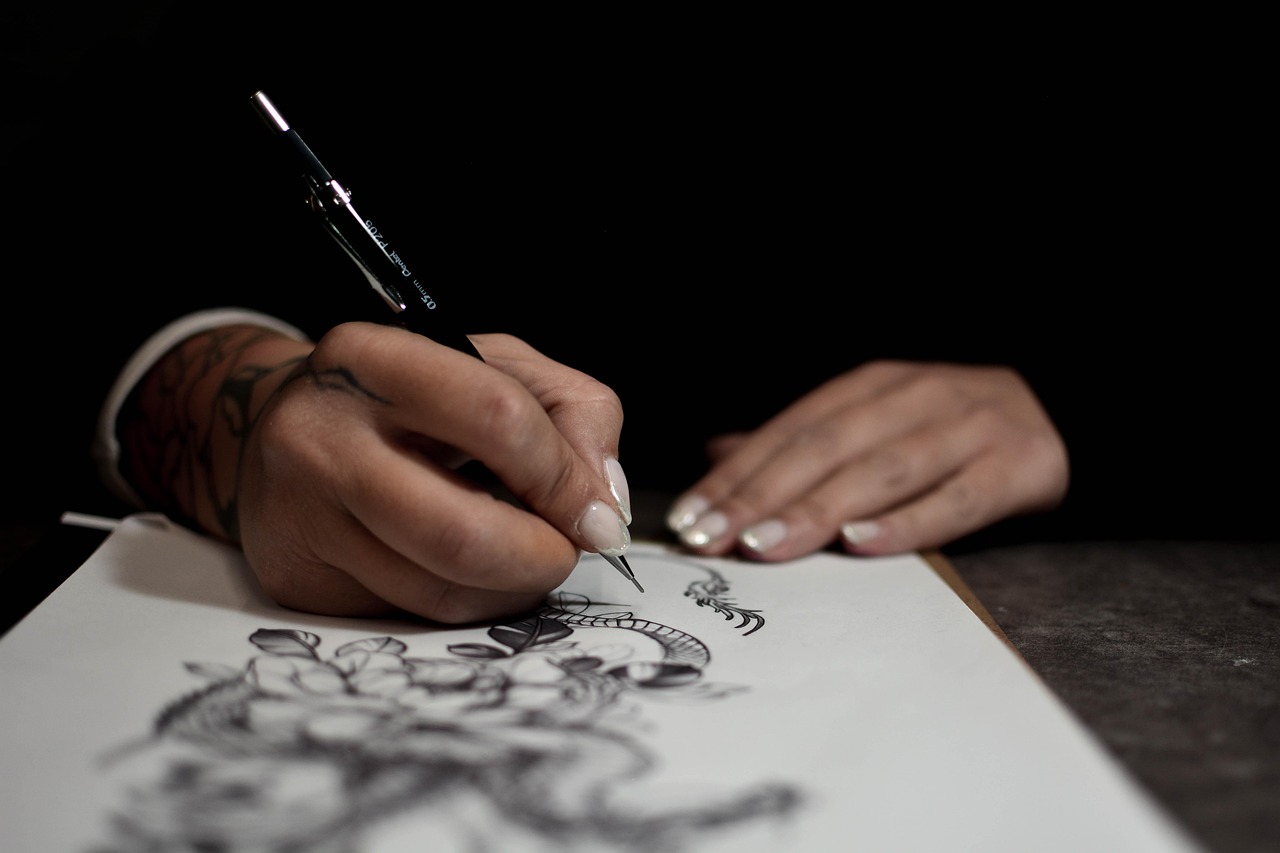
When someone has one small tattoo, one style may be enough. A full forearm, chest panel, or leg sleeve is a different job because the old work and new work need to speak to each other. A black and gray skull beside a fine line name can look random if nothing connects them. It can also look collected when the artist repeats line weight, shadow depth, or negative space.
Clients Want One Piece to Hold Many Stories
Pew also reported in 2023 that many tattooed Americans connect their tattoos with memory, identity, or belief. That matters when a tattoo has more than one style. A memorial piece may need realistic eyes, a handwritten date, and a traditional rose. Each part has its own job in the design. The hard part is making those parts work together instead of looking like loose stickers.
Style Mixing Is Not a Shortcut
Mixed work often takes more drawing time than one pure style. The artist has to choose what gets detail, what stays simple, and where the eye should go first. If every part is loud, the tattoo becomes hard to read. Good mixed style tattoos usually have one main voice and a few support parts. That is what keeps the piece clean.
What Does Mixed Tattoo Style Actually Mean?
A mixed style tattoo is not just several trends placed next to each other. It is a planned blend of visual languages. Think of it like clothing: boots, denim, and a tailored jacket can work together if the color, shape, and mood fit. Tattoos give less room for trial and error because you cannot swap them out after a weekend.
A Planned Blend of Visual Languages
Every tattoo style has its own basic rules. Traditional tattooing uses bold outlines and simple color blocks. Realism depends on tone, texture, and correct proportions. Geometric work uses balance and repeated shapes. Fine line tattooing relies on control and space. A mixed design should borrow these traits for a clear reason, not just because a reference photo looked good late at night.
A Shared Rule for Line Weight and Value
Line weight is one of the fastest ways to make mixed work feel connected. If a fine line bird sits beside a heavy blackwork mandala, the artist may add a medium outline between them. They may also use a soft shadow bridge or a black anchor shape. Value matters too because the eye reads dark and light before it reads detail. A pale section beside a dense black area needs space around it. Without that space, the lighter part can get lost.
A Clear Main Style With Supporting Details
Most mixed tattoo styles work better when one style leads. The second style should add support, not fight for attention. A realistic tiger can be the main subject, while geometric framing gives the piece structure. A traditional dagger can lead, while dotwork shading adds texture. This makes the design easier to read from across the room. It also gives you something to enjoy up close in the mirror.
Which Mixed Tattoo Style Pairings Work Best?
No public authority tracks which style pairings age best across all skin types, placements, and artists. That kind of data would need long-term photo records, the same lighting, and thousands of healed tattoos. Since reliable public data is not available, it is safer to judge pairings by contrast, line clarity, and how much detail the skin can hold.
Fine Line With Realism
Fine line and realism can work well together, especially for portraits, pets, flowers, and small symbolic objects. The realistic part carries the emotion, while the fine line part keeps the tattoo lighter. This pairing needs care with size. The artist should avoid tiny facial details in very small areas. A 2-inch realistic face on the wrist may look good on day one. It has very little room to soften as the years pass.
Traditional With Neo Traditional Color
Traditional and neo traditional tattooing are close relatives, so they usually mix without much trouble. Traditional gives the design strong bones through bold outline, simple shape, and a clear silhouette. Neo traditional adds more color range, softer gradients, and extra detail. This pairing fits animals, flowers, daggers, hearts, snakes, and classic flash-inspired designs. It is also easier to keep readable over time. Bold shapes usually hold up better than tiny details packed into a small area.
Geometric With Botanical or Animal Motifs
Geometric frames can give order to natural subjects. A peony, moth, wolf, or koi can sit inside a circle, triangle, or ornamental grid. The geometry keeps the piece controlled. The natural subject keeps it from feeling too cold or stiff. The artist should leave enough negative space between the lines. If the geometric pattern is too tight, it may heal into a dull gray patch later.
How Can You Plan a Mixed Style Tattoo without a Mess?
Planning is where mixed work either holds together or falls apart. You do not need a 20-page design file. You do need a few firm choices before the artist starts drawing. Many messy tattoos start with one extra idea, then another, then a small quote, then maybe a moon. That is how a clear concept gets crowded.
One Main Focal Point
Pick one thing that should be seen first. It could be a face, animal, flower, symbol, or word. Everything else should lead the eye back to that point. On a forearm piece, the focal point often works well on the outer arm because people see that side more often. On a thigh piece, the center area can take more detail. There is more flat skin to work with there.
A Simple Three-Rule Brief
Before your consult, write a three-rule brief. Keep it plain and useful:
- Main subject: a black and gray raven.
- Secondary style: geometric circle and dotwork texture.
- Mood: clean, dark, not horror.
This gives the artist room to draw while keeping the design on track. It is usually more helpful than sending 18 screenshots with no notes. Screenshots are useful, but too many of them can pull the design in several directions. A short brief helps the artist understand what matters most. See also: tattoo care.
Mockups Before Needle Time
A stencil or digital mockup can show whether the styles sit together. Check the design at phone-screen size and at real size. Squint at it for a second. If the main subject still reads when you squint, the layout is probably working. If you only see texture, the tattoo may need bigger shapes. It may also need fewer small lines.
What Should You Know About Placement, Aging, and Safety?
Mixed style tattoos are still tattoos, so skin rules still apply. Placement changes how the design bends. Aging changes how sharp the lines stay. Safety affects healing from the first day. The American Academy of Dermatology notes that tattoos can cause skin reactions and may also make some skin changes harder to notice, especially if ink covers moles or suspicious spots. If a mark on your skin is changing, get medical advice before tattooing over it.
Body Areas Change the Design
Flat areas such as the upper arm, outer thigh, calf, and back are easier for mixed style designs. They give the artist enough room for bold structure and fine detail. Hands, fingers, elbows, knees, ribs, and feet are harder areas. The skin moves more there, and some spots fade faster. A tiny realism and script mix on a finger is a gamble. It is not a safe choice if long-term readability matters to you.
Aging Depends on Contrast
Contrast helps a tattoo age. A mixed tattoo with a clear dark base, open skin breaks, and readable shapes usually holds better than a low-contrast piece filled with tiny details. Fine line work can look good, but it needs space. Color can stand out, but it needs enough saturation and a sensible palette. Ask your artist how the tattoo may look in 5 years. Do not judge it only by how it looks after the final wipe.
Clean Ink and Care Matter
Safety is not the exciting part, but it matters. The U.S. Food and Drug Administration issued final guidance on tattoo ink sanitation in October 2024 and stated that firms conducted 18 recalls of tattoo inks contaminated with microorganisms between 2003 and 2023. That does not mean every ink is unsafe. It does mean you should choose a licensed studio. Ask about sterile supplies and follow the aftercare instructions. Take unusual redness, swelling, heat, or pus seriously.
How Do You Talk With an Artist About Mixed Tattoo Styles?
A good consult is not a test. You do not need to talk like a tattooer. You do need to be clear about what you want, what you dislike, and where you can be flexible. Mixed tattoo styles need honest discussion because not every artist likes every pairing. Also, not every style works on every placement.
Reference Boards With Limits
Bring 5 to 8 reference images, not 40. Mark what you like in each one, such as the line, shading, color mood, flower shape, or frame. Also show one or two images you do not like. That can save both of you time. If you hate heavy black fill or soft pastel color, say it early. The artist can then avoid drawing in the wrong direction.
Budget and Session Reality
Mixed work can take longer because the artist may switch tools, shading methods, and color plans. A palm-size tattoo may still be one session. A sleeve that blends realism, ornamental blackwork, and color may need several sittings. Ipsos reported in 2019 that 46% of tattooed Americans had at least one tattoo for more than 10 years. That is a useful reminder because the piece may stay with you longer than your current haircut, job title, or favorite jacket.
A Style Agreement Before Stencil Day
Before the needle starts, agree on the main style, secondary style, level of detail, and any hard no items. For example: black and gray realism leads, dotwork supports, no bright color, no tiny script. This does not stop the artist from being creative. It keeps the design from picking up last-minute clutter. A clear yes before stencil day usually makes tattoo day easier. It also helps the finished piece look planned instead of patched together.
FAQ
Q1: Are Mixed Tattoo Styles Good for a First Tattoo? A: Yes, if the design stays simple. For a first tattoo, choose one main style and one supporting style. A small piece with three or four styles can look confused and may not age well.
Q2: Do Mixed Tattoo Styles Cost More? A: They can. More styles may mean more drawing time, more stencil changes, and longer sessions. Ask for a price range during the consult so there are no awkward surprises later.
Q3: Can Old Tattoos Be Added Into a Mixed Style Sleeve? A: Often, yes. The artist may use background shading, geometric framing, blackwork, or repeated motifs to connect older pieces. Very dark or faded tattoos may need cover-up planning or laser lightening first.
Q4: Which Mixed Style Is Safest for Long-Term Readability? A: There is no reliable public dataset naming one safest mix. In practice, designs with strong contrast, clean spacing, and readable shapes tend to hold better than tiny low-contrast detail.
Q5: Should You Choose the Style or the Artist First? A: Choose the artist first if the tattoo is complex. Look for healed photos, not only fresh posts. If the artist already handles the style mix you want, the final piece is more likely to look planned.