What Are the Best Female Tattoo Placement Ideas for Every Style?
Choosing among female tattoo placement ideas can feel quite personal. A small word on the wrist says something different from a thigh floral piece, a sternum design, or a shoulder tattoo. This guide goes through visibility, pain, body movement, clothing, and how the tattoo may wear over time, with more ideas in the tattoo placements section.
There is no reliable public database that ranks the exact most popular tattoo placements for women, so it is better not to act as if there is one. What we can check is the wider tattoo market. Pew Research Center reported in August 2023 that 38% of U.S. women had at least one tattoo, compared with 27% of men, and 56% of women ages 18 to 29 had one. That makes placement planning a common style choice, not a fringe decision. (pewresearch.org)
Which Female Tattoo Placement Ideas Fit Your Daily Life?
The best placement is usually the one you can live with on a busy Monday morning, at a wedding, during a workout, and years later. Start with how often you want to see the tattoo, how often other people will see it, and whether you need to control when it shows.
Visible Spots for Confident Daily Wear
Forearms, outer wrists, collarbones, and ankles are good choices if the tattoo is part of your daily style. These spots suit fine-line symbols, small florals, short quotes, and minimalist designs. The benefit is clear: you get to see the work often. The tradeoff is also clear, because people may notice it before they notice your outfit, jewelry, or mood that day.
Easy-to-Cover Areas for Work and Family Events
Upper arms, ribs, hips, thighs, shoulder blades, and the back are safer choices if your workplace, family culture, or future plans need more privacy. You can show the tattoo with summer clothes, gym wear, or swimwear, then cover it with sleeves, trousers, or a dress. This is not about hiding who you are. It is about keeping your options open.
Private Placements for More Personal Meaning
Some tattoos are not meant for everyone to see. A rib quote, hip design, sternum ornament, or inner bicep piece can feel more personal. These placements work well for memorial tattoos, personal dates, spiritual symbols, or designs linked to a private story. Pew found that 69% of tattooed U.S. adults said honoring or remembering someone or something was a reason for their tattoo, and women were especially likely to give that reason. (pewresearch.org)
Where Do Small Tattoos Look Best on Women?
Small tattoos need careful placement because there is less room for detail. A clean small design can look neat, but if it is placed where the skin bends, rubs, or gets a lot of sun, it may blur sooner. Ask your artist if the line weight is right for the placement, even if the design looks good on a phone screen.
Wrist and Inner Forearm
The wrist and inner forearm are common spots for small tattoos because the skin is fairly flat and easy to show. Initials, stars, birth flowers, tiny script, moons, and simple line art all work well here. If you wear bracelets or a watch every day, place the tattoo a little higher or lower. That way, it does not sit under constant rubbing.
Ankle and Foot
Ankle tattoos can look light and feminine without being too obvious. A small vine, butterfly, word, or fine bracelet-style design usually fits the area well. Foot tattoos can look good too, but shoes, socks, and sun can be hard on healing skin. If you have a beach trip next week, it is not the right week for a foot tattoo. It sounds boring, but it is practical advice.
Behind the Ear and Nape
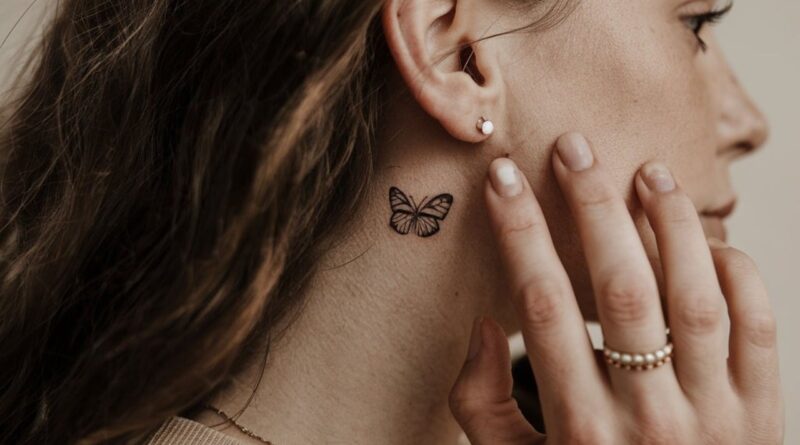
Behind the ear and the nape of the neck are useful spots for tiny icons, initials, and simple ornamental marks. Hair gives you natural cover, which helps when you want the tattoo to stay low-key. These areas can be more sensitive than some people expect. Very tiny details may also age less cleanly than larger shapes, so keep enough space between the lines.
Which Placements Suit Larger Feminine Designs?
Larger tattoos need enough skin space to work properly. If the design has flowers, animals, ornamental lines, portrait elements, or layered shading, a cramped area can make it look unclear. Bigger does not always mean more visible. A large thigh or back tattoo may be easier to hide than a small hand tattoo.
Upper Arm and Shoulder
The upper arm and shoulder are solid choices for floral wraps, mandalas, botanical pieces, dragons, butterflies, and soft blackwork. The shoulder curve gives the design some movement without pushing it across too many joints. This area also makes sense if you may want to build a half sleeve later. If that is possible, leave space from the start.
Thigh and Hip
The thigh gives your artist a good amount of skin to work with. It suits detailed florals, snakes, tigers, ornamental frames, script, and large fine-line compositions. The hip feels more private and works well for designs that follow the body line. These placements are also easier to cover, which helps if your style changes between office clothes and weekend outfits.
Back and Rib Area
The back is one of the better areas for balanced, detailed work because it gives space and symmetry. The rib area creates a closer, body-following look, especially for vertical script, florals, or flowing designs. Ribs can hurt more, and breathing can make long sessions feel harder. For a first tattoo, a full rib panel may be a lot to start with.
How Much Should Pain Shape Your Placement Choice?
Pain should be part of the decision, but it should not control the whole plan. Tattoo pain depends on your body, the artist’s technique, the machine, the design style, session length, sleep, food, and stress. Most people can handle more than they expect. Still, it makes sense to plan in a way that is fair to your body.
Softer Areas Are Usually Friendlier
Outer upper arms, outer thighs, calves, and some shoulder areas are often easier for many clients because they have more padding and fewer sharp bone points. These spots are good for a first tattoo or a larger piece that needs more time. If you want detail with less stress, the outer arm or thigh is often a safe choice. Your artist can also adjust the size and line weight to fit the area better.
Bony Areas Can Feel Sharper
Ribs, sternum, spine, elbows, knees, ankles, feet, fingers, and collarbones often feel sharper because the skin sits close to bone or has many nerve endings. That does not mean you have to avoid them. It means you should keep the first design smaller, eat before the appointment, and avoid booking a long session after poor sleep. A shorter booking can make these placements much easier to manage. See also: tattoo care.
Session Length Matters as Much as Location
A ten-minute ankle symbol may be easier than a three-hour shaded thigh piece, even if the thigh is usually seen as a friendlier spot. Fine-line tattoos can be quick, while color packing and heavy shading take more time. If you like a sensitive placement, ask whether the design can be split into shorter sessions. Your skin and your patience may both handle it better that way.
How Can You Plan for Work, Aging, and Clothing?
Tattoo placement is not only about the appointment day. It also involves hiring managers, uniforms, bras, waistbands, sun exposure, pregnancy, weight changes, and fabric rubbing against the skin. That may sound like a lot, but a few checks before booking can prevent regret.
Visibility at Work Still Depends on the Room
Social acceptance has grown, but it is not the same in every workplace. YouGov reported in 2025 that 76% of Americans said tattoo design can be considered art, and 62% said tattoos can be attractive on a woman. The same survey found that 34% said visible tattoos were not acceptable for senior office-based roles. If your career path is conservative, choose a placement you can cover without effort. (yougov.com)
Skin Movement Changes the Design
Areas that bend and stretch a lot, such as fingers, elbows, knees, stomach, and inner arms, can change the way a design looks in motion. This is not always a problem. A snake, vine, or ornamental line can look good when it follows the body. Geometric designs, tiny circles, and straight script need more care because small shifts are easier to notice.
Clothing and Sun Exposure Affect Healing
Think about what will touch the tattoo during the first two weeks. Bra bands can rub sternum and rib tattoos, while waistbands can bother hip tattoos. Tight shoes can irritate ankle and foot tattoos. Sun is another issue because fresh tattoos are healing wounds, so book the appointment when loose clothing and shade are realistic.
What Safety Points Should You Check Before Booking?
A good-looking placement still needs safe work. The U.S. Food and Drug Administration notes that tattooing places ink into skin with needles, and it has received reports of infections from contaminated inks as well as allergic reactions. The FDA also says even sealed inks can contain bacteria or other microorganisms, so studio hygiene and product handling matter. (fda.gov)
Licensed Studios and Clean Process
Choose a licensed studio that uses sterile needles, fresh gloves, clean surfaces, and single-use supplies where required. The artist should answer basic safety questions without acting annoyed. If the studio looks careless, smells strange, or rushes the consent process, leave. A good tattoo is not only art; it is also a controlled skin procedure.
Ink Reactions and Skin History
If you have a history of keloids, eczema, strong allergies, or slow wound healing, speak with a medical professional before booking, especially for large color work. The American Academy of Dermatology says tattoo reactions can happen right away or even years later. It also notes that red ink is often linked with allergic reactions, though any color can cause problems. (aad.org)
Aftercare for the First Two Weeks
Follow your artist’s aftercare instructions, keep the tattoo clean, and do not pick flakes or scabs. Watch for warning signs such as redness that spreads, pain that gets worse, fever, chills, pus, or open sores. AAD advises seeing a doctor or board-certified dermatologist right away if infection signs appear. Placement affects aftercare too, so choose a spot you can actually look after.
FAQ
Q1: What Is the Most Feminine Tattoo Placement? A: There is no single most feminine spot, but collarbone, rib, hip, wrist, ankle, shoulder, and behind-the-ear placements are often chosen for a softer look. The design style matters as much as the body area.
Q2: What Is the Best First Tattoo Placement for Women? A: The outer forearm, upper arm, shoulder, calf, or outer thigh can be good first placements because they are easier to reach, easier to care for, and often more manageable for pain than ribs, sternum, feet, or spine.
Q3: Where Should You Put a Tattoo if You Need to Hide It? A: Choose the upper thigh, hip, ribs, upper back, shoulder blade, or upper arm. These areas can usually be covered with normal work clothes, though summer outfits and formal wear may change visibility.
Q4: Do Small Tattoos Age Well? A: Small tattoos can age well if the design has enough spacing and the lines are not too tiny. Very small script, crowded symbols, and finger tattoos often need more touch-ups because ink can spread or fade over time.
Q5: Should Placement Come Before the Design? A: Placement and design should be planned together. A long quote may fit the ribs better than the wrist, while a round floral design may suit the shoulder, hip, or thigh. Bring both ideas to your artist and let the body shape guide the final choice.