How Does an Ocean Wave Tattoo Reflect Okan Uckun’s Brain Wave Artistry
NYC-Based Artist Okan Uckun Creates One-Of-A-Kind Tattoos With Brain Waves
Okan Uckun, a New York–based tattoo artist, merges neuroscience with minimalist aesthetics to craft tattoos that visualize the rhythm of thought. His work transforms brainwave data and oceanic motion into refined linear art that flows across the skin like a living diagram of consciousness. These designs are not decorative alone; they embody the dialogue between inner cognition and natural rhythm, redefining how contemporary tattooing expresses human identity through science-informed artistry.
The Conceptual Intersection of Ocean Waves and Brain Waves in Okan Uckun’s Art
The artistic foundation of Okan Uckun’s practice lies in connecting two rhythmic systems: the movement of ocean waves and the oscillations of brain activity. Both represent continuous cycles—natural, unpredictable, yet patterned—and serve as metaphors for consciousness and emotion.
Symbolism Behind Ocean Wave Tattoos
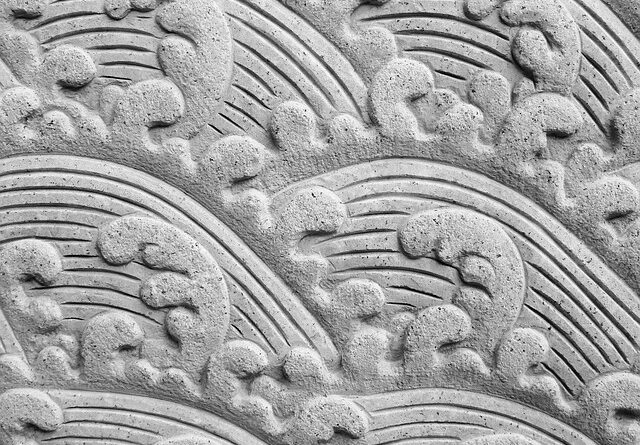
Ocean wave tattoos often signify rhythm, flow, and renewal. In Uckun’s interpretation, these motifs parallel the oscillatory nature of brain activity recorded in EEG patterns. The wave becomes a visual metaphor for mental balance, where chaos meets order. Many cultures view the ocean as both nurturing and destructive; this duality mirrors the human mind’s capacity for serenity and turmoil. Within his minimalist framework, the ocean wave tattoo also conveys emotional endurance—a quiet strength beneath its fluid surface.
Translating Neural Patterns into Visual Expression
Uckun transforms neural data into abstract compositions resembling fine-line currents. His process involves interpreting EEG-like signals as rhythmic linework that mimics both frequency and amplitude variations. Each curve echoes the invisible architecture of thought. By reducing complexity to essential forms, he bridges scientific visualization with aesthetic intuition. The resulting tattoos evoke both analytical precision and meditative calm—qualities reminiscent of minimalist design principles found in modern architecture or Japanese ink drawing.
Bridging Neuroscience and Aesthetics Through Design
In his studio practice, Uckun treats each tattoo as a translation between two languages: biology and geometry. Brainwave frequencies become lines; emotional states transform into spatial relationships on skin. This synthesis not only personalizes each piece but also elevates tattooing into an interdisciplinary medium that merges data interpretation with fine art composition.
Okan Uckun’s Artistic Philosophy and Methodology
Uckun’s creative approach is rooted in minimalism but informed by scientific structure. His tattoos appear simple at first glance yet reveal layered meaning upon closer study—each line calibrated to convey rhythm, silence, or continuity.
The Minimalist Approach in Tattoo Design
Minimalism allows Uckun to distill complex ideas into pure form. He employs geometric precision to create clarity within apparent simplicity. Negative space plays an essential role; it represents pauses between neural firings or troughs between ocean waves. Through symmetry and repetition, his compositions achieve balance while preserving organic fluidity across skin contours.
Integrating Scientific Data into Artistic Form
Scientific input guides much of Uckun’s conceptual work. By referencing real or imagined brainwave frequencies, he constructs visual analogues for mental states such as calmness or focus. The result is a physical manifestation of cognitive rhythm—a permanent record of internal experience rendered through linework rather than narrative imagery.
Tattooing as a Living Canvas of Neural Expression
Each client becomes part of an experimental dialogue between body and mind. The tattoo functions like wearable data art: a reflection of one’s psychological tempo etched directly onto skin. In this way, Uckun redefines personal expression through science-inspired minimalism.
The Aesthetic Dialogue Between Nature and Neuroscience
Uckun’s art thrives on parallels between organic motion and neural activity. Both systems operate through feedback loops—self-similar yet infinitely variable structures that echo life’s complexity.
Parallels Between Oceanic Motion and Neural Activity
Ocean waves and brainwaves share fractal characteristics: repeating patterns that never replicate exactly yet remain mathematically coherent. Under stress or calmness, both exhibit turbulence followed by restoration—a dynamic equilibrium mirrored in his compositions. These visual resonances reinforce unity between external environment and internal perception.
The Role of Flow Dynamics in Artistic Interpretation
Flow dynamics underpin much of Uckun’s visual language. Curved lines mimic energy transfer within water currents or synaptic pathways. Variations in density suggest amplitude shifts akin to alpha or theta waves observed in EEG readings. Through controlled abstraction, he captures kinetic essence without literal depiction—turning invisible processes into tangible art.
Capturing Motion Through Controlled Abstraction
Rather than depicting waves realistically, Uckun abstracts their movement into rhythmic sequences that feel alive yet meditative. This technique invites viewers to sense rather than see motion—a principle shared with kinetic sculpture or sound visualization studies found in experimental design fields.
Cultural and Psychological Dimensions of Wave-Inspired Tattoos
Beyond aesthetics, wave-based symbolism carries deep cultural resonance across traditions—from Polynesian navigation tattoos to Japanese ukiyo-e depictions of seas as metaphors for impermanence.
Symbolic Resonance Across Cultures
In many cultures, ocean waves symbolize transformation or life force—the ceaseless movement linking all existence. When fused with brainwave imagery, they articulate a universal connection between human consciousness and natural cycles. Uckun situates these ancient symbols within a contemporary neuroscientific framework, aligning traditional spirituality with modern cognitive science.
Emotional Expression Through Minimalist Symbolism
By stripping away figurative detail, minimalist wave tattoos invite introspection rather than storytelling. Each line becomes a marker of mood or memory rather than literal representation. This subtlety encourages wearers to engage emotionally with their body art as an evolving meditation on self-awareness.
Body Art as Cognitive Reflection
Wave-inspired tattoos act as mirrors for internal state—fluid records of shifting thought patterns over time. They embody resilience not through overt imagery but through steady repetition of form—echoing how neural networks adapt under experience or trauma recovery research suggests neuroplasticity follows similar rhythmic adaptation patterns (IEEE Brain Initiative).
The Evolution of Contemporary Tattoo Art Through Cognitive Aesthetics
Tattooing has entered an era where technology meets introspection. Artists like Okan Uckun redefine body art by integrating biometric insight with aesthetic restraint.
Redefining Tattooing as an Interdisciplinary Practice
Uckun exemplifies how neuroscience can inform contemporary tattoo design theory by merging analytical observation with artistic intuition. His practice challenges conventional boundaries separating scientific illustration from fine art composition—a shift toward intellectualized body art grounded in empirical inspiration rather than purely decorative intent.
Influence on Future Directions in Tattoo Design Innovation
As biometric tools evolve, artists increasingly explore physiological data such as heart rate variability or neural oscillations to generate personalized designs in real time (IEEE Spectrum). This convergence opens new collaborations among artists, neuroscientists, and technologists aiming to visualize consciousness through living media like skin.
Toward Data-Driven Personal Expression
Okan Uckun’s methodology hints at future directions where tattoos become responsive interfaces rather than static images—artworks informed by measurable aspects of human cognition that merge aesthetics with self-quantification culture emerging across digital health fields (Bloomberg Technology).
FAQ
Q1: What makes Okan Uckun’s ocean wave tattoo style unique?
A: His designs merge minimalist geometry with conceptual neuroscience by translating brainwave patterns into flowing linework resembling ocean currents on skin surfaces.
Q2: How does he incorporate scientific data into tattoo design?
A: He references EEG-like patterns representing mental states such as calmness or focus to guide composition structure during design planning.
Q3: Why are minimal lines important in his work?
A: Minimalism reflects clarity within complexity; each fine line symbolizes rhythm while negative space conveys silence between neural impulses or wave crests.
Q4: Do his tattoos have cultural significance beyond aesthetics?
A: Yes, they reinterpret traditional wave symbolism found across global cultures through a modern lens linking nature’s motion with cognitive processes.
Q5: How might this approach influence future tattoo innovations?
A: It encourages integration between biometric sensing technologies and artistic creation—paving paths for responsive tattoos shaped by real-time physiological data streams.