Surrealism tattoo ideas and what to know before choosing one
What is a surrealism tattoo?
A surrealism tattoo uses dreamlike imagery, impossible combinations, symbolic objects, distorted anatomy, or unusual scale to create a scene that feels familiar and unreal at the same time. Instead of showing a rose, eye, animal, clock, face, or landscape in a literal way, a surrealist design changes the rules of reality. An eye may become a doorway, a hand may hold a moon, a portrait may dissolve into clouds, or a staircase may lead nowhere.
For people comparing different tattoo styles, surrealism is appealing because it can feel personal without explaining its meaning too directly. It is especially useful for tattoos about memory, identity, grief, imagination, transformation, or the subconscious, where a simple icon or slogan may feel too obvious.
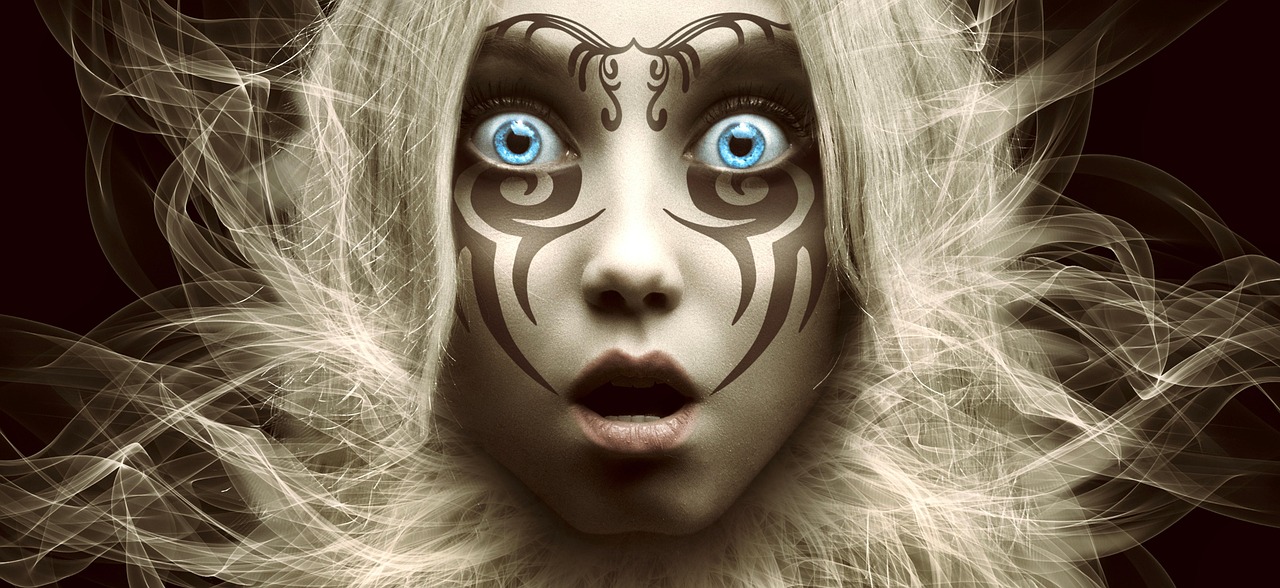
In art history, Surrealism grew from early twentieth-century experiments with dreams, the unconscious mind, automatic drawing, and unexpected juxtapositions. Major art references, including Tate and the National Gallery of Art, describe the movement as closely connected to dreams and the unconscious. In tattooing, those ideas become visual tools rather than strict museum categories. A surrealism tattoo does not need to copy famous paintings; it can borrow the logic of dreams to build an original image that works on skin.
Why surrealism works so well as tattoo art
Surrealism works well in tattooing because skin is not a flat gallery wall. A tattoo moves with the body, changes under different light, and is viewed from different distances. This suits images that reveal more over time. A small surreal tattoo may first read as a simple object, then reveal a hidden face or symbol. A larger piece can work like a dream sequence, with one image transforming into another across the arm, back, thigh, or chest.
The style also gives artists room to combine technical control with interpretation. A realistic eye, hand, skull, flower, moth, mask, or architectural shape can be rendered precisely, while the surrounding composition breaks ordinary logic. That contrast is often what makes the tattoo compelling. The believable detail anchors the image; the impossible relationship between elements creates the surreal effect.
Surrealism can also keep a design from feeling too literal. A tattoo about time does not have to rely only on a clock. It could show a landscape folded into a watch face, a portrait with hourglass shadows, or a bird carrying fragments of a calendar. A tattoo about grief does not need to include a name or date if the wearer prefers privacy. Empty chairs, doors, moons, wilted flowers, or fragmented anatomy can suggest absence in a more personal way.
Common surrealism tattoo themes
Surreal tattoos are flexible, but several themes appear often because they translate clearly into visual form and carry symbolic weight without needing text.
Eyes, faces, and identity
Eyes are one of the most common surrealist tattoo elements because they can suggest awareness, memory, secrecy, protection, and inner vision. A single eye may appear inside a flower, cloud, mirror, hand, or keyhole. Faces can be split, masked, multiplied, or partly replaced by landscapes. These ideas are often used for tattoos about self-perception, emotional change, hidden feelings, or the tension between public and private identity.
Nature and impossible landscapes
Mountains, oceans, forests, deserts, planets, moons, and clouds work well because they can be scaled and shaped around the body. A surreal landscape may sit inside a human silhouette, spill from a frame, or merge with an animal. These designs often suit people who want a tattoo connected to travel, solitude, spiritual reflection, or the feeling of being between worlds.
Clocks, doors, mirrors, and thresholds
Objects linked to time and transition are natural fits for surrealism. Clocks can suggest memory, aging, urgency, or repetition. Doors and windows may point to escape, opportunity, fear, or the unknown. Mirrors can represent self-examination or distortion. Because these objects already carry symbolic meaning, they can be effective even in simple black-and-gray designs.
Animals and hybrid forms
Birds, moths, snakes, wolves, cats, deer, fish, and insects can become surreal when combined with human features, celestial shapes, machinery, flowers, or architecture. Hybrid imagery can express instinct, transformation, duality, or conflict. The key is restraint: too many hybrids in one composition can become hard to read unless the artist builds the piece around a clear focal point.
Popular design approaches for a surrealism tattoo
Surrealism is not a single tattoo technique. It can be built through realism, illustrative linework, fine-line detail, blackwork, dotwork, color, or a mixed approach. The best method depends on the concept, placement, size, and how much detail the wearer wants the tattoo to hold over time.
Black-and-gray surrealism
Black-and-gray is a strong option for portraits, statues, eyes, hands, skulls, architectural scenes, and moody dream imagery. It allows smooth shading, firm contrast, and a lasting visual style. It is especially useful when the concept depends more on light, shadow, and form than on bright color. However, black-and-gray surrealism usually needs enough size to preserve soft transitions and small details.
Fine-line surrealism
Fine-line surreal tattoos can feel delicate, poetic, and modern. They are well suited to small symbols, minimal landscapes, single-object illusions, or clean compositions with negative space. The limitation is longevity: very tiny details, tightly spaced lines, and low-contrast shading may soften as the tattoo ages. A good artist will simplify the design so it remains readable after healing and normal skin changes.
Illustrative surrealism
Illustrative surrealism sits between realism and stylized drawing. It can use bold outlines, etched shading, dotwork, or graphic shapes. This approach is often more forgiving than hyperrealism because it does not depend on photographic detail alone. It works well for symbolic tattoos, strange creatures, floating objects, and designs inspired by old book illustrations, engraving, mythology, or fantasy art.
Color surrealism
Color can make a surreal tattoo feel cinematic or hallucinatory. It is useful for cosmic scenes, flowers, animals, abstract backgrounds, stained-glass effects, and dreamlike skies. The challenge is contrast. A colorful surreal tattoo still needs a clear value structure so the main subject does not disappear into the background. Skin tone, pigment choice, sun exposure, and aftercare can all affect how color settles and ages.
Placement, size, and readability
Placement is one of the most important decisions for a surrealism tattoo because the style often depends on detail, transitions, and visual surprise. A design that looks strong on a large screen may fail as a small tattoo if the elements are too crowded. Before approving a stencil, the wearer should ask whether the design is readable from a normal viewing distance, not only in a close-up drawing.
Medium and large placements usually serve surrealism best. The forearm, upper arm, calf, thigh, chest, back, ribs, and shoulder blade provide enough room for layered scenes. Smaller placements can still work, but they should focus on one strong idea: an eye inside a moon, a melting candle, a small door in a hand, or a flower with a hidden face. Tiny surreal tattoos should avoid too many micro-details. See also: tattoo care.
| Placement | Best for | Design note |
|---|---|---|
| Forearm | Vertical scenes, eyes, hands, doors, small landscapes | Good visibility, but the design should flow with the arm |
| Upper arm | Portraits, animals, hybrid imagery, circular compositions | Allows more shading and stronger contrast |
| Thigh | Larger dream scenes, figures, surreal landscapes | Offers enough space for complex storytelling |
| Back | Large compositions, mirrored imagery, symbolic scenes | Best for ambitious pieces with multiple elements |
| Ribs | Vertical, poetic, or minimal surreal concepts | Consider pain level and movement during healing |
Readability also depends on contrast. Surreal tattoos often combine several objects, so the main subject should be easy to identify. If every area has the same level of detail, the image can become visually noisy. Strong surreal tattoo design usually has a hierarchy: a primary focal point, secondary supporting elements, and quieter space that lets the eye rest.
How to plan a surreal tattoo concept
A good surrealism tattoo starts with meaning, but it should not try to explain everything at once. The most effective concepts often come from two or three connected ideas rather than a long list of symbols. For example, “memory, water, and a childhood home” may become a house floating in a glass wave. “Anxiety, time, and self-control” may become a hand holding a clock that turns into birds. The concept should be specific enough to guide the artist but open enough to allow visual invention.
When preparing for a consultation, it helps to separate references into categories. One group can show mood: dark, soft, romantic, cosmic, eerie, or minimal. Another group can show subject matter: eyes, animals, architecture, flowers, portraits, or landscapes. A third group can show technical style: fine-line, black-and-gray realism, illustrative, dotwork, or color. This keeps the process clear without asking the artist to copy another tattoo.
- Choose one main subject before adding supporting symbols.
- Decide whether the tattoo should feel eerie, peaceful, spiritual, romantic, or abstract.
- Use personal references carefully, especially faces, dates, and memorial elements.
- Ask the artist which details need to be simplified for the chosen size.
- Review the stencil at body scale, not only as a digital image.
It is also useful to ask what the tattoo should not communicate. Surreal imagery can be interpreted in different ways. A skull may feel poetic to one person and dark to another. An eye may suggest protection, surveillance, spirituality, or vulnerability depending on context. Clarifying unwanted meanings can help the artist avoid symbols that do not fit the wearer’s intention.
What to discuss with your tattoo artist
Because surreal tattoos often rely on illusion and layered meaning, communication with the artist matters. Bring references, but expect the final drawing to change. A responsible artist will adapt the idea to skin, placement, needle technique, and long-term readability. This is especially important for faces, hands, tiny architecture, and smooth gradients, which can lose clarity if scaled too small.
Ask how the artist plans to create depth. Depth may come from shading, line weight, negative space, color temperature, or the way elements overlap. In surrealism, depth is not just decoration; it helps the viewer understand the impossible space. A floating object, open doorway, or split portrait needs enough visual logic to feel intentional rather than accidental.
Health and aftercare should also be part of the conversation. The U.S. Food and Drug Administration has noted that tattoo inks can be associated with infections or allergic reactions, particularly when products are contaminated or used in unsafe conditions. The American Academy of Dermatology also advises that skin reactions can occur even when a tattoo is applied by a licensed artist. This does not mean people should avoid tattoos altogether, but it does mean clients should choose professional studios, follow aftercare instructions, and seek medical advice if they notice spreading redness, unusual swelling, pus, fever, or a reaction that worsens instead of improving.
For complex surreal tattoos, consider whether the work should be completed in multiple sessions. Large black-and-gray pieces, color compositions, and detailed portraits may require time for lining, shading, and finishing. Rushing a dense design can affect comfort, healing, and precision. A staged approach also gives the artist more control over contrast and detail.
Frequently asked questions
Is a surrealism tattoo always dark or strange?
No. Surrealism often uses strange or impossible imagery, but the mood can be soft, hopeful, romantic, spiritual, funny, or mysterious. A surreal tattoo can be a delicate moon scene, a peaceful landscape inside a hand, or a bright floral design with one impossible detail.
Can a surreal tattoo be small?
Yes, but the concept should be simple. Small surreal tattoos work best when they focus on one clear transformation or visual twist. If the idea requires a portrait, landscape, multiple symbols, and fine shading, it will usually need more space.
Does surrealism work better in black-and-gray or color?
Both can work. Black-and-gray is strong for mood, realism, and contrast. Color is effective for dreamlike skies, flowers, cosmic imagery, and emotional atmosphere. The better choice depends on the subject, skin tone, placement, and the artist’s strengths.
How do I make sure the design is original?
Use references for direction rather than duplication. Share themes, objects, moods, and composition ideas, then let the artist create a custom design. Avoid asking for a direct copy of another person’s tattoo or a famous artwork unless there is a clear legal and ethical basis for adaptation.
What makes a surrealism tattoo age well?
Clear contrast, enough size, readable spacing, and controlled detail help a surreal tattoo age better. Designs that depend on extremely tiny lines, low contrast, or too many crowded symbols may lose clarity faster as the skin naturally changes over time.
Final thoughts
A surrealism tattoo is a strong choice for someone who wants body art with imagination, symbolism, and emotional depth. Its power comes from the space between reality and dream: the viewer recognizes the objects, but their relationship feels impossible. That tension can make the tattoo personal without making it overly literal.
The best results come from a focused concept, an artist with the right technical style, and a design that respects the limits of skin. Whether the final piece is a small fine-line symbol or a large black-and-gray dreamscape, surrealism should do more than look unusual. It should turn a private idea into an image that remains readable, meaningful, and visually alive over time.