Norse tattoos and meanings for symbols, runes, and modern designs
What Norse tattoos usually mean
If you searched for norse tattoos and meanings, the practical answer is that most designs point to protection, courage, wisdom, fate, ancestry, or a personal connection with Norse myth. Mjölnir, Thor’s hammer, usually suggests protection and strength. Odin-related imagery can suggest wisdom, sacrifice, poetry, death, and the search for knowledge. Yggdrasil represents connection and the structure of the cosmos. Runes can carry strong meaning, but they are letters first, not a universal set of magic icons.
The key point is that popular Norse tattoo symbols do not all come from the same period. Some motifs are grounded in Viking-age objects, stones, and mythic literature. Others, including Vegvísir and many magical staves, belong to later Icelandic manuscript traditions. A strong design should balance visual style, personal meaning, and historical honesty. For related symbolism guides, visit our tattoo meanings section.
Quick meanings table for popular Norse tattoo symbols
| Symbol or motif | Common tattoo meaning | Historical and design note |
|---|---|---|
| Mjölnir | Protection, strength, blessing, loyalty to Thor | Thor’s hammer amulets are among the better-supported Norse-inspired tattoo references. Museums describe them as protective amulets that became especially visible in the tenth century. |
| Yggdrasil | Connection, fate, growth, endurance, the worlds held together | Works best as a tree, root, and branch composition rather than a tiny mark, because the meaning depends on scale and structure. |
| Huginn and Muninn | Thought, memory, watchfulness, wisdom, guidance | Odin’s ravens are a clear option for people who want an Odin-linked tattoo without relying on a more ambiguous geometric sign. |
| Valknut | Death, the fallen, Odin, courage, transition | The exact original meaning is debated. It is visually powerful but socially sensitive because it has also been appropriated by extremist groups in some contexts. |
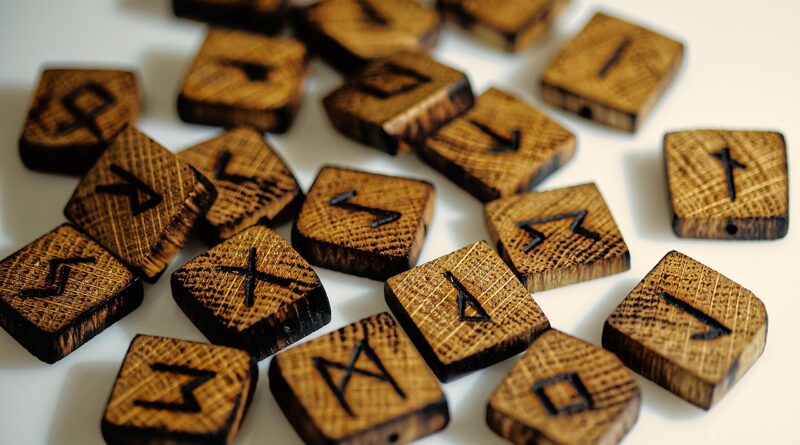
| Runes | Names, vows, memorial phrases, identity, protection | Runes are writing systems. For a Viking-age look, Younger Futhark is usually more appropriate than the older Elder Futhark often seen on modern charts. |
| Bind runes | A personalized mark made from combined rune letters | Modern bind-rune tattoos can be meaningful, but they should be treated as designed monograms unless they are based on a verified historical model. |
| Vegvísir | Finding one’s way, guidance through difficulty | Popularly called a Norse compass, but it belongs to later Icelandic magical-stave tradition, not proven Viking-age navigation. |
| Ægishjálmur | Protection, awe, intimidation, spiritual defense | Often translated as Helm of Awe. The symbol appears in Icelandic magical manuscript contexts, with later Christian and folk-magic layers. |
| Fenrir or wolves | Wild power, restraint, rebellion, shadow, destiny | Wolves can read as strength or chaos depending on the pose, surrounding symbols, and whether the design references Fenrir, Geri and Freki, or general wolf imagery. |
Historical accuracy and what we can actually verify
Norse tattoos are modern body art inspired by Norse mythology, Viking-age material culture, medieval texts, later Icelandic manuscripts, and contemporary design. That does not mean historical Vikings wore the exact tattoos now seen in studios. Preserved skin from Viking-age Scandinavia has not provided a catalogue of tattoo patterns. The often-cited tenth-century account of Ahmad ibn Fadlan describes marked or colored Rus traders around the Volga region, but scholars and translators have debated whether those markings were tattoos, body paint, or another form of decoration. It is useful evidence, but it is not a tattoo manual.
Archaeology is stronger for objects than for skin. The National Museum of Denmark describes rune stones as memorial monuments that name people, kinship, status, and sometimes the circumstances of death. For tattoo design, that context matters. It shows that runes were used for communication, commemoration, and identity, not only for mystery. A memorial rune tattoo, a name, or a short vow can therefore feel closer to historical use than a random row of letters copied for decoration.
Mjölnir has a different kind of support. Museum explanations of Thor’s hammer pendants connect them with protection and with identity during the period when Scandinavian pagan traditions met Christianity. This is why Mjölnir remains one of the clearest choices for a Norse-inspired tattoo meaning protection, courage, and blessing. It is not only a fantasy weapon; it was worn as an amulet.
Vegvísir and Ægishjálmur require more caution. The Museum of Icelandic Sorcery and Witchcraft identifies the Huld manuscript as a nineteenth-century Icelandic source for magical staves and notes earlier Icelandic grimoires for related protective signs. These symbols can make strong tattoos, but calling them Viking-age symbols without qualification is misleading. A more accurate description is later Icelandic magical symbolism with Norse cultural associations.
Meanings by theme
Protection and strength
For protection, Mjölnir is the most direct option. It can be drawn as a simple pendant shape, a carved-stone silhouette, or an ornamental hammer filled with knotwork. Ægishjálmur also communicates protection, but with a different tone: more magical, intimidating, and ritualistic. If you want a tattoo that feels protective without looking aggressive, Mjölnir, a shield pattern, or a guarded tree design may age better socially.
Wisdom, memory, and sacrifice
Odin tattoos usually carry a more complex meaning than simple victory. In Norse mythology, Odin is associated with war and death, but also with poetry, magic, runes, sacrifice, and the relentless pursuit of knowledge. A one-eyed figure, a spear, ravens, or a subtle raven pair can symbolize learning through cost. Huginn and Muninn are especially readable because their names are commonly understood as thought and memory. They suit designs about observation, intelligence, and remembering where someone came from.
Fate, roots, and personal growth
Yggdrasil is one of the most flexible Norse tattoo ideas because it can hold several meanings at once. Roots suggest ancestry, grounding, and hidden strength. Branches suggest growth and future direction. The whole tree suggests connection across worlds, time, and identity. In tattoo design, Yggdrasil needs enough room for the roots and branches to work visually. A small, crowded tree can lose both readability and symbolic force.
Courage, conflict, and the shadow self
Wolves, serpents, dragons, and Fenrir designs lean toward struggle, instinct, and destiny. A Fenrir tattoo can mean restrained power, refusal to be controlled, or the danger of becoming what others fear. It can also read as anger or intimidation when paired with harsh blackwork, skulls, or combat symbols. The best version depends on whether the wearer wants to emphasize survival, rebellion, transformation, or mythic tragedy.
Design choices that change the meaning
The same Norse symbol can mean different things depending on style, placement, and surrounding elements. A small Mjölnir on the wrist may read as a personal protective charm. A large hammer with lightning, skulls, and battle axes may read as a statement of force. A raven over the heart can feel memorial or watchful; a pair of ravens across the shoulders can feel like guardians.
Runes require careful planning. First, decide whether the tattoo should be historical, symbolic, or personal. If the goal is a Viking-age feel, ask about Younger Futhark, the 16-character rune row used in Viking-age Scandinavia. If the goal is a broader ancient Germanic look, Elder Futhark may be acceptable, but it is older than the Viking Age. Second, translate the idea into language before changing letters into runes. A modern English phrase converted character by character can look attractive, but it may not say what the wearer thinks it says. See also: tattoo care.
Composition also matters. Norse ornament often uses flowing animals, interlaced bodies, gripping beasts, and carved lines rather than flat clip-art symbols. A skilled artist can draw from Borre, Jellinge, or Urnes-inspired ornament while still creating an original tattoo. That approach often feels more mature than placing five famous symbols in a row without a visual hierarchy.
Cultural and social context before you ink
Norse symbols are meaningful to many people, including history enthusiasts, Scandinavian descendants, modern pagans, fantasy fans, and clients who connect with the myths. At the same time, some symbols have been misused by extremist groups. The Anti-Defamation League’s symbol database repeatedly stresses context: Thor’s hammer, runic writing, and the Valknut can be used by non-racist people, but certain versions and combinations can carry hateful associations.
This does not mean every Norse tattoo is suspicious. It does mean design research matters. Be cautious with the Valknut, winged or altered Othala runes, Black Sun imagery, swastikas, SS-like lightning forms, and compositions that combine Norse signs with racial slogans or militant symbols. If the intended meaning is ancestry, resilience, or mythology, the surrounding imagery should make that clear. Pairing a Norse symbol with natural elements, memorial text, personal dates, or a thoughtful mythic scene can reduce ambiguity.
Respect also means avoiding false certainty. If a symbol is later Icelandic, call it later Icelandic. If a meaning is modern, own it as modern. A tattoo does not need to be archaeologically pure to be meaningful, but it should not depend on a false claim.
How to choose a Norse tattoo that ages well
- Start with the meaning, not the symbol. Choose protection, memory, courage, fate, ancestry, grief, growth, or transformation before choosing the image.
- Separate Viking-age from Norse-inspired. Mjölnir, runes, ravens, and animal ornament can be rooted in older evidence. Vegvísir and many staves are later Icelandic traditions.
- Verify text before tattooing it. Names, dates, and vows should be checked for spelling, language, and rune row.
- Avoid overcrowding. One strong symbol with well-drawn ornament usually ages better than many small symbols competing for attention.
- Think about public reading. If a symbol has controversial associations, use context, placement, and composition to clarify your intention.
- Choose a compatible artist. Look for clean linework, healed examples, and experience with knotwork, blackwork, engraving styles, or illustrative animals.
Frequently asked questions
Did Vikings really have tattoos?
Possibly, but the evidence is limited. A tenth-century account of Rus traders is often interpreted as describing tattoos or body markings, but it is indirect and debated. There is no surviving Viking-age tattoo flash sheet or preserved Scandinavian skin showing standard designs.
What is the most accurate Norse tattoo?
Accuracy depends on the design. A Mjölnir amulet, a properly planned Younger Futhark inscription, or ornament inspired by Viking-age objects is generally easier to support than a modern symbol presented as ancient. Accuracy improves when the tattoo is based on a specific object, inscription, or manuscript tradition.
Is Vegvísir a Viking symbol?
Vegvísir is better described as a later Icelandic magical stave. It is meaningful as a tattoo for guidance and finding one’s way, but it should not be presented as a confirmed Viking-age compass or ship symbol.
Are rune tattoos risky?
Rune tattoos are not inherently risky, but mistakes are common. Some people use the wrong rune row, mistranslate words, or combine runes into symbols with unintended social associations. A short, verified inscription is safer than a long phrase converted automatically.
What Norse tattoo means protection?
Mjölnir is the clearest protection symbol for many Norse-inspired tattoos. Ægishjálmur is also used for protection and awe, but it belongs to later Icelandic magical tradition. Shields, guardian ravens, and protective rune inscriptions can also work when designed carefully.