
Koi fish tattoo color meaning and design choices that fit the story
Koi fish tattoo color meaning at a glance
Koi fish tattoo color meaning usually begins with the fish itself: perseverance, movement through difficulty, ambition and transformation. Color then gives the design a more specific direction. A black koi often points to hardship overcome, red suggests love or courage, gold and yellow lean toward prosperity, blue can suggest calm or masculine energy, and white or red-and-white patterns often feel clean, classic and celebratory. These meanings are common in modern tattoo culture, but they are not fixed rules. The strongest koi tattoo is usually the one where color, direction, water, flowers and placement all support the same personal idea. For more symbolic tattoo guides, browse our tattoo meanings section.
| Color or pattern | Common tattoo meaning | Best design use |
|---|---|---|
| Black koi | Endurance, maturity, strength after hardship | Bold sleeves, high-contrast back pieces, stories of survival |
| Red koi | Love, courage, passion, life force | Emotional designs, family themes, dramatic Japanese-inspired work |
| Gold or yellow koi | Prosperity, success, good fortune, confidence | Bright focal points, achievement tattoos, celebratory pieces |
| Blue koi | Calm, discipline, masculinity in some modern readings | Water-heavy designs, balanced compositions, quieter symbolism |
| White koi | Clarity, renewal, restraint, personal reset | Minimal palettes, black-and-grey work, soft contrast designs |
| Red-and-white koi | Classic beauty, celebration, purity with energy | Kohaku-inspired designs, elegant Japanese-style tattoos |
| Black-and-white koi | Balance, contrast, duality, resilience | Yin-yang layouts, paired koi, symbolic symmetry |
Why color matters in a koi tattoo
Koi are not imaginary creatures created only for tattoo art. Public references from the Smithsonian’s National Zoo describe Japanese koi as colorful ornamental versions of the common carp, with modern Japanese koi believed to date back to early nineteenth-century Japan. The U.S. Geological Survey also describes koi as brightly colored domesticated carp, commonly marked with orange, yellow, white and black. That real-world variety is one reason the fish translates so well into tattooing: color is already part of the animal’s identity, not an afterthought.

Color meanings still need context. A chart can help with planning, but it should not override the whole composition. A red koi moving through dark water will not read the same way as a red koi surrounded by cherry blossoms. A gold koi on the forearm may feel bright and ambitious, while the same gold koi on the back with storm waves may suggest a long climb toward success. Color is one layer of meaning, not the entire message.
It also helps to separate koi varieties from tattoo symbolism. Japanese nishikigoi are grouped by real breeding traits such as color, pattern, scale quality and body shape. Japanese tourism materials on Ojiya nishikigoi describe Kohaku, Taisho Sanshoku and Showa Sanshoku as the three highly recognized Gosanke varieties. Tattoo meanings borrow from that visual world, but they also combine folklore, personal symbolism and modern design language.
Core koi colors and what they usually communicate
Black koi tattoos
A black koi tattoo is one of the clearest choices for a story about resilience. In modern tattoo interpretation, black koi are often connected with overcoming adversity, growing through hardship and becoming stronger after a difficult period. The color also gives the tattoo visual weight. It can anchor a sleeve, make waves feel more dramatic, and create strong contrast against red, gold, blue or skin-tone negative space.
Black is especially useful when the design is meant to feel serious rather than decorative. It can represent grief survived, discipline built over time, or a private challenge the wearer does not want to explain literally. In Japanese-inspired layouts, black can also help the koi stand out against wind bars, water and pale highlights. If the goal is to communicate endurance without text, black is often the most direct option.
Red koi tattoos
Red koi tattoos are commonly chosen for love, courage, passion and emotional intensity. Red feels active on skin, so it works well when the tattoo is about devotion, family, desire, anger transformed into strength, or the will to keep moving. A red koi can be bold and celebratory, but it can also carry a serious story when paired with heavy waves or darker background elements.
Because red is visually dominant, it needs planning. A small red koi can draw the eye more strongly than a larger grey or blue element. Red also deserves a specific discussion with the tattoo artist because skin reactions are possible with any tattoo pigment. The American Academy of Dermatology notes that allergic reactions may appear in a specific ink color and that red is often involved, although any color can cause a reaction. That does not mean everyone should avoid red, but it does mean the choice should be made thoughtfully.
Gold and yellow koi tattoos
Gold and yellow koi are usually read as prosperity, success, optimism and good fortune. The meaning does not have to be limited to money. For many people, a gold koi represents a goal reached after years of work, a new chapter after a setback, or confidence earned rather than inherited. In design terms, gold and yellow bring warmth. They can make a koi feel luminous, especially against blue water, black waves or muted background shading.
Real koi varieties make this color family feel natural. Ojiya nishikigoi materials mention metallic gold Ogon among popular varieties, and tattoo artists often translate that shine into yellow, orange, gold and cream tones. On skin, however, very light yellow can fade or become subtle over time depending on skin tone, placement and sun exposure. If gold is central to the meaning, ask the artist how they plan to preserve contrast with outlines, orange shading, a black background or negative space.
Blue koi tattoos
Blue koi tattoos usually feel calmer than red or gold. They are often used for self-control, peace, focus, recovery or quiet strength. In some modern family-symbolism readings, blue is also associated with masculine energy or a son, but that should be treated as one possible interpretation rather than a universal tradition. Blue works especially well when the tattoo has a strong water setting because the fish can feel integrated into its environment.
A blue koi can also be a good choice when the meaning is not victory yet, but steadiness. It can suggest that the wearer is still in the current, still learning and still moving with discipline. In larger Japanese-style tattoos, blue can cool down a composition that might otherwise become too warm with red, orange and gold.
White, red-and-white and black-and-white koi tattoos
White koi tattoos often communicate clarity, renewal and restraint. A mostly white koi can feel spiritual, quiet or refined, especially when the artist uses negative space rather than heavy white pigment. It may suit someone who wants the koi’s meaning of perseverance without making the design feel aggressive.
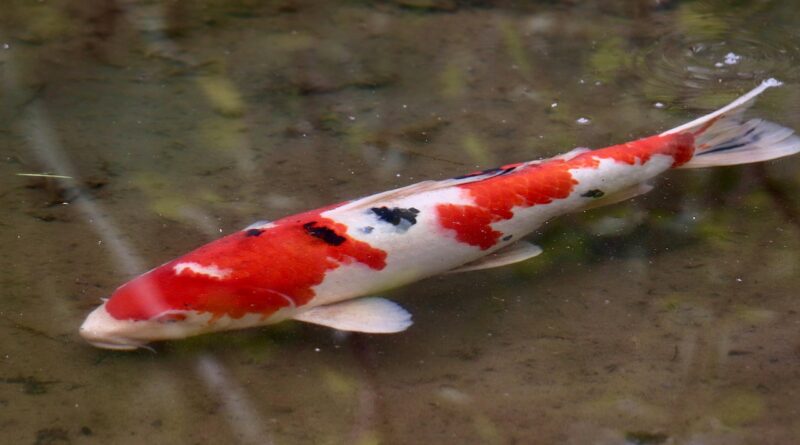
Red-and-white koi are often inspired by Kohaku, a white koi with red markings. In nishikigoi culture, Kohaku is one of the most recognizable visual patterns. In tattooing, it can suggest balance between purity and force, calm and courage, elegance and energy. A red-and-white koi is also a strong option for people who want a classic Japanese-inspired look without using too many colors.
Black-and-white koi designs are usually about contrast. They can represent balance, duality, discipline, grief and renewal, or two parts of the self moving together. This palette also works well for people who prefer black-and-grey tattoos but still want a koi design with symbolic depth. See also: tattoo care.
How direction, water and companion elements change the reading
Color becomes clearer when the koi’s movement supports it. A koi swimming upstream is commonly read as active struggle, ambition or the decision to continue despite resistance. A koi swimming downstream can suggest that a battle has already been faced, that the wearer is moving with acceptance, or that the lesson has been integrated. Neither direction is automatically better. The right choice depends on whether the tattoo is about the fight, the breakthrough or the peace after it.
Water changes the mood as much as color does. High waves make the koi feel tested. Smooth water makes the same fish feel controlled and meditative. Circular water can suggest cycles, balance or returning to the self. A pair of koi may point to partnership, inner duality, family or harmony, especially when the colors are intentionally contrasted.
Companion elements should support the meaning, not simply fill space. Lotus flowers can reinforce themes of growth through difficult conditions. Peonies can add richness, bravery or beauty. Cherry blossoms can make the design feel more temporary and reflective, especially if the tattoo is about change, memory or the shortness of a life stage. A dragon paired with a koi often points to transformation, but it also makes the design more complex, so the artist should plan the story carefully rather than just adding more symbols.
Choosing a koi color for your body and long-term design
A symbolic color still has to work as a tattoo. Skin tone, placement, size, line weight and future aging all affect the final result. A color that looks bright in a reference image may heal softer on the body. A small koi with too many colors may lose clarity. A large back or sleeve piece can carry subtle gradients, while a wrist or ankle tattoo usually needs a simpler palette.
Before choosing a color, ask three practical questions:
- What is the main story? If the tattoo is about survival, black may be stronger than gold. If it is about a new chapter, white, blue or red-and-white may fit better.
- What needs to be visible from a distance? Strong contrast usually matters more than including every meaningful color.
- How will the color age? Discuss healed examples with the artist, especially for yellow, pale blue, white highlights and red-heavy designs.
Safety should be part of the design conversation. The U.S. Food and Drug Administration says tattoo inks and pigments fall under its oversight as cosmetics, and it has received reports of infections from contaminated inks and allergic reactions to inks. Dermatology guidance also notes that some reactions can appear immediately, while others may appear weeks or years later. Choose a licensed professional, follow aftercare instructions, protect healed tattoos from heavy sun exposure, and seek medical care if redness spreads, pain worsens, pus appears, fever develops or a reaction persists.
Frequently asked questions
What color koi tattoo means overcoming struggle?
Black is the most common choice for overcoming struggle, especially when the tattoo is about hardship, discipline or survival. An upstream black koi makes that message even clearer because the movement reinforces resistance and effort.
What does a red koi fish tattoo mean?
A red koi tattoo usually suggests love, courage, passion and strong emotional energy. It can be romantic, familial or personal depending on the surrounding design. Because red ink can be associated with reactions for some people, it is worth discussing pigment choice and aftercare with the artist.
Is a gold koi tattoo only about money?
No. Gold and yellow koi often symbolize wealth or prosperity, but the meaning can be broader. A gold koi can stand for success, confidence, good fortune, a completed goal or a brighter stage of life after difficulty.
Does the direction of a koi tattoo matter?
Direction can matter if you want the symbolism to be specific. Upstream usually suggests active struggle or ambition. Downstream can suggest acceptance, completion or moving forward after the hardest part. The meaning should be decided with the full composition, not direction alone.
Can I mix koi colors in one tattoo?
Yes. Many strong koi tattoos use more than one color, especially in sleeves, back pieces and paired-koi designs. The key is to avoid adding colors only because each one has a meaning. A focused palette usually reads better than a crowded one.
Final thoughts on koi fish tattoo color meaning
The best koi fish tattoo color meaning is clear without feeling forced. Black can speak to survival, red to love and courage, gold to prosperity, blue to calm strength, and white or Kohaku-inspired patterns to clarity and elegance. The fish’s direction, water, flowers, placement and scale all shape the final message. Start with the story you want the tattoo to carry, then choose the color palette that makes that story visible, balanced and durable on skin.