Maori traditional tattoo explained through tā moko, moko kauae and kirituhi
What a Maori traditional tattoo actually refers to
People searching for maori traditional tattoo are usually trying to understand tā moko, the Māori practice of marking the skin with designs connected to identity, ancestry, status, responsibility and belonging. In Māori contexts, moko is not simply a decorative tribal tattoo. Museum of New Zealand Te Papa Tongarewa describes the lines of moko as carrying much more than surface ornament, while Te Ara, the Encyclopedia of New Zealand, presents tā moko as a distinctive Māori art with social, spiritual and historical importance. That distinction matters for anyone studying tattoo history, considering a Māori-inspired design, or trying to understand why copying a face tattoo from an image can be disrespectful. For broader body art background, visit our tattoo culture section.
This guide explains the key terms, traditional technique, cultural meanings, history of decline and revival, and the modern boundary between tā moko and kirituhi. It is cultural explanation, not permission to reproduce sacred designs.

The roots of tā moko in Māori culture
Tā moko belongs to the Māori people of Aotearoa New Zealand. It developed from wider Polynesian tattooing traditions into a form with its own tools, aesthetics and protocols. Public cultural sources, including Te Papa and New Zealand tourism education materials, connect Māori tattooing to both ancestral Polynesian practice and specifically Māori development in Aotearoa. For that reason, Maori traditional tattoo may be useful as a search phrase, but tā moko is the more precise term when discussing the cultural practice itself.
In Māori tradition, origin stories are not just decorative legends. One widely discussed narrative concerns Mataora and Niwareka, a story often used to explain the sacred origin of moko and the difference between temporary surface marking and enduring skin marking. Because oral traditions vary across iwi and educational sources, this story is best understood as a cultural account rather than a single fixed historical record.
The practitioner is traditionally known as a tohunga tā moko. The word tohunga refers to an expert or skilled person, and in this context it signals that moko was not historically a casual service separated from cultural knowledge. Design, placement and process were connected to whakapapa, or genealogy, and to the wearer’s place within whānau, hapū and iwi relationships. In practical terms, moko could communicate who a person was, where they came from, and how they stood within a living community.
Tools, technique and why moko is often described as carved
One of the clearest technical differences between historical tā moko and many modern tattoos is the tool. Te Papa explains that Māori developed the use of smaller, narrower uhi, or chisels, that cut grooves through the skin. This is why traditional moko is often described as carved rather than only punctured. The finished mark was not only pigment under the skin; it could also include a textured surface formed by the cut.
Modern tā moko is not limited to one tool. Many contemporary practitioners use electric tattoo machines, while some have revived or continued work with uhi. The key point is that the cultural framework does not disappear simply because the equipment changes. A machine-made moko can still be created through Māori protocol and cultural relationship, while a copied pattern made with traditional-looking tools does not automatically become tā moko.
Traditional accounts also emphasize that moko was a serious process involving pain, healing, preparation and restrictions that differed by community and period. These are better described as tikanga, or protocols, rather than as one universal rulebook. A design that looks similar in two photographs may have very different meaning depending on the wearer, the practitioner, the whakapapa behind it and the setting in which it was received.
Meanings, placement and identity
The meaning of tā moko is relational, not purely symbolic. Many online tattoo guides treat Māori forms as a menu of shapes with fixed meanings, but that approach is too simple. Te Papa describes moko as a visual language connected with artistic excellence, identity and role. Te Ara also places moko within Māori social and cultural history rather than presenting it as a universal symbol chart.
Some placements are especially significant. Moko kauae is commonly associated with wāhine Māori and appears on the chin, often with markings that may extend to the lips. It is widely discussed today as an expression of whakapapa, mana, identity and leadership. Historical full-face moko for men is often called moko kanohi, although facial moko should not be reduced to gender alone because practice has varied across time and community. Body moko also existed, including forms placed on the thighs, buttocks, torso and limbs.
| Term | General meaning | Important note |
|---|---|---|
| Tā moko | The Māori practice of tattooing or marking the skin | Connected to Māori identity, whakapapa and tikanga |
| Moko | A Māori tattoo or marking | Often used for the finished mark, especially when culturally grounded |
| Moko kauae | Chin moko, commonly worn by wāhine Māori | Associated with identity, mana, whānau and leadership |
| Uhi | Traditional chisel-like tattooing tool | Historically used to cut grooves rather than only puncture skin |
| Kirituhi | Skin art or non-traditional tattooing | Often used for Māori-inspired work that is not tā moko |
The table is only a starting point. It should not be used to decode someone’s moko from a photograph or to assemble a design without guidance. In Māori contexts, the meaning of a line can depend on who wears it, who designed it, the whakapapa it references and the tikanga followed during the process.
Decline, survival and contemporary revival
Tā moko changed under colonisation, mission influence, introduced social pressures and shifting political conditions in Aotearoa New Zealand. It would be inaccurate to say that one law or one event ended the practice. However, colonial pressure on tohunga authority forms part of the historical background. New Zealand Legislation records the Tohunga Suppression Act 1907 as a law that imposed penalties on certain practices associated with tohunga, and many cultural discussions place that Act within a broader pattern of state interference in Māori knowledge systems.
Even so, moko did not vanish. Te Ara records continuation and change, including accounts of moko kauae among Māori women into the twentieth century. This matters because it corrects a common misunderstanding: contemporary tā moko is not simply a modern revival of a dead art. It is better described as a living practice that endured disruption, adapted to new conditions and became more publicly visible during wider Māori cultural revitalisation.
From the late twentieth century onward, tā moko became increasingly visible as part of renewed Māori language, art and identity movements. Today, some wearers receive moko through ceremonial settings, some through studio settings, and some through a combination of both. Its public visibility should not be treated as a fashion cycle. For many wearers, moko is a declaration of belonging and responsibility as much as a visual artwork. See also: tattoo care.
Tā moko, kirituhi and respectful choices for non-Māori
One of the most common questions around Māori tattooing is whether non-Māori people can get a Māori tattoo. A respectful answer starts with terminology. Tā moko is not simply a look; it is bound to Māori whakapapa and tikanga. Te Aka Māori Dictionary defines kirituhi as skin art or tattooing that is non-traditional and not done using Māori protocols or imagery. In contemporary tattoo discussion, many practitioners use kirituhi for Māori-inspired designs made for people who are not Māori, although views vary among artists and communities.
For a non-Māori person, the safest approach is not to ask for tā moko, not to copy a Māori person’s moko, and not to use facial moko forms as aesthetic inspiration. A more respectful path is to consult a knowledgeable Māori artist or cultural practitioner, explain your background honestly, and accept that the answer may be no or that the design may need to move in a kirituhi direction.
- Do not copy moko from photographs, museum images, celebrities or family portraits.
- Do not claim a design represents whakapapa if it does not.
- Do not describe a Māori-inspired tattoo as authentic tā moko unless the practitioner and process support that claim.
- Be especially cautious with face, chin and lip placements, which carry strong cultural significance.
- Avoid the generic word tribal when you mean Māori, Polynesian, Samoan, Marquesan or another specific tradition.
This distinction is not about closing culture off from learning. It is about recognizing that appreciation requires boundaries. A design can be beautiful, meaningful to the wearer and ethically considered without pretending to be a traditional moko.
How to understand designs without reducing them to a symbol chart
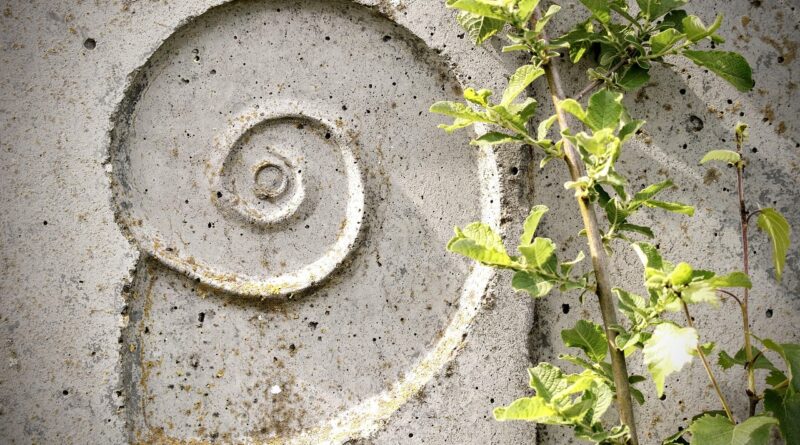
Many readers want a list of Māori tattoo symbols and meanings. That is understandable, but it can create problems. Some motifs, such as spirals and curving forms, are widely associated with ideas like growth, return, movement, ancestry or life paths. Yet in tā moko, meaning is not produced by a single motif alone. Meaning comes from composition, placement, the wearer’s story, the practitioner’s knowledge and the cultural process around the mark.
A better way to research Māori-inspired tattooing is to ask questions rather than collect symbols. What cultural tradition does the design come from? Who has the authority to create it? Is the design connected to someone else’s whakapapa? Is the placement appropriate? Is the artist using the term tā moko, moko, kirituhi or Māori-style tattoo carefully? If the answer is vague, the design may need more research before it belongs on skin.
For tattoo culture readers, the key lesson is that Māori tattooing challenges the idea of tattoo as portable decoration. Tā moko is a record of relationship. It turns skin into a place where genealogy, responsibility, memory and art meet. That is why a respectful article, studio conversation or design consultation should treat it as cultural knowledge rather than as an interchangeable pattern style.
Frequently asked questions
Is tā moko the same as a normal tattoo?
No. Tā moko can involve tattooing techniques, including modern machines, but its cultural meaning is different from ordinary decorative tattooing. It is connected to Māori whakapapa, identity, tikanga and social relationships. The tool alone does not define it.
What is moko kauae?
Moko kauae is a chin moko commonly worn by wāhine Māori. It is often described in relation to whakapapa, mana, whānau, identity and leadership. Because it is culturally specific, it should not be copied as a general face tattoo style.
Can non-Māori get tā moko?
Many Māori voices distinguish tā moko from kirituhi. For non-Māori wearers, Māori-inspired work is more often discussed as kirituhi, especially when it does not carry Māori whakapapa or follow Māori protocol. The respectful step is to consult a knowledgeable practitioner and avoid claiming a design is tā moko if it is not.
Are Māori tattoo symbols universal?
No. While some shapes are commonly associated with broad ideas, moko is not a universal symbol dictionary. The meaning depends on the wearer, family history, placement, composition, practitioner and tikanga.
Why do some sources write Maori while others write Māori?
Māori with a macron is the more accurate spelling because the macron marks a long vowel in te reo Māori. Many search engines and older English sources still use Maori without the macron, which is why both forms appear in educational and SEO contexts.